Tag: Palisades Fire

  • Unraveling the Palisades Fire Cover-Up: Official Narratives Crumble Under Scrutiny

    Unraveling the Palisades Fire Cover-Up: Official Narratives Crumble Under Scrutiny

    From the moment flames ripped through Pacific Palisades on January 7, 2025, killing twelve residents and obliterating thousands of homes, Los Angeles officials have been peddling a fairytale so flimsy it disintegrates the second you hold it up to the light. The spin machine went into overdrive before the ash even settled. LAFD leadership, the Mayor’s office, and Governor Gavin Newsom’s sprawling bureaucracy all locked arms and marched out the same script: this was an unavoidable “holdover fire,” a tragic act of nature, a freak of climate change, a perfect storm no one could have seen coming.
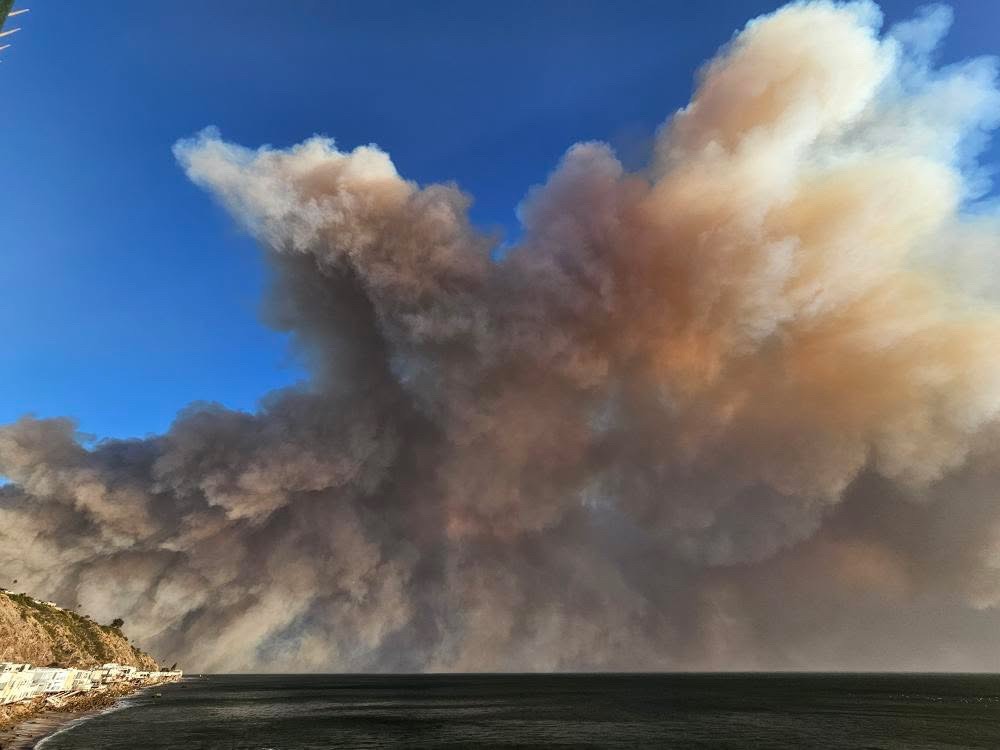
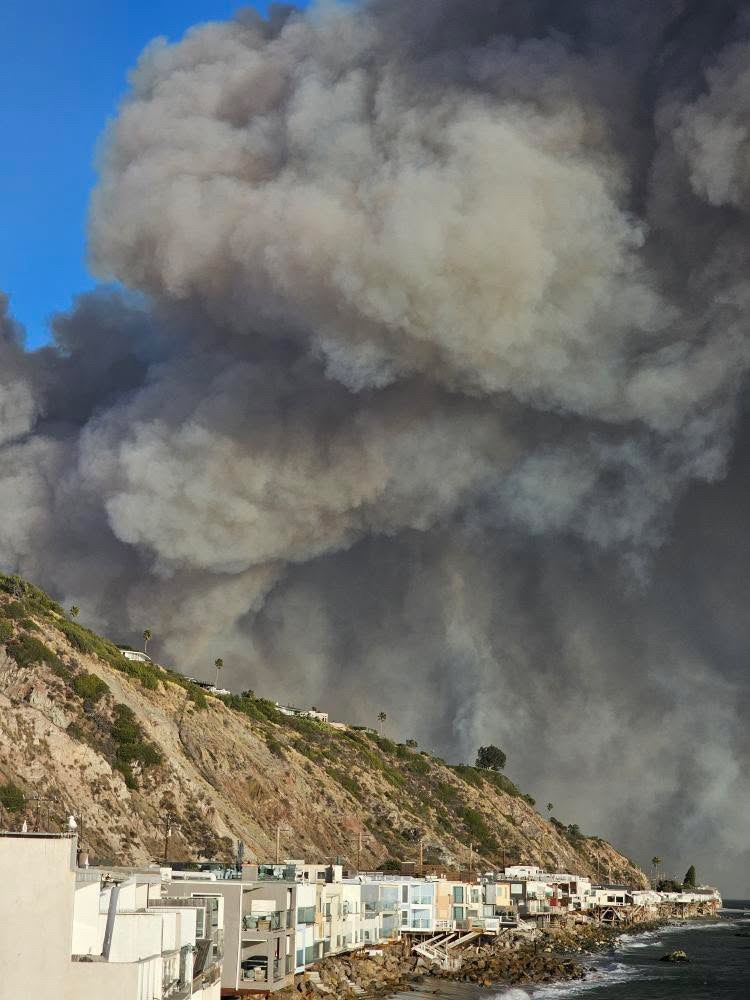
    Palisades Fire January 7th, 2025
    Palisades Fire January 7th, 2025

    That narrative is a lie. A deliberate, breathtaking lie. And the truth they worked so hard to bury has finally clawed its way to the surface.

    The Palisades Fire wasn’t a natural disaster, it was a manufactured catastrophe, the direct result of state interference, city negligence, abandoned protocols, and a political class more interested in protecting its image than protecting human life. And when the firestorm turned deadly, the same officials who failed residents scrambled to build a new firewall: a cover-up.

    What they didn’t count on Spencer Pratt.

    The reality TV star-turned-whistleblower has become the one thing City Hall didn’t prepare for: someone with receipts, a platform, and nothing left to lose. Pratt has been methodically dropping evidence that shreds the carefully staged official storyline, photos, manuals, call logs, insider accounts, state park directives, and contradictions hiding in plain sight.
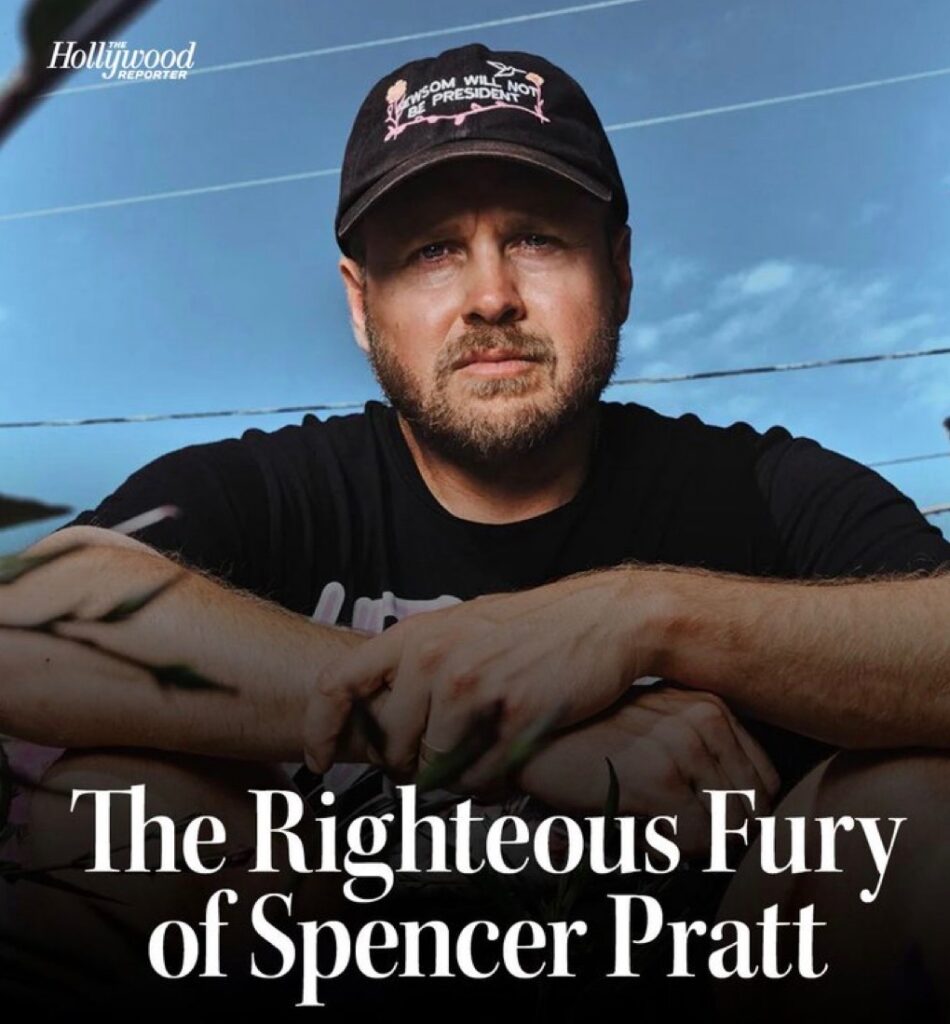
    His evidence isn’t speculation. It’s the blueprint of a cover-up.

    Let’s start with the biggest lie: that the Lachman Fire on January 1 was “fully extinguished.” LAFD leadership insisted on this point so aggressively you’d think they were trying to hypnotize the public. Chief Jaime Moore even told ABC7’s Marc Brown, in what might be the softest interview of the decade, that the fire burned “20 to 25 feet underground,” conveniently undetectable, and that crews followed standard protocols before leaving.

    Except they didn’t. Cold trailing, the most basic, non-negotiable mop-up procedure in wildland firefighting, never happened. The Los Angeles Times confirmed it. Firefighters confirmed it. And yet LAFD leadership kept parroting the claim as if repetition alone would rewrite the truth.
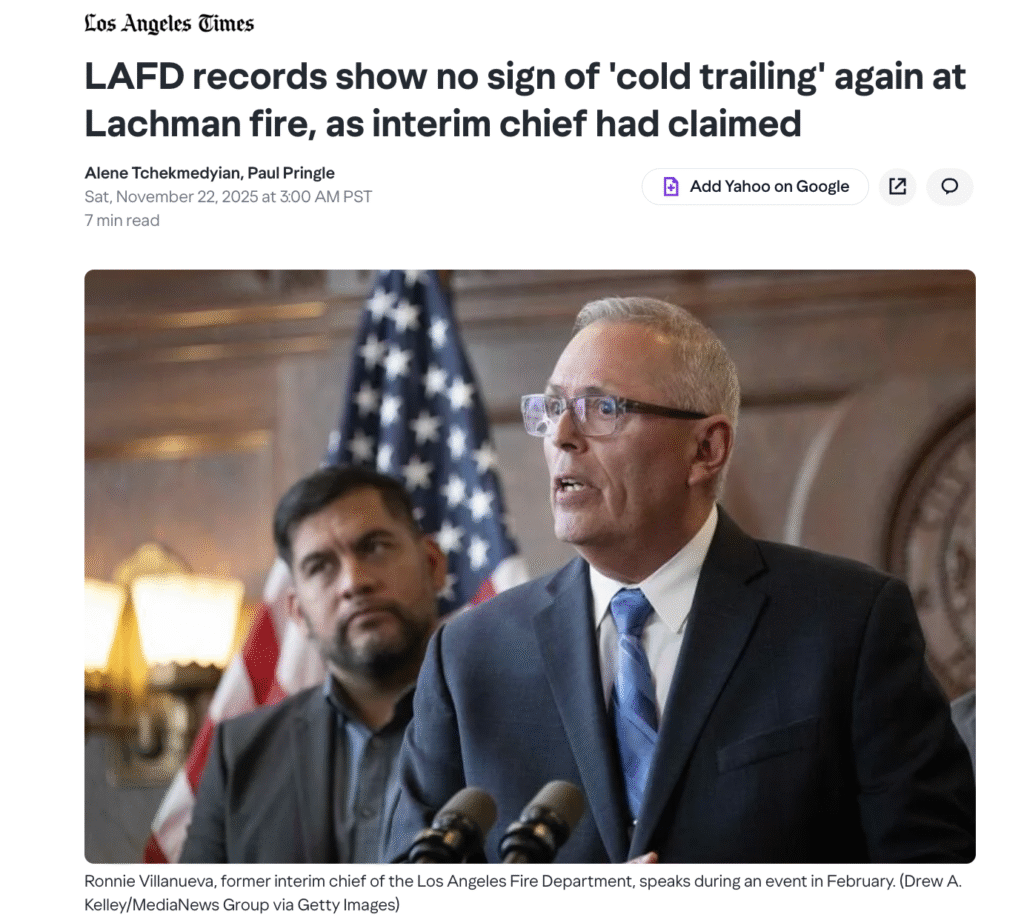
    Why skip cold trailing? Because the State of California tied their hands.

    Pratt released the Topanga State Park manual, a stunning piece of bureaucratic malpractice that restricted firefighters from using essential mop-up tools in so-called “avoidance areas.” Sensitive vegetation took precedence over stopping a potentially deadly fire. State parks insisted they weren’t present. Pratt posted photos proving they were. LAFD claimed state officials weren’t directing operations. Lawsuits say otherwise, alleging state reps blocked crews from doing the very work that would have prevented the catastrophe.

    The second lie, that Governor Newsom’s administration “didn’t know” about the Lachman Fire until January 7, collapses under the weight of documented phone call records showing state officials notified on January 1. The manual’s explicit directive encouraging “managed burns” tells you everything about the mindset that allowed a smoldering fire to sit unchecked for six days while officials congratulated themselves on “resource protection.”

    The third lie, that water systems played no role, is one of the most insulting. Residents watched hydrants spit air. Firefighters testified to low pressure at the Senate hearing. Pratt and Heidi Montag’s lawsuit lays out in devastating detail how two reservoirs were allegedly drained in the days leading up to the fire. And yet Bass and DWP leadership continue to shrug, insisting water infrastructure simply “isn’t designed for fires of this magnitude.”

    Right – but it’s apparently designed well enough for DWP chief Janisse Quiñones to stroll onto a stage and collect an LA Times leadership award as Palisades families sift through the rubble of homes that might have survived had there been water in the damn pipes.

    The fourth lie, that climate change, not human failure, drove this disaster – is the political equivalent of waving shiny keys to distract the baby. Brush hadn’t been cleared. Defensible space was ignored. State policy fetishized “natural burns.” Arsonist Jonathan Rinderknecht may have lit the match, but state and city negligence built the kindling pile.

    And the fifth lie, that reforms have “solved” everything, is the one Bass’s office clings to like a life raft. Moore pointed to new mop-up procedures, new trainings, a new wildland division, anything to look proactive. But these self-congratulatory measures are not progress, they are admissions. You don’t overhaul protocols that supposedly worked. You overhaul protocols that failed so catastrophically that twelve people died.

    Which brings us to the U.S. Senate investigation, the one Bass desperately wishes didn’t exist.

    Senators Rick Scott and Ron Johnson have peeled back the city’s PR varnish and exposed the rot beneath. Their November 13 field hearing in Pacific Palisades delivered the one thing Bass and Newsom have been avoiding: unfiltered public testimony. Residents recounted hydrants that failed, fire crews that never returned, bureaucrats who vanished, and leadership that hid behind press conferences instead of answers. Scott and Johnson have demanded Bass’s records. They’ve subpoenaed whistleblower letters calling LAFD’s After-Action Review a “fraud.”
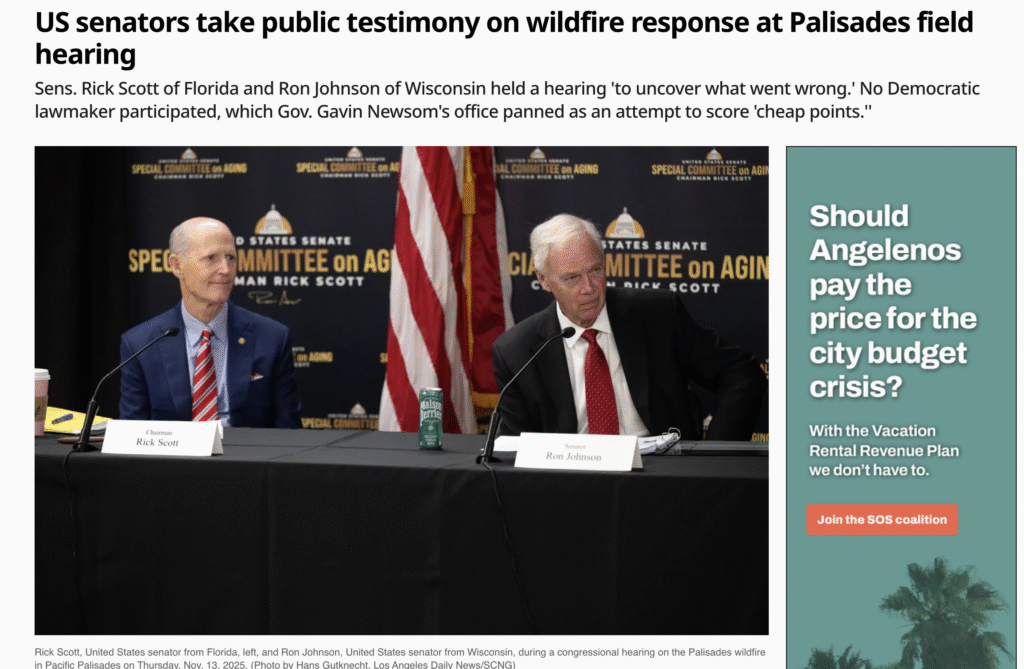
    And Newsom? He ducked them entirely during his Washington trip, a move that reeks of political self-preservation, not leadership.

    Meanwhile, the media, with rare exceptions, has been asleep at the wheel. Marc Brown’s interview with Chief Moore wasn’t journalism. It was damage control. Not one hard question. Not one challenge to the contradictions. Not one mention of lawsuits, manuals, state interference, or cold trailing. It was a masterclass in how legacy outlets help politicians rewrite history while the truth is still smoldering.

    Here’s the truth, stripped of PR varnish:
    The Palisades Fire was preventable. The deaths were preventable. The destruction was preventable. And the cover-up is ongoing.

    Residents aren’t mourning a natural disaster. They’re mourning the consequences of a political system that protects agencies, not citizens. A fire didn’t burn down Pacific Palisades — negligence did. And now, as federal investigators dig deeper, the city’s carefully orchestrated story is collapsing like the very homes it failed to protect.

    Bass can launch as many “internal reviews” as she wants. Newsom can dodge senators till kingdom come. LAFD can pretend mop-up tools were optional. But facts don’t vanish. Evidence doesn’t evaporate. And families who lost everything aren’t going away.

  • Palisades Fire Rebuilds on Track to Take 9-16 Years to Complete – Malibu Rebuilding Ambassador Exposes City Hall Derailing Fire Victims

    Palisades Fire Rebuilds on Track to Take 9-16 Years to Complete – Malibu Rebuilding Ambassador Exposes City Hall Derailing Fire Victims

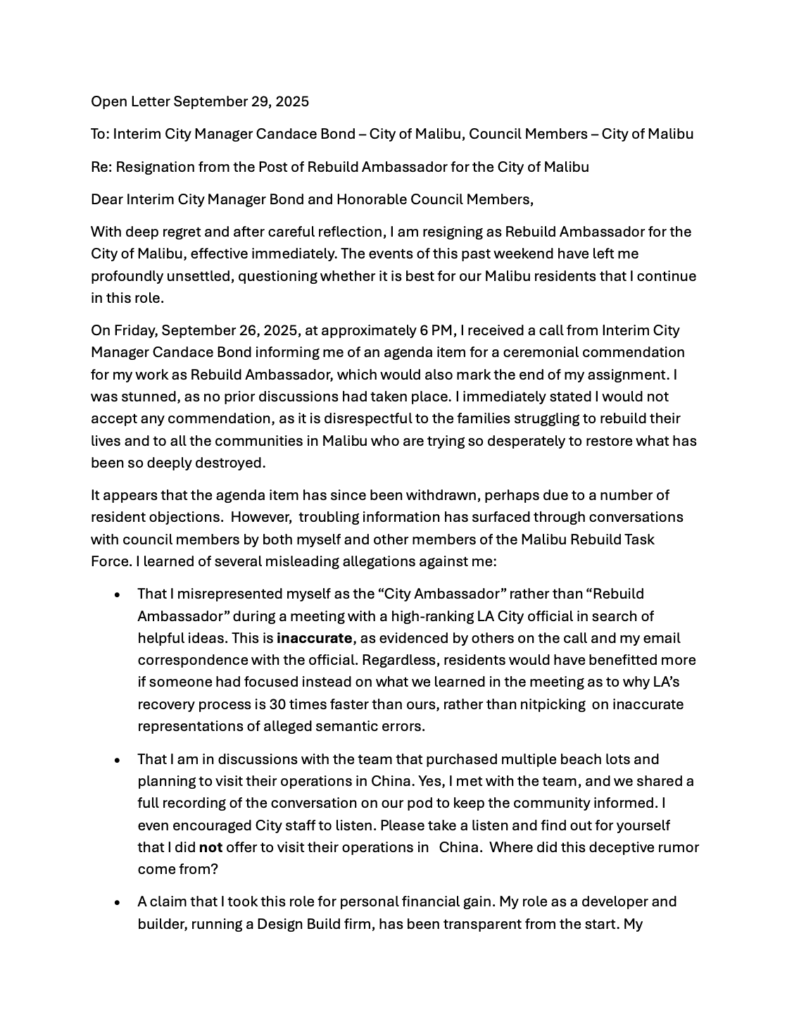
    The announcement blindsided residents and council members alike, arriving just before the September 29th Council meeting which amended its agenda to include a ceremonial commendation for Roy’s service.

    To many, the move reeked of politics. Families who trusted him to challenge a system “complicated by design” were left reeling. As one resident asked, “Why would the city remove a fellow resident that fire victims trust to deal with the collective power of City Hall?”

    The decision was not a coincidence. It was clearly orchestrated from the top. A decision was made after interim city manager Candace Bond complained directly to Mayor Marianne Riggins that Roy was “micromanaging” staff, resulting in Riggins taking a personal interest to eliminate his role. Council member Doug Stewart backed her, lending political cover to the mayor’s maneuver.

    By siding with Riggins instead of the very residents still fighting to rebuild, Stewart positioned himself not as an advocate for the displaced, but as complicit in their abandonment. What makes this betrayal all the more galling is Riggins’ own admission it took her more than five months to visit the burn areas. To Malibu’s displaced families, that confession was not simply tone-deaf, it was moral negligence. How can a mayor strip away their only advocate without ever standing in the ashes of their destroyed homes? How can Stewart defend her decision while families sleep in rentals and motels, their insurance running out, their futures uncertain? For victims, this is leadership in name only, absent when it counts, and dismissive when challenged.

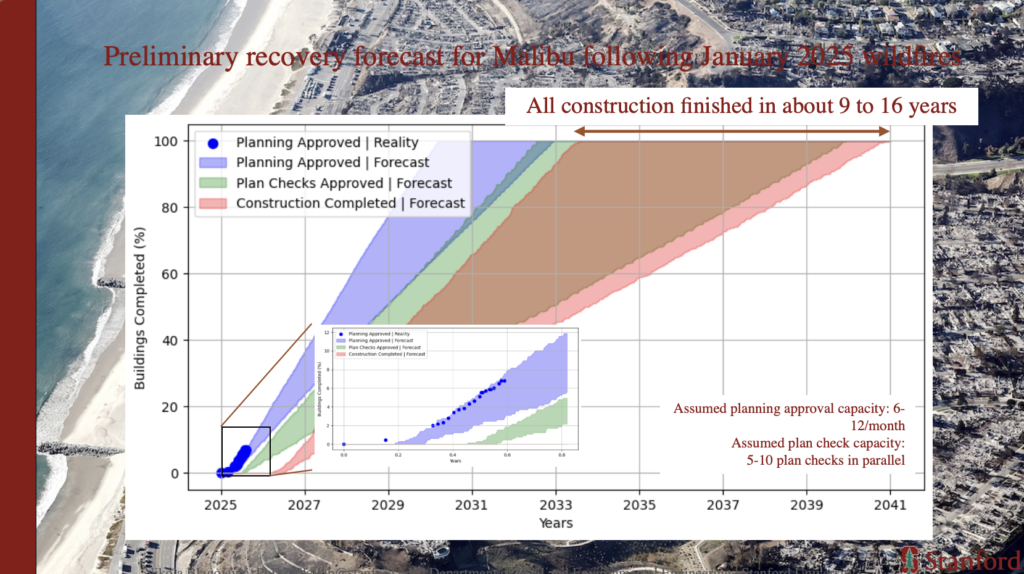
    Worse, Riggins was the one who personally demanded that Roy remove the damning slide from his first presentation to Council the slide that showed, based on Malibu’s current process, it would take nine to sixteen years for fire victims to rebuild. That single act of suppression transformed the crisis from incompetence into deception. By hiding the truth from the public, Riggins deliberately denied victims the transparency they deserve. This was not an isolated act either. Riggins has a history of orchestrating deals behind the scenes to benefit developers and staff over residents, most notably with the skate park project and in dealings with developer Steve Gillen, a pattern long noted by community watchdog Andy Lyon.

    The slide presented by Malibu Rebuild Ambassador Abe Roy that was removed from his presentation.

    For that reason alone, Riggins should be immediately removed from the city’s fire rebuild ad hoc committee. Her lack of empathy, her blatant disregard for fire victims, and her disdain for their truth were made clear in her attempt to eliminate Abe Roy without accountability or public input. A mayor who silences victims and buries the facts has no business overseeing Malibu’s path back from fire devastation.

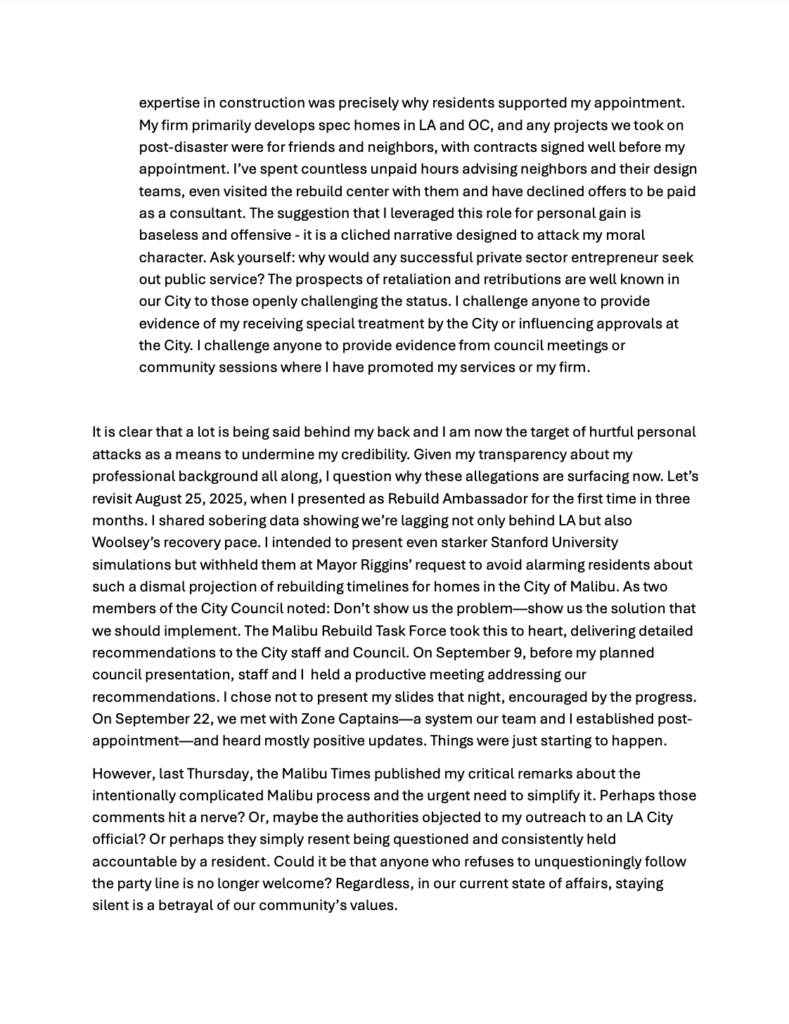
    Roy’s brief tenure had already produced results organizing Zone Captains in fire areas, created direct lines of communication between victims and staff, and pressed for reforms to cut through unnecessary red tape. He identified the stark contrast between Malibu’s process and Los Angeles City’s: LA has approved 40 percent of rebuild applications, while Malibu has managed just one percent, two permits out of 150 applications in nine months. “We’ve worked so hard to give residents hope and support. Why walk back the trust we’re building?” Roy asked.

    The dismissal of Roy has further inflamed anger. Residents credit him with preventing delays and forcing staff to address problems. Colin Drummond, a Big Rock resident, addressed the Council directly: “This whole Abe Roy fiasco is disturbing. It’s premature, and it’s confusing. Abe has been telling the truth, that the rebuilding process is complicated by design and needs to be uncomplicated for fire victims. He’s offered practical solutions, consolidating corrections, reducing consultant dependency, and putting fire rebuilds ahead of discretionary projects. Our homes are burning down faster than we can build them. We face unreliable water, brush we can’t clear, homes without defensible space. And we have no city manager. Five good people up here can only speak to each other every two weeks. My nephew would call this a Gong Show. Ending Abe’s role at this moment sends the worst possible message. Malibu needs vision and leadership, not silence.”

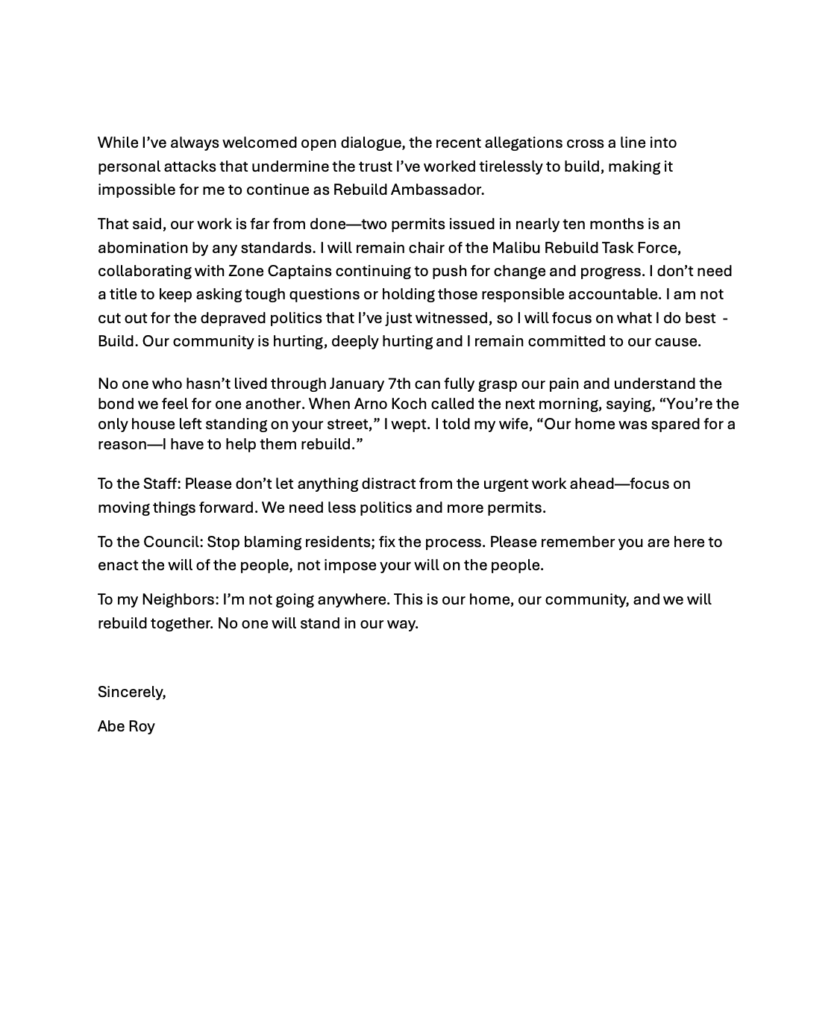
    Roy himself has suggested that his removal was retaliation for speaking too candidly. In his resignation letter, he pointed to “intentionally complicated” processes, allegations spread behind closed doors, and efforts by city leadership to downplay data showing just how far Malibu has fallen behind. He noted that after he published remarks criticizing the City’s rebuild system, rumors surfaced accusing him of misrepresenting his title, seeking personal financial gain, or planning foreign business trips. He dismissed each as false. “The suggestion that I leveraged this role for personal gain is offensive,” Roy wrote. “Ask yourself: why would any successful private sector entrepreneur seek out public service? The prospects of retaliation are well known in our City to those challenging the status quo.”

    The numbers speak louder than any defense. Malibu has roughly 4,300 households. Nearly one in four families remain displaced from recent fires. From the Palisades Fire alone, two permits have been issued in nearly a year. The Woolsey Fire, now seven years past, still has more than 70 applications unresolved. At Malibu’s current pace, families will be waiting decades.

    The longer the process drags, the more families will be forced out. Rental insurance is running dry. Parents with children in Malibu schools are preparing to leave permanently. The people who gave Malibu its identity and “soul” are disappearing. As Roy warned, “Stop blaming residents; fix the process. You are here to enact the will of the people, not impose your will on the people.”

    The Malibu Rebuild Task Force has outlined clear solutions: accept existing soils data, and give options to waive geotechnical reports using existing soils and compaction data, fast-track rebuilds where homes stood safely for decades, use neighbor reports as benchmarks, and publish progress transparently, reduce the administrative steps such as difficulties in uploading documents, etc., requiring multiple affidavits, and streamlining corrections to one review – this alone will save fire victims at minimum 6-12 months in the application process to achieve a rebuild permit. Instead, Council has chosen to silence one of the few advocates who had credibility with fire families.

    For residents who lost everything, it’s about survival. Malibu has already failed one generation of fire victims. If City Hall continues to stall, it risks failing another. Families are not asking for shortcuts, they are asking for fairness, urgency, and compassion. Whether Malibu’s leaders can deliver on that will decide if these families come home, or if the city loses them forever.

  • Using Crisis as a Career Opportunity: Former Embattled Malibu City Manager Resurfaces in Yet Another Fire Related Scandal

    Using Crisis as a Career Opportunity: Former Embattled Malibu City Manager Resurfaces in Yet Another Fire Related Scandal

    They say lightning doesn’t strike twice, but Malibu knows better.

    In just seven years, another wildfire scorched through the region, this time gutting areas that had barely escaped the wrath of Woolsey. But the flames weren’t the only thing making a comeback.

    Adding insult to injury, Reva Feldman, the former Malibu city manager whose disastrous handling of the Woolsey Fire cemented her infamy, is now entangled in yet another fire related scandal. This time, it’s the misappropriation of FireAid funding meant to go to those directly impacted by the Palisades and Eaton Fires. Instead, the money was quietly funneled to a nonprofit hundreds of miles away, where Feldman just happens to sit on the board.

    “After the Fire”, a non-profit based in Sonoma, sounds like a noble cause, but when you dig beneath the branding, the organization reveals itself as a buzzword factory, spewing phrases like “coaching,” “collaborating,” “multigenerational power building,” and “civic engagement.” What it doesn’t do is provide direct relief to fire victims, which is exactly what FireAid donors were told their money would support.

    And yet “After the Fire” got a chunk of the FireAid windfall, despite operating hundreds of miles from the neighborhoods obliterated by the January firestorms.

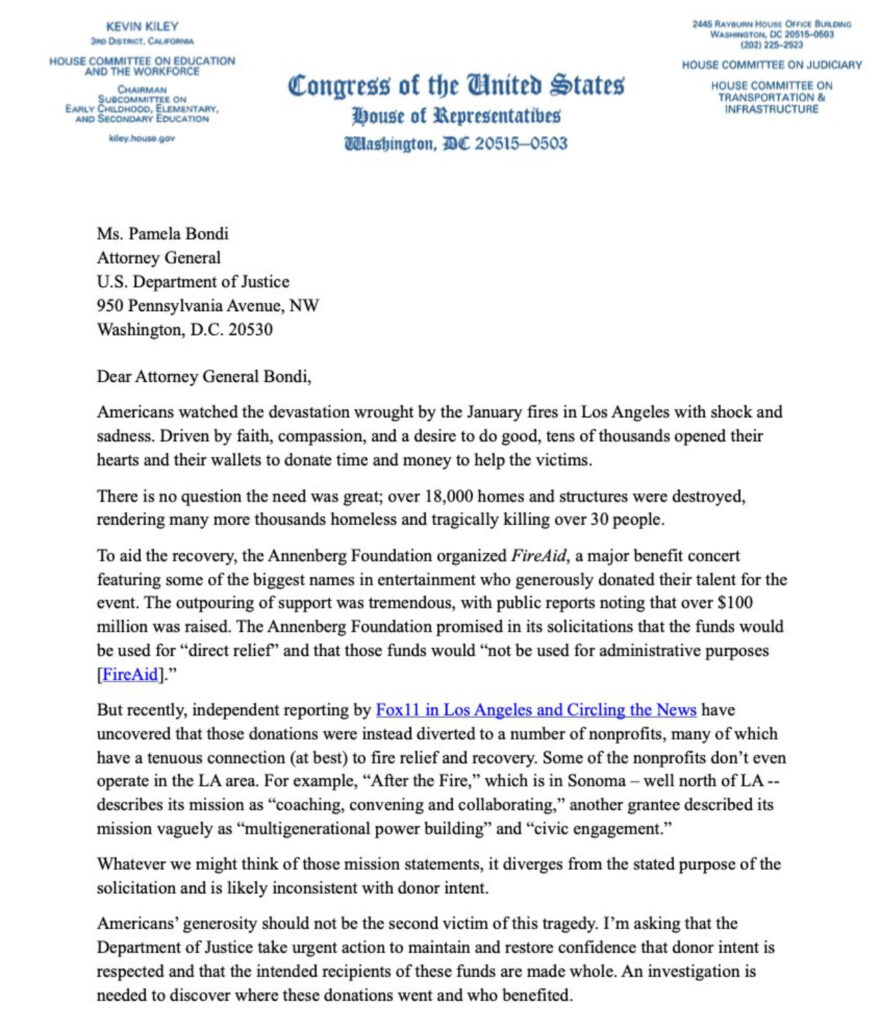
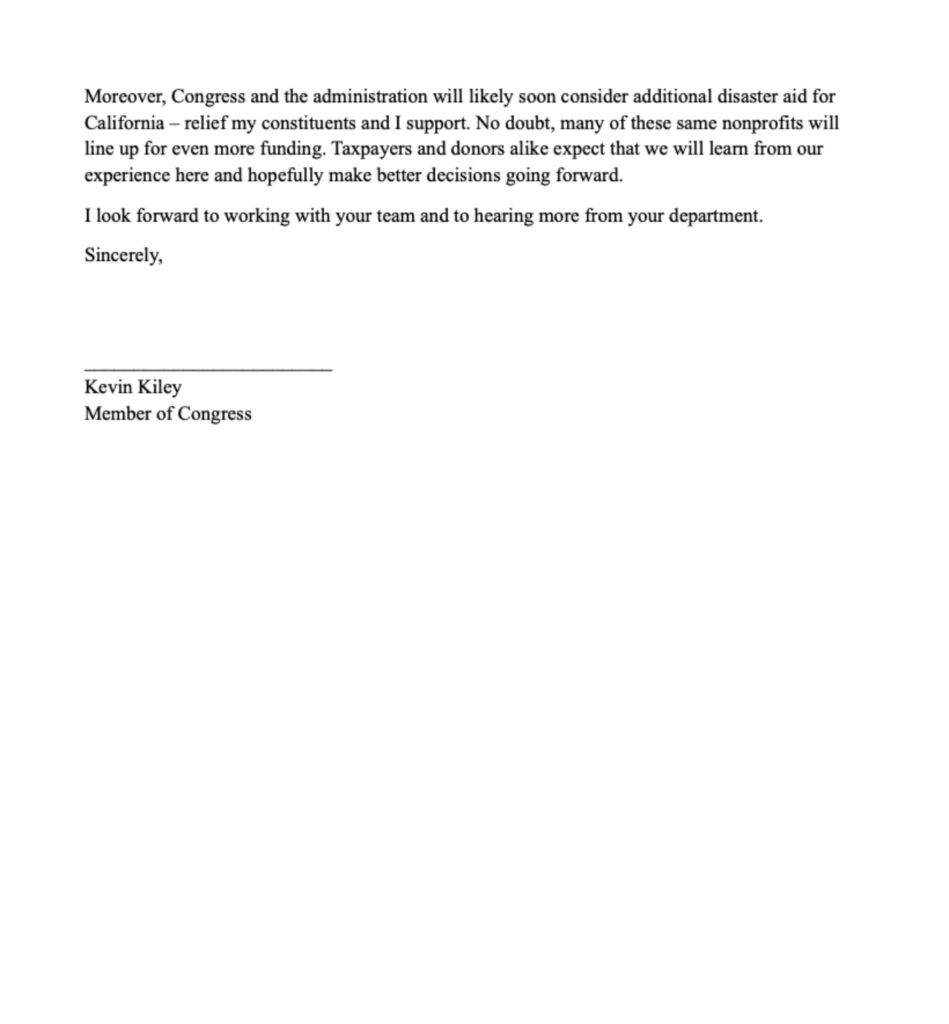
    It’s a bait-and-switch flagged by Congressman Kevin Kiley, who issued a scathing letter to Attorney General Pamela Bondi this week demanding an investigation.

    In his words, groups like “After the Fire” have “a tenuous connection (at best) to fire relief and recovery.”


    The letter also sharply criticizes the diversion of funds from intended victims, warning that this disconnect between solicitation and disbursement may violate donor intent, and calls for a federal investigation into where the money actually went, and who benefited.

    REVA RESURFACES IN YET ANOTHER FIRE RELATED SCANDAL

    Feldman’s tenure in Malibu was marred by public outcry over her handling of the 2018 Woolsey Fire, failure to advocate for Malibu during crisis evacuations, and controversial city hall conduct that ultimately forced her resignation. Her departure came with a hefty payout, funded by taxpayers, and a separation agreement that avoided further scrutiny of her performance.

    Now, Feldman resurfaces in yet another fire-related scandal, this time tied to a nonprofit that benefited from a highly publicized disaster relief fund. Coincidence? Unlikely, given her track record of leveraging tragedy for personal gain and profiting off disaster at the expense of the very community she was entrusted to serve.


    It’s unclear what role Feldman played in securing funds for After the Fire. What is clear, however, is that the organization is among the nonprofits Congressman Kiley now says need to be scrutinized for misalignment with the original purpose of the FireAid campaign.

    COMPLICIT OR CLUELESS?

    The Annenberg Foundation has remained silent as the FireAid scandal erupts into a firestorm of controversy.

    But the facts demand answers.

    Who chose the grantees?  Who reviewed their qualifications? And why were groups like “After the Fire”, based far outside the disaster zone, deemed worthy of donation dollars, while families in Pacific Palisades, Topanga, and Malibu were denied assistance?

    Taxpayers and donors didn’t shell out to fund a networking nonprofit in wine country. They gave with the expectation that their money would go to the victims of the January firestorms, not disappear into a boardroom full of buzzwords masquerading as disaster relief.

    The people deserve transparency, not just from the nonprofits, but from the Annenberg Foundation itself, which has yet to explain why groups like “After the Fire’, with no direct connection to the affected areas, were given a seat at the table.

    And if Reva Feldman thought no one would notice her fingerprints on this fire fund fiasco, she clearly underestimated those of us who never stop watching where political corruption leads next.

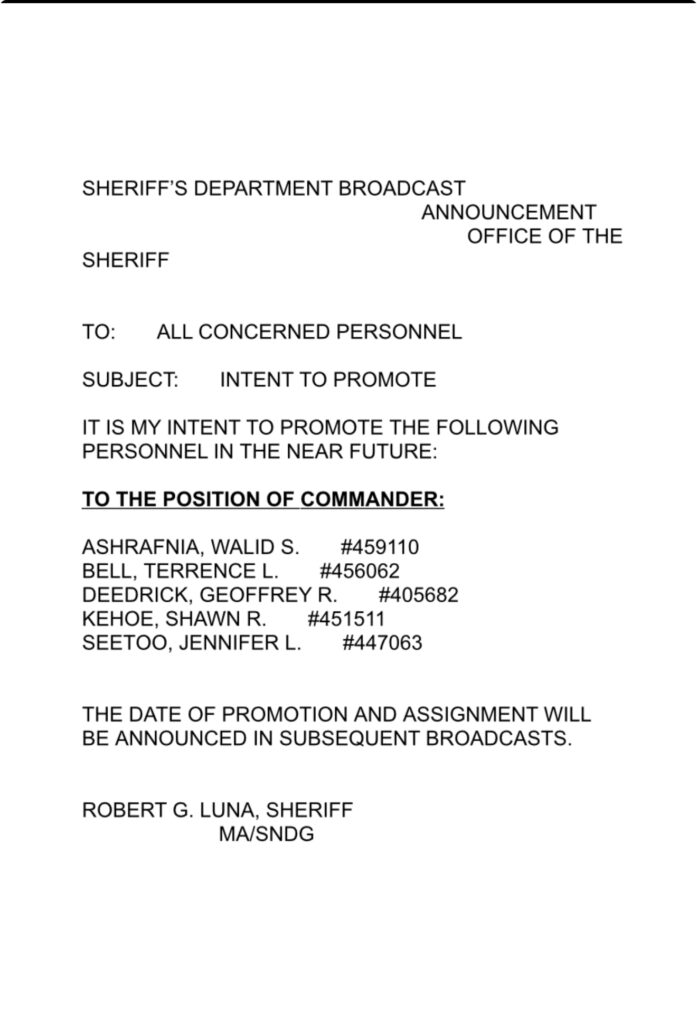
  • Promoted or Protected? Commander Jennifer Seetoo’s Rise Through the Ranks Reeks of Politics, Not Merit

    Promoted or Protected? Commander Jennifer Seetoo’s Rise Through the Ranks Reeks of Politics, Not Merit

    In a department drowning in scandal, buried misconduct, and zero public confidence, Sheriff Robert Luna just slid Malibu/Lost Hills Captain Jennifer Seetoo into a shiny new Commander title – and did it with all the subtlety of a backroom deal in a burning building.

    Let’s be real: this wasn’t a promotion, it was a political payoff dressed up as leadership.

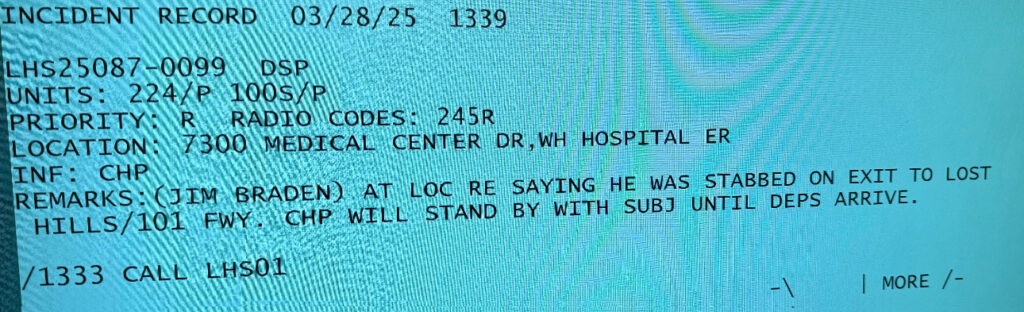
    The move came just as the Malibu/Lost Hills Station is embroiled in yet another bombshell scandal, this one involving retired Lieutenant Jim Braden, once highly respected in the Malibu community, and among the station line staff… until March 28th when the wheels came off the wagon and his shady activity was under a bright spotlight.

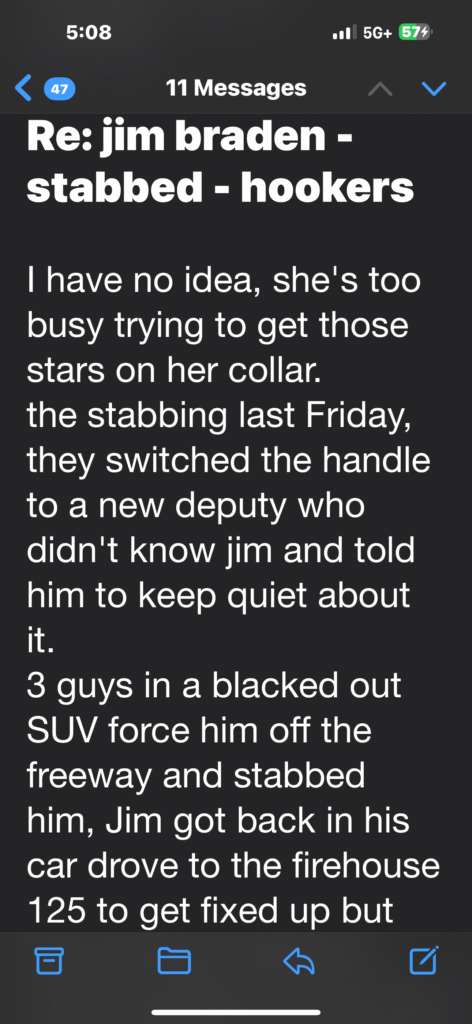
    On March 28th, Braden was reportedly stabbed after allegedly refusing to pay a sex worker.

    That’s just the beginning of what we are now learning is one of a series of disturbing incidents involving Braden, actively being covered up by the Lost Hills Station over the last three years.

    The Braden Bombshells

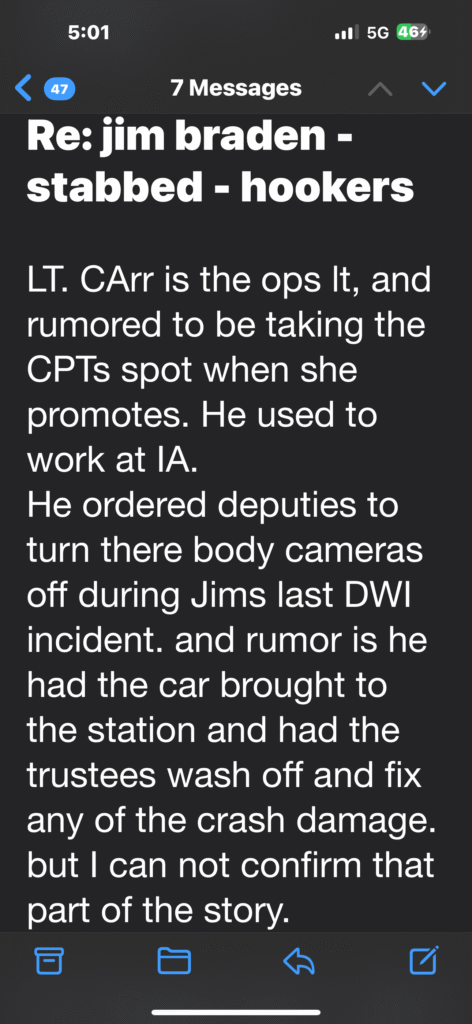
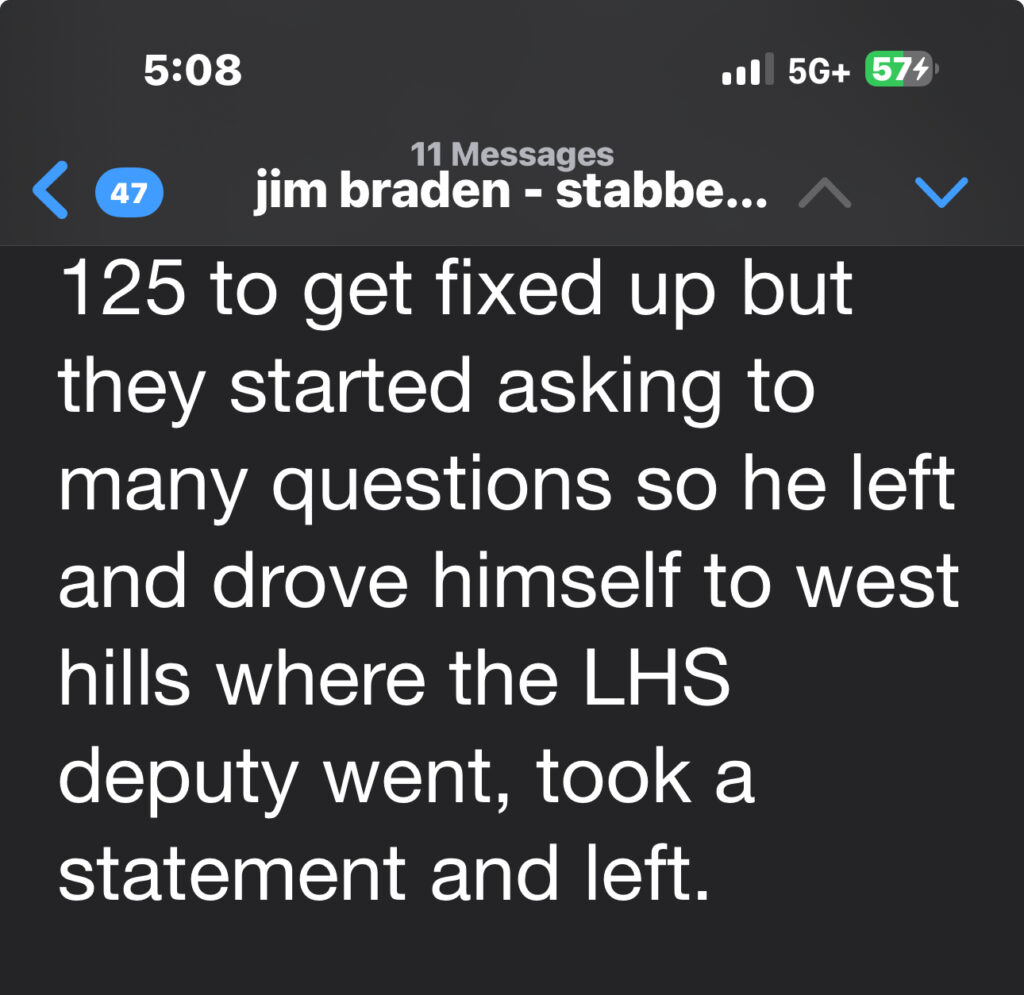
    The stabbing incident didn’t just expose Braden’s double life; it kicked open a door to a vault of dirty secrets buried under Seetoo’s command. Multiple sources say Braden was involved in a DUI incident that responding deputies attempted to handle… until they realized who was behind the wheel. According to those inside the station, OPS Lieutenant Dustin Carr ordered body-worn cameras shut off, and Braden’s vehicle was mysteriously “cleaned up” at the station. You know, standard operating procedure—if you’re trying to obstruct justice.

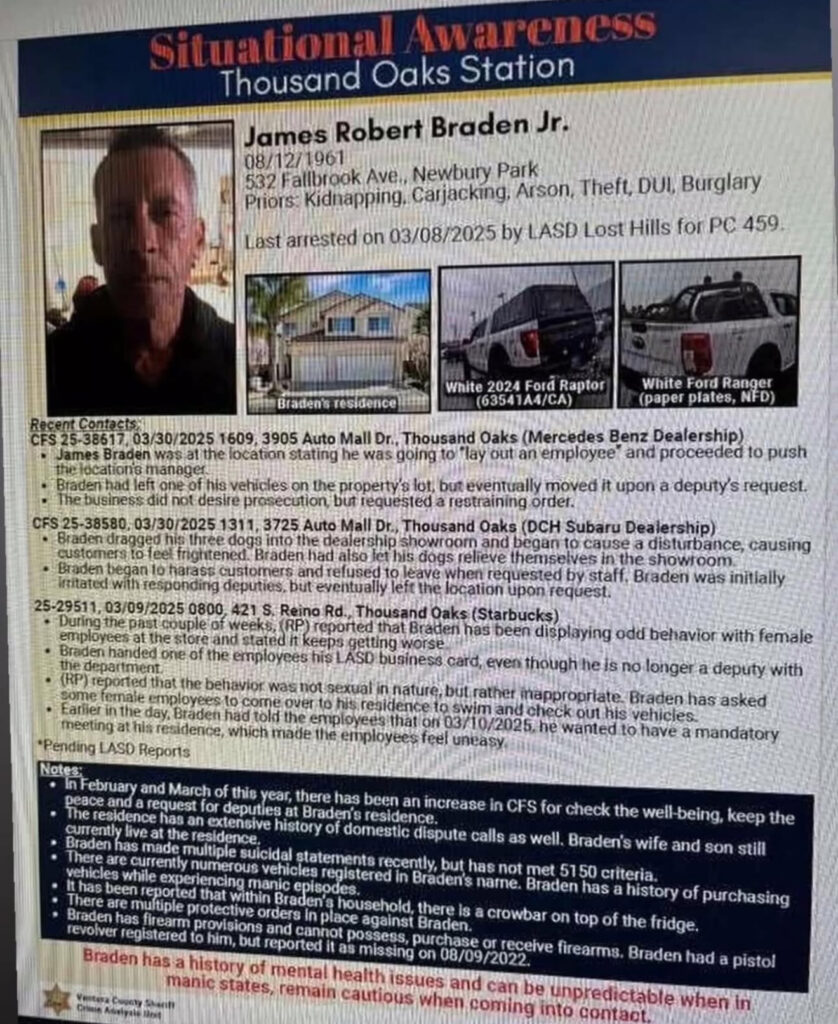
    In case anyone thought this was an isolated case, Braden’s ongoing criminal behavior was documented in an internal bulletin from the Ventura County Sheriff’s Department. Which begs the question…how many incidents were swept under the rug while Seetoo looked the other way—or worse, participated in the cover-ups?

    Fire, Ego, and a Breakdown in Command

    Seetoo’s judgment wasn’t just questionable behind the desk—it was also a failure in the field. During the Palisades and Eaton fires, a pissing match of egos broke out between agencies, with Cal Fire’s red hats clashing with LASD command over who was in charge. The Rose Bowl Incident Management Team had to step in and assert authority, citing potential criminal elements behind the fires that could lead to murder charges.

    And who muddied the chain of command? You guessed it… Captain Seetoo, who reportedly inserted herself into IMT operations – a direct violation of IMT protocol. According to sources, her interference caused confusion and chaos during a life-threatening emergency.

    As Cal Fire reportedly “drove right over her and the Palisades IMT,” the Rose Bowl team had to clean up the command mess – because apparently, Seetoo couldn’t even follow her own department’s playbook.

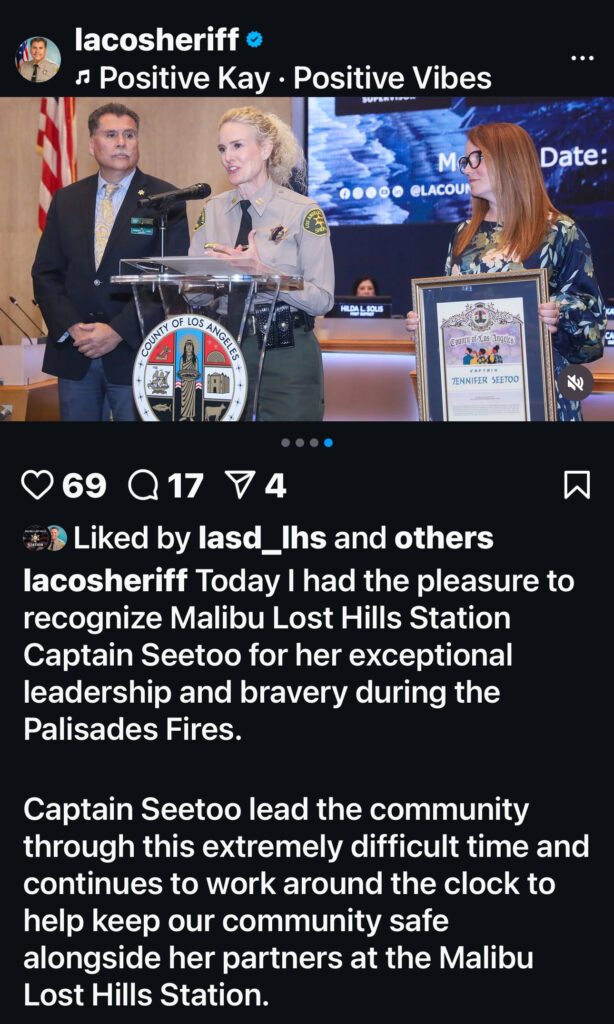
    And instead of discipline, Sheriff Luna decided Seetoo was more deserving of an award for “bravery” during the Palisades Fire response. 

    Arrive Alive

    Shortly after four Pepperdine students were tragically killed on PCH, Seetoo launched a public safety campaign to much fanfare. Meanwhile, behind the scenes, Malibu Search and Rescue – under her command – was launching a craft beer collab with a local brewery.

    The cans were slapped with the silhouette of LASD’s Air 5 rescue helicopter – because nothing says “we take public safety seriously” like using a life-saving aircraft emblazoned on a beer can served at an event inside Malibu Creek State Park – where drunk drivers would potentially leave drunk, turning on to the canyon roads where accidents are routinely airlifted out by the very team now hawking the public safety branded craft beer.  The level of ignorance, and the timing, is mind numbing. Literally and figuratively.

     The Coup No One Talks About

    Seetoo’s fast-tracked promotion has long been a point of controversy. In May 2022, council members from multiple cities told the Malibu Daily News they were completely blindsided by her appointment as Captain. Four out of five city managers had reportedly indicated their choice was Acting Captain Joe Fender.

    So what happened? According to city insiders, Malibu City Council members Mikke Pierson and Karen Farrer pulled a political stunt, pressuring city managers to flip their support to Seetoo – without input from their councils. The move reeked of a backroom deal, and the fallout was immediate: frustration, distrust, and disillusionment.

    Meanwhile, during the compromised Captain selection process, Seetoo was suing the department for discrimination – because allegedly she wasn’t getting promoted fast enough.

    Communication is Key

    At the PCH Taskforce meeting held in the wake of the horrific crash that killed four Pepperdine students, L.A. County Supervisor Lindsey Horvath offered praise that aged like milk. “We know you are working closely with the city,” Horvath gushed to Lost Hills Station Captain Jennifer Seetoo.

    Except… she actually wasn’t.

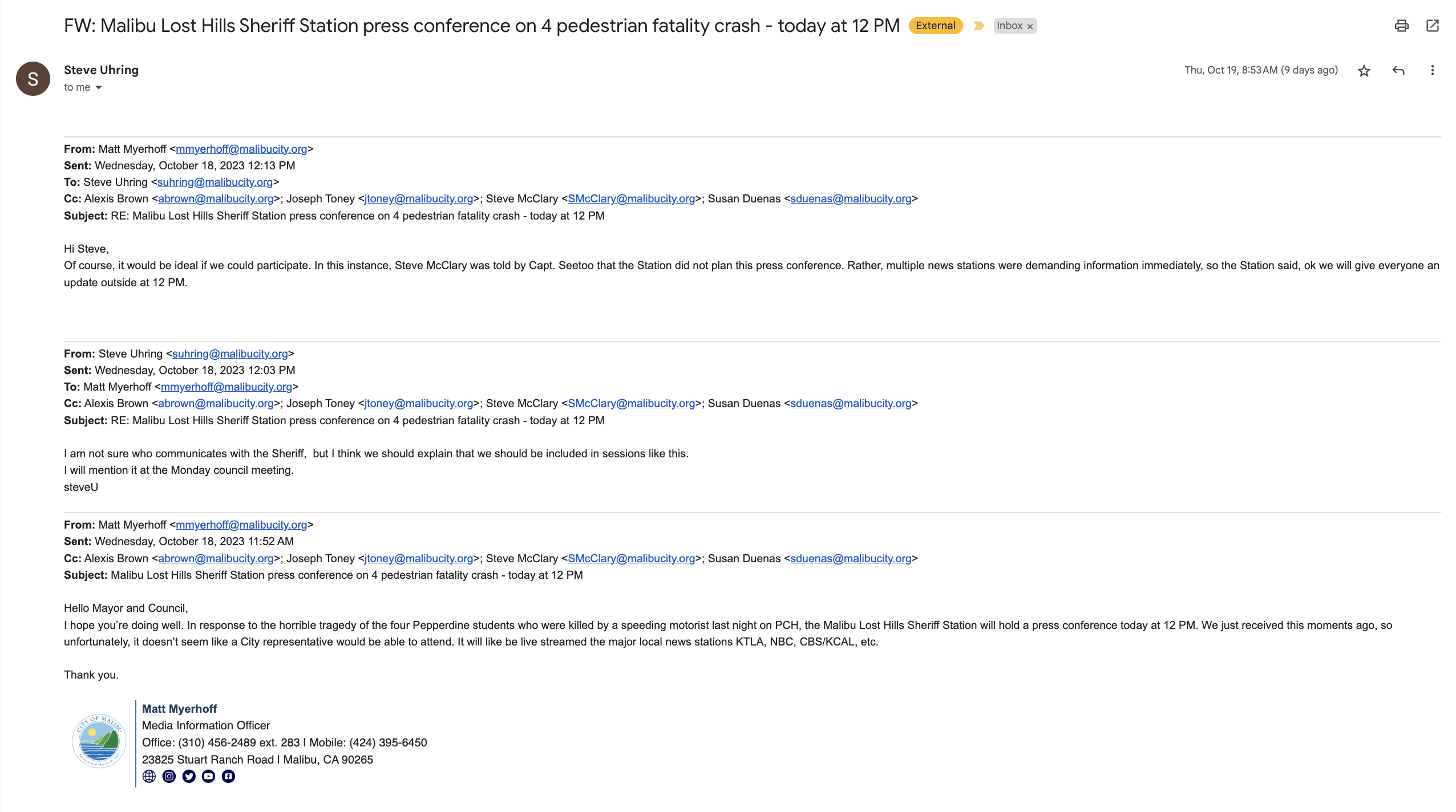
    Clearly, Horvath missed the memo—assuming one even existed—about the calculated communication blackout Seetoo orchestrated to exclude Malibu officials from a critical press conference regarding the fatal crash. The briefing was held at Lost Hills Station, 19 miles from Malibu City Hall, and city officials were given a whole seven minutes’ notice via email. That’s not “working closely”—that’s sabotage.

    Captain Seetoo’s move wasn’t just a logistical fumble—it was a deliberate power play, one that snubbed Malibu leadership and made a mockery of the $15 million contract the city pays annually for LASD services. Apparently, the price tag doesn’t come with common courtesy.

    Malibu Mayor Steve Uhring was justifiably livid, blasting the department’s opaque handling of the tragedy:

    “I was not getting information from the city staff or the Sheriff… we have some communication issues that we need to learn how to deal with with the Sheriff,” Uhring told Malibu Daily News.

    Let’s be clear: this wasn’t a simple scheduling snafu. It was a slap in the face to a grieving community and its elected officials—one more example of the growing dysfunction between LASD leadership and the city they’re supposed to serve.

    While Malibu’s elected officials were iced out of the press conference, Captain Jennifer Seetoo made sure her favorite PCH safety influencers had front-row seats. Multiple activists she’s cozied up to were given ample notice to attend the high-profile event—because when it comes to image control, Seetoo plays favorites like a seasoned politician.

    Meanwhile, Malibu Daily News was tipped off by sources at LASD HQ—not Seetoo herself—at 9 a.m. that a press conference would be held at noon. That’s how the public and the press found out: not through local coordination, but through backchannel scrambling.

    And once the cameras rolled, Seetoo wasted no time shamelessly plugging her station’s social media—yes, those were her actual words—as if Instagram clout could erase a legacy of inaction. The Lost Hills Station feed had suddenly become flooded with posts touting speeding citations and impounded cars in the days following the tragedy. A PR blitz disguised as enforcement.

    But residents weren’t buying the photo-op policing. On social media, outrage boiled over. The consensus was scathing:
    “Where was the Sheriff’s Department before these young women were killed?”

    The 180-degree shift in enforcement didn’t inspire trust—it exposed a department in damage control mode, trying to save face after failing to save lives.

    Back in 2019, communication – or the lack thereof – was already a glaring issue for Captain Seetoo, who at the time was a lieutenant tasked with overseeing comms at Lost Hills Station during the first fire season post-Woolsey.

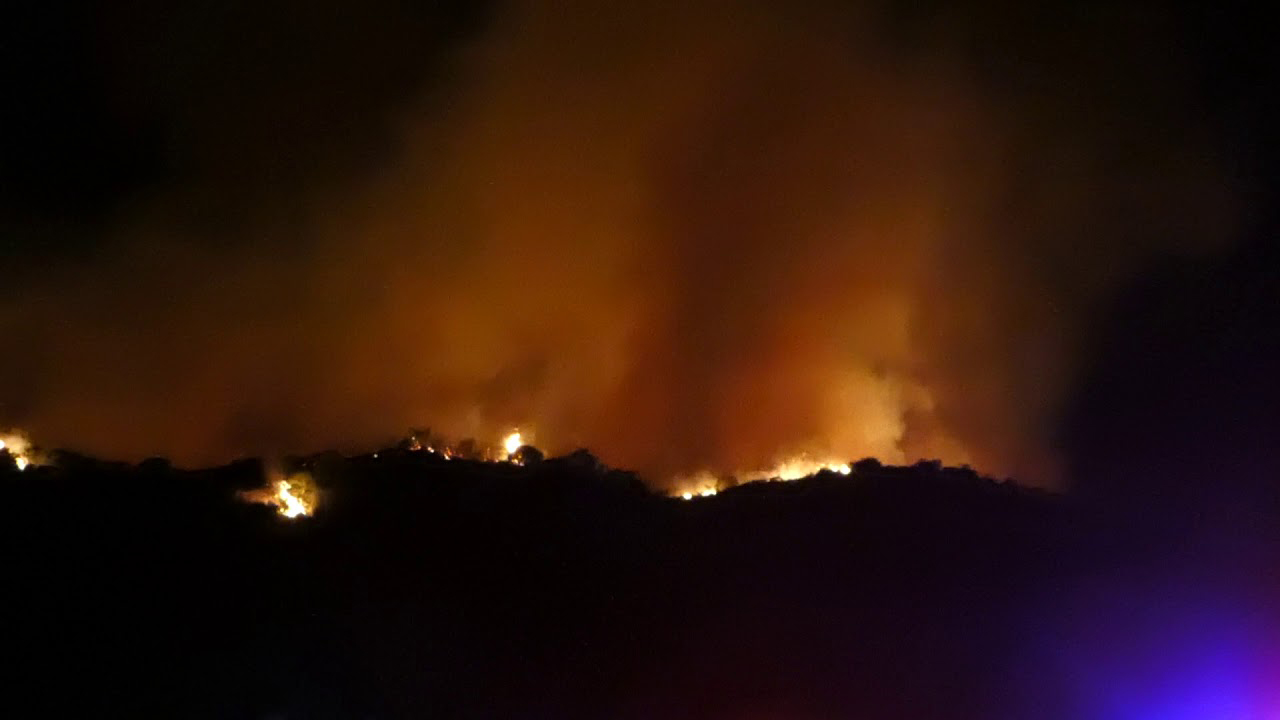
    On the night of Thursday, October 10, 2019, as the Wendy Fire was being reported across social media, panic began to spread faster than the flames. What locals didn’t know – because no one bothered to tell them—was that firefighting efforts had successfully halted the blaze near Point Mugu State Park.

    But residents in Decker Canyon could see flames glowing in the distance before 10 p.m. and heard nothing from authorities. No alerts. No wind forecasts. No preparation instructions. Just radio silence.

    Neither Lost Hills Station nor the City of Malibu offered a shred of real-time guidance. So, like clockwork, those with livestock and large animals – who had been burned before, literally and figuratively – took matters into their own hands, organizing voluntary evacuations in the dark with zero help from the people who are supposed to protect them.

    It was a preview of what’s become a pattern: when crisis hits, the only thing Malibu residents can rely on is each other – not their $15 million-a-year LASD contract.

    The Wendy Fire in 2019.

    Anxiety reached a fever pitch with residents posting on social media their concerns over the flames visible from the Wendy Fire, and smoke filling the canyons from different directions. The City of Malibu sent out only one alert at 8:23 p.m., and no further updates as flames became more visible from canyons looking down the coastline.

    Lt. Seetoo was contacted multiple times regarding updates as there was no information from the station posted on social media. She stated there were no fires in the canyon and that the smoke was coming from fires burning in the San Fernando Valley. Malibu Daily News strongly suggested to Lt. Seetoo that the station needs to post updates to calm residents who were anticipating evacuations based on the smoke filling the air in the canyons.

    After three solid days of failing to update the community, photos of the station’s Twitter account was sent directly to then-Sheriff Alex Villanueva. The posts clearly showed the blatant failure to communicate with residents during a critical time and the first fire season after Woolsey. Shortly after, Lt. Seetoo was transferred to the West Hollywood station.

    Even more startling is that Captain Seetoo was Acting Captain of the station during the Woolsey Fire and had full knowledge and hands-on experience witnessing the magnitude and the destruction these wildfires cause, and yet she still failed to take control of the situation during the first fire season after Woolsey.

    Villanueva took the issue very seriously and mandated station personnel to go through social media training. In 2020, Lt. Chuck Becerra was promoted to Captain taking command of the Lost Hills station. Becerra contacted Malibu Daily News to help facilitate introductions with key members in the community who could help with emergency preparedness and assistance developing a better overall messaging strategy to reach more residents during a disaster or critical incident.

    A comprehensive social media plan was devised including tagging all local media at the end of every emergency post to ensure the messaging was reached as many residents as possible (the same strategy was also suggested to Villanueva for LASD HQ social media. An internal power struggle stopped it dead in its dead tracks which is unfortunate as it would have been viewed as an olive branch to the press, which was much needed at the time).

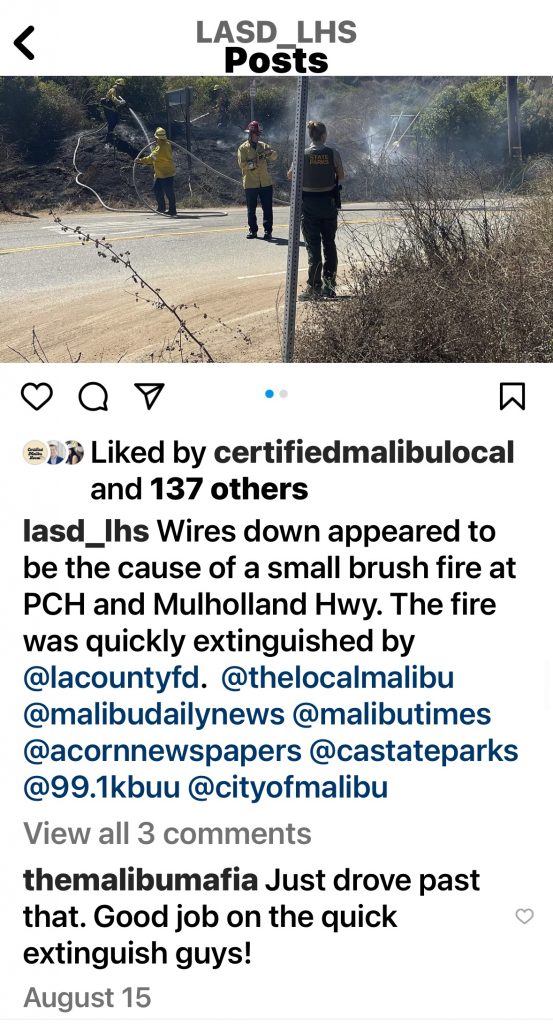
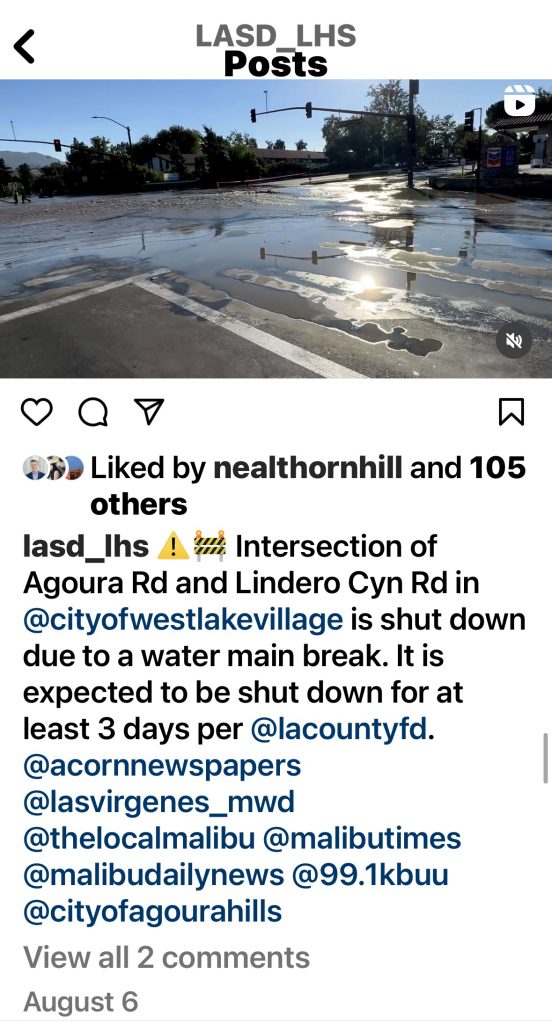
    The strategy was successfully implemented at the station level and continued until The Current Report and Malibu Daily News articles exposed Sheriff Luna’s failures, and Captain Seetoo’s failures at the Lost Hills Station under her command.. Shortly after the articles were published, The Local Malibu and Malibu Daily News social media accounts were excluded from all Lost Hills Station emergency posts.

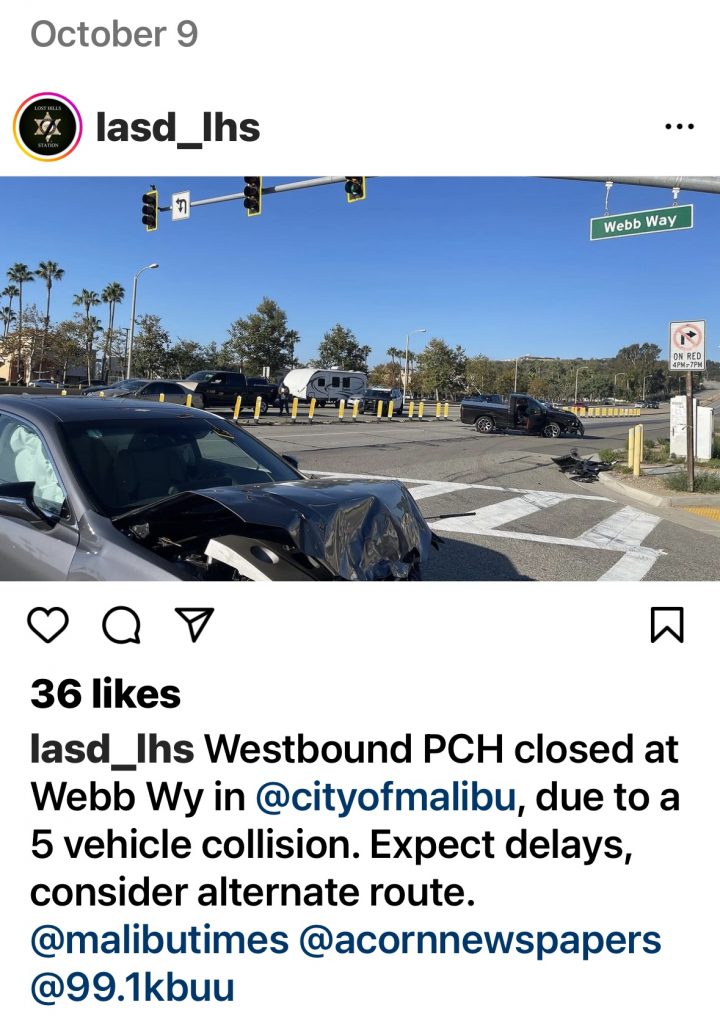
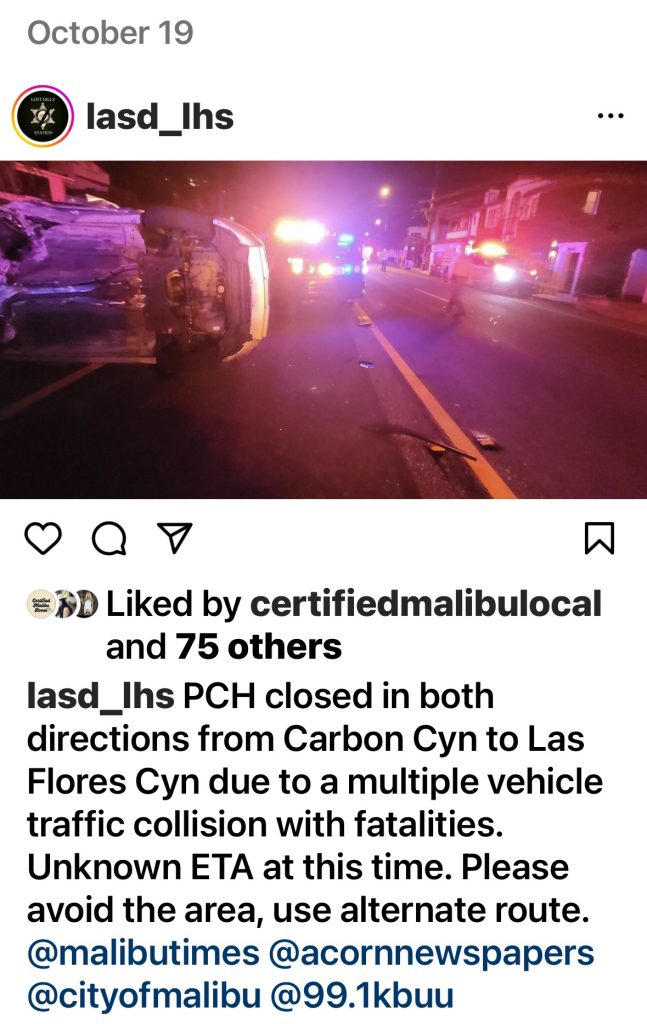
    Including the post notifying the community of the October 17th crash that killed the four young women.

    BEFORE

    AFTER

    A purposeful (and retaliatory) act, not in the best interests of the safety of the community and contrary to the statement Captain Seetoo made at the PCH Task Force meeting: “We must do this together as a community. We must do this together to save lives.” she said

    A Commander of What, Exactly?

    During, and at the end of  Seetoo’s watch, Malibu/Lost Hills has descended into internal chaos. Complaints were mounting. The Malibu/Lost Hills region was losing faith under her failed leadership, and yet, the May 10th fundraising event in support of Sheriff Luna’s re-election bid hails her as “Malibu’s most powerful community leader.”

    Powerful? Not by anyone actually paying attention.

    Final Thought: Promotions or Payoffs?

    Sheriff Luna may think quietly promoting Commander Seetoo will deflect attention from the department’s implosion, but the facts say otherwise. Cover-ups, chaos, cronyism—this isn’t leadership. It’s a masterclass in corruption.

    The 2026 race for Los Angeles County Sheriff isn’t just pivotal — it’s a five-alarm political reckoning. Sheriff Robert Luna announced his re-election bid last November, shamelessly asking for four more years after a term defined by scandal, spin, and strategic cowardice. Across LA, one question echoes louder than a siren: how much more damage can one sheriff do?

    The answer? A hell of a lot.

    Another four years under Luna wouldn’t just be a step backward – it would be the final nail in the coffin of what was once the most respected sheriff’s department in the nation. Under his failed leadership, LASD isn’t being reformed – it’s being dismantled, one tone-deaf decision at a time.

  • Traci Park’s Web of Hypocrisy: The Truth Behind the Pacific Palisades Fire Disaster

    Traci Park’s Web of Hypocrisy: The Truth Behind the Pacific Palisades Fire Disaster

    As Pacific Palisades and Malibu residents pick through the ashes of 6,000 homes destroyed in the catastrophic fire earlier this month, a chilling truth emerges: much of this devastation was preventable. At the heart of this failure lies Councilwoman Traci Park, whose actions in defunding the Los Angeles Fire Department (LAFD) last year directly contributed to the department’s inability to respond effectively to the disaster. Yet, rather than take accountability, Park has launched a full-scale public relations campaign to distract her constituents from her catastrophic leadership.

    The Unforgivable Vote

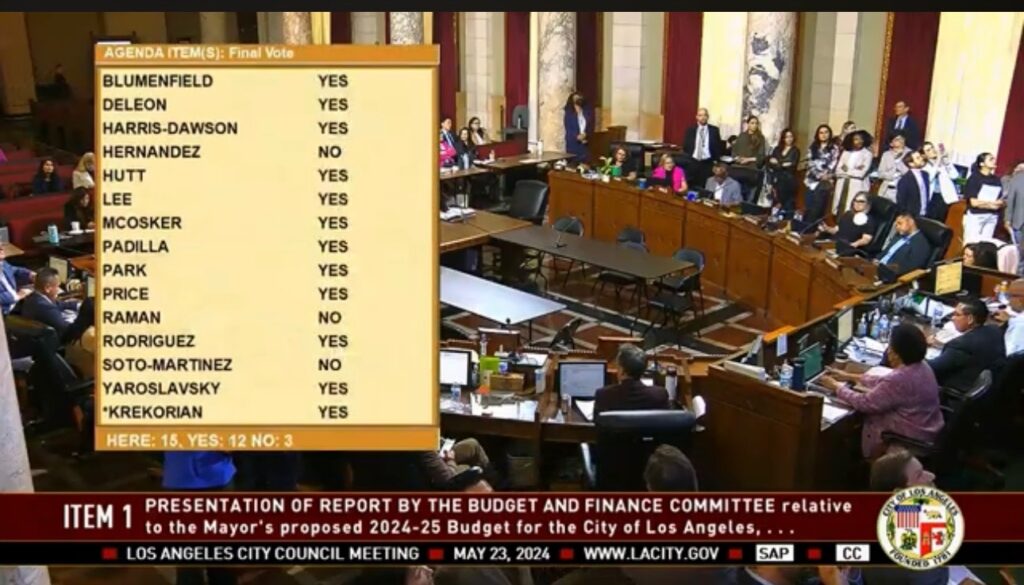
    The story begins on May 23, 2024, when Traci Park, along with a majority of the Los Angeles City Council, voted to slash $17.8 million from the LAFD’s budget. This decision was followed by an even more devastating $48 million cut in 2025. These cuts forced the department to reduce staffing, eliminate vital programs, and delay essential equipment upgrades. Fire Chief Kristin Crowley has publicly acknowledged that the lack of resources and manpower hindered the department’s ability to respond effectively to the Palisades fire.

    For a community as vulnerable as Pacific Palisades, nestled between brush-filled hills and high winds, this was a death sentence waiting to happen. Despite multiple Red Flag warnings issued days before the fire, the LAFD was unprepared, lacking both personnel and equipment to combat the blaze in its critical early hours. Firefighters on the ground confirmed that units were spread too thin, with some areas receiving no response at all during the peak of the crisis.

    Traci Park’s Shameless PR Spin

    As the fire raged, Traci Park’s initial silence was deafening. But once the flames subsided, her team sprang into action—not to assist recovery efforts but to salvage her public image. Park has been spotted at charity events, hugging victims, posing for photos, and delivering heartfelt speeches about the community’s resilience. However, her actions reek of hypocrisy.

    Park’s defenders have tried to shield her from criticism, claiming that her detractors are part of a so-called Democratic Socialists of America (DSA) conspiracy to take her down. This deflection tactic is not only absurd but insulting to the intelligence of her constituents. The criticisms levied against Park are rooted in her own documented decisions, not political vendettas. To blame activists for the backlash she now faces is nothing more than a desperate attempt to shift the narrative.

    The Smoking Gun: Budget Cuts and LAFD Failures

    Multiple sources within the LAFD have confirmed that staffing shortages—a direct result of Park’s budget cuts—played a significant role in the fire’s spread. Firefighters who should have been held over during the high-risk conditions were sent home. Brush patrols that should have been pre-positioned in high-risk zones remained idle at their stations. Even when off-duty firefighters were called back as the fire spiraled out of control, many couldn’t arrive in time due to the lack of resources to support a full recall.

    Additionally, it has come to light that the Santa Ynez Reservoir, a critical water source for firefighting efforts in the area, was out of service. This negligence compounded the crisis, forcing firefighters to rely on limited water supplies. While frontline personnel scrambled to make do with what they had, Traci Park remained conspicuously absent from the scene.

    Hypocrisy on Display: Traci Park and Donald Trump

    In a bizarre twist, Park was recently photographed speaking proudly with former President Donald Trump during his visit to the fire-affected areas. While she publicly touts her support for the community, this moment underscores the disingenuous nature of her leadership. Park’s willingness to align herself with high-profile figures for photo ops while avoiding accountability for her decisions reveals her true priorities: optics over action.

    Media Silence and Community Betrayal

    Equally troubling is the complicity of local media and influencers who have refused to report on Park’s role in the fire. Instead, they continue to churn out glowing profiles of her “leadership,” shielding her from the accountability she so richly deserves. This failure to report the truth does a disservice to the victims who have lost everything. The residents of Pacific Palisades and Malibu deserve transparency, not carefully curated fluff pieces designed to protect a politician’s career.

    The Consequences of Leadership Failure

    The Pacific Palisades fire stands as a grim reminder of what happens when political decisions prioritize budgets over public safety. Traci Park’s vote to defund the LAFD directly contributed to the department’s inability to respond effectively to this disaster. Her refusal to take responsibility, coupled with her shameless PR campaign, only adds insult to injury for the thousands of residents who now face the daunting task of rebuilding their lives.

    May 2nd, 2024, Traci Park at a city council speaking in support of LAFD and advocating for them to have more resources- only for her to turn around and vote to defund the department later that month.

    Screenshot

    Accountability Must Prevail

    The community must demand answers. Why did Traci Park vote to defund the LAFD despite warnings about the department’s vulnerabilities? Why hasn’t she publicly apologized or acknowledged her role in this catastrophe? And what steps will she take to ensure this never happens again?

    If we fail to hold leaders like Park accountable, we set a dangerous precedent for the future. The Pacific Palisades fire was not just a natural disaster—it was a man-made failure, born of poor decisions and misplaced priorities. The victims of this tragedy deserve more than hollow words and staged photo ops. They deserve the truth.

    As the community rebuilds, one thing is clear: Traci Park’s hypocrisy cannot be allowed to stand. It is time for the residents of Los Angeles to demand better leadership and to ensure that those who failed them are held to account. The ashes of Pacific Palisades are not just a symbol of loss—they are a call to action.