Tag: environment

  • Malibu’s First Taste of Wildfire Season Was a Potential Recipe For Disaster (Again)

    Malibu’s First Taste of Wildfire Season Was a Potential Recipe For Disaster (Again)

    Last Thursday afternoon, wildfire worries became a reality when the Santa Ana season officially swung into action.

    With a single wind shift, not one, but two potential wildfire threats to our area produced monumental concerns for residents just 11 months after the Woolsey Fire devastated our community. Last year’s fire destroyed approximately 1643 homes and 97000 acres burned overall between November 8-10th, 2018.

    Wendy Worries

    Shortly after 7 pm. on Thursday, October 10th, the Wendy Fire, named for its ignition point on Wendy Dr. in Newbury Park, was reported on social media.

    The fire started at 7:11 p.m. near the Wendy trailhead at Wendy Drive and Potrero Road in Newbury Park. The fire burned in a southerly direction, away from homes on national parkland, with firefighters initiating a strong attack on flames. The same area was  previously hit hard by the Woolsey Fire last November.
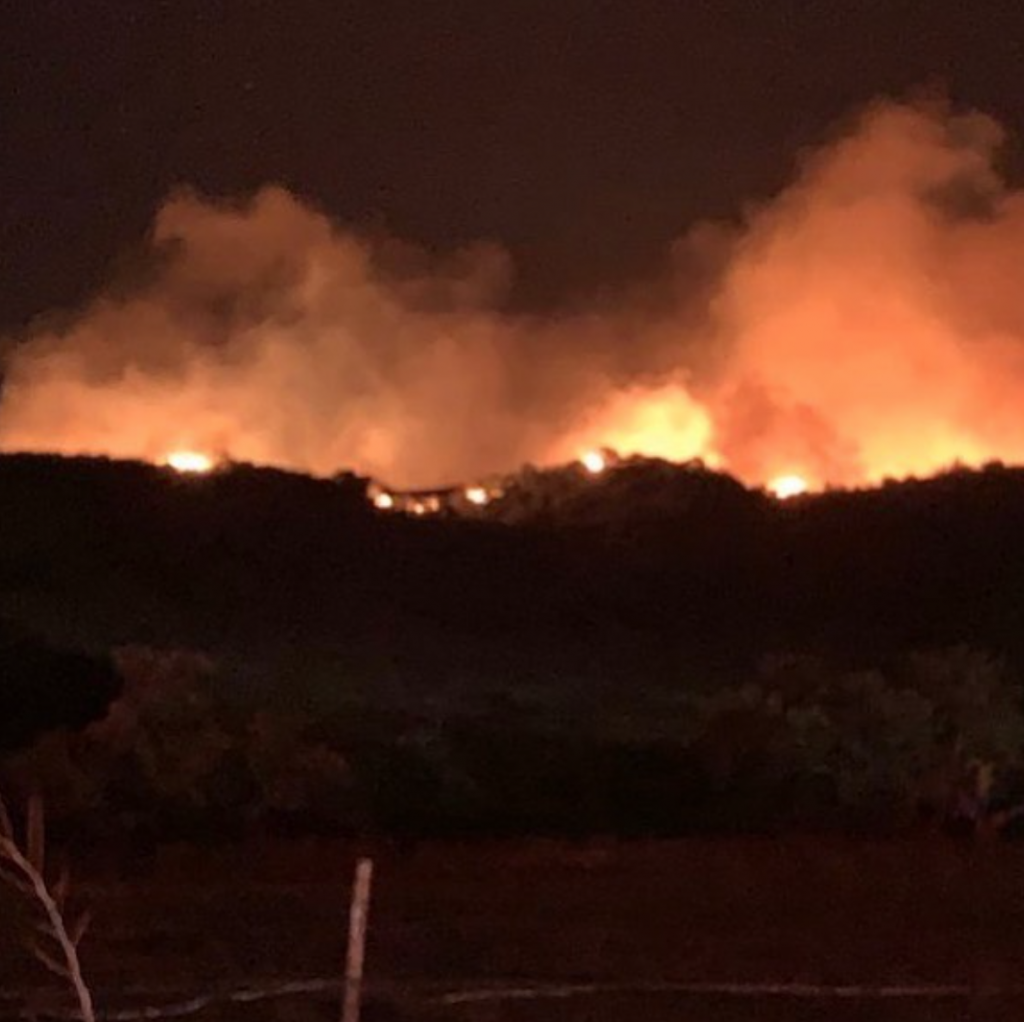
    Unbeknownst to locals, the efforts to stop the blaze were successful upon its approach to Point Mugu State Park. However, with flames visible in the distance by Decker Canyon residents before 10 p.m., and no guidance from authorities, or the City of Malibu as to wind direction and preparation for residents, those living in the canyon with large animals were not taking any chances and making plans to voluntary evacuate on their own.

    The Wendy Fire was getting dangerously close to Malibu for residents still raw from Woolsey.

    Anxiety reached a fever pitch with residents posting on social media their concerns over the flames visible from the Wendy Fire, and smoke filling the canyons from different directions. The City of Malibu sent out only one alert at 8:23 p.m., and no further updates as flames became more visible from canyons looking down the coastline.
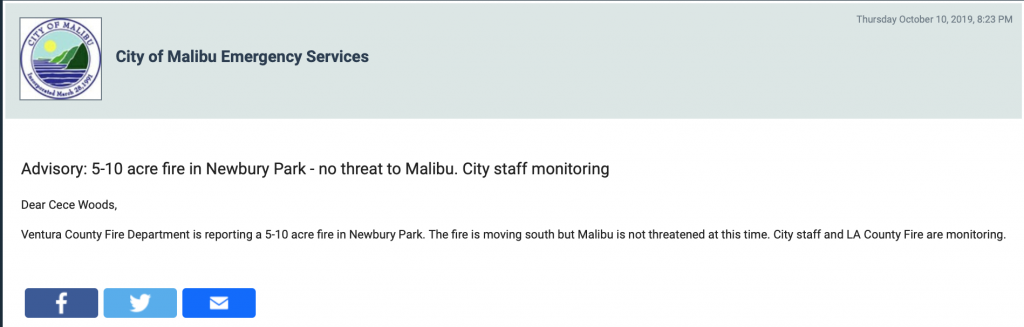
    The City of Malibu’s only emergency notification was at 8:27 stating there was “no threat to Malibu”, however, an hour later flames were visible from the Wendy Fire in Decker Canyon forcing residents to make plans to evacuate large animals.

    The Saddleridge Fire was now raging out of control and fears of yet another fire headed toward Malibu, with similar patterns of the Woolsey Fire, spread through the community fast.

    After a sleepless night with no real updates on the Wendy Fire other than official response on social media that lacked detail, discrepancies over Wendy’s containment sent the community spinning once again. Reports varied between 25% and 90% with local authorities sending out an incorrect emergency notification at 90% when the fire was in fact only contained to 25%. Reports of winds gathering strength once again made residents extremely uneasy.
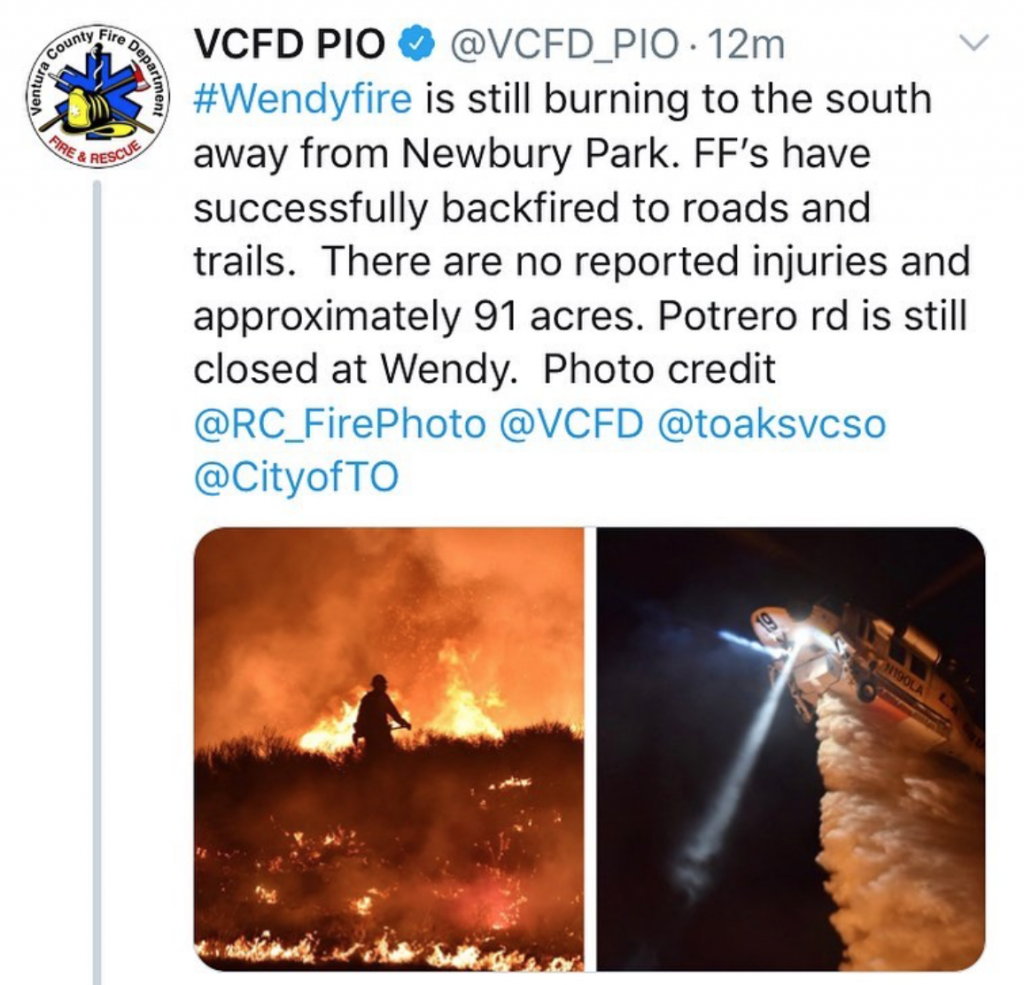
    The City managed to eek out one tweet mentioning the Wendy Fire, and completely ignored the Saddleridge Fire growing in size exponentially overnight.

    By Friday, more than 1,000 firefighters from multiple agencies were battling the Saddleridge Fire. Eight helicopters made repeated water drops as crews on the ground attack the flames, and two super scoopers and one Erickson air crane join the fight from the air as the fire headed west toward the Ventura County. A slight wind shift could have impacted Malibu similarly to what we experienced 11 months ago
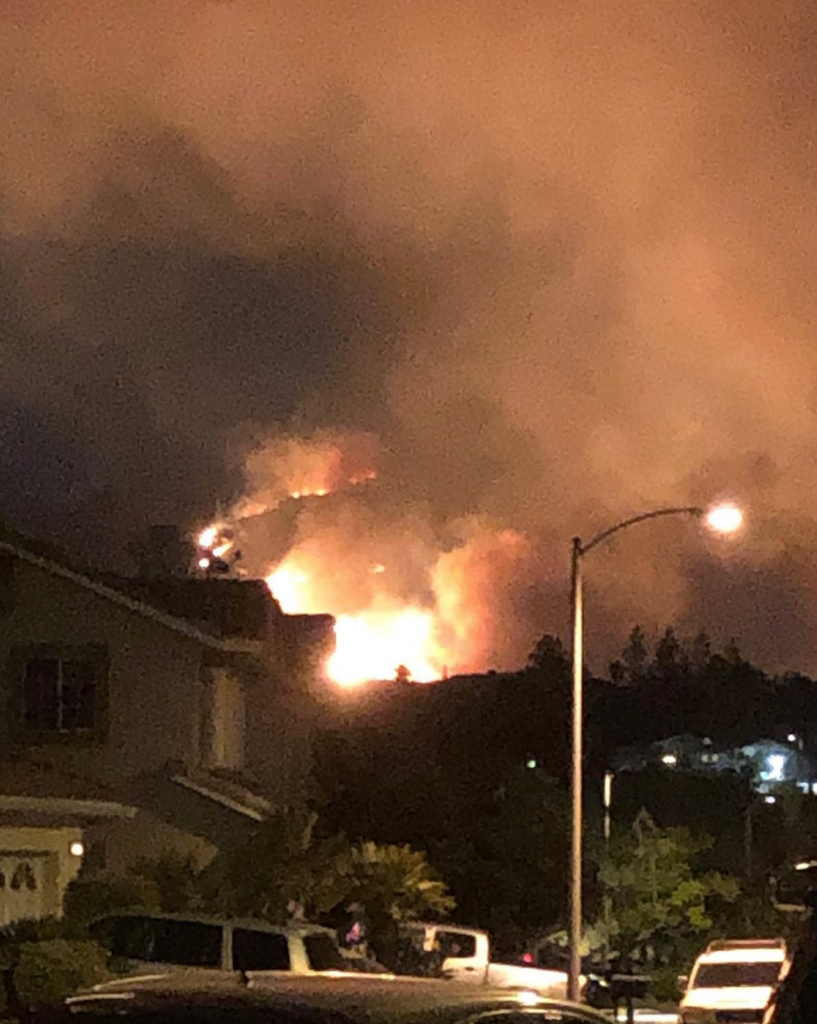
    The Saddleridge Fire raging out of control.

    Too Lazy To Use Fire Liaison?

    In May, the city added a third person to the Malibu Public Safety Department. The new Fire Safety Liasion position was created and filled with Jerry Vandermuelen, a 35 year veteran of fire service experience with the Kern County and Ventura County Fire Departments.

    The Wendy Fire event would have been the perfect opportunity for the City of Malibu to flex this new fire expert’s muscle. Alas, that would not come to pass. It is unknown why the city did not utilize the newly hired Fire Liaison’s knowledge and connections in Ventura, the lead agency in the Wendy Fire, to gather information and properly guide residents during the first fire event breaking out so close to Malibu.

    The combined experience and relationships with Ventura officials that Malibu City Public Safety Director Susan Duenas supposedly brought to the table before the Thomas Fire (but did not benefit locals whatsoever in terms of communication and preparedness), and the added experience of the new Fire Liasion, it would seem the City would be prepared, and communication would be detailed and at the highest level.

    Unfortunately it was deja-vu-in-the-bu, as yet again, City of Malibu officials were embarrassingly unprepared, even after a report ordered by Council last February was submitted with over 50  recommendations regarding Malibu City staff’s failures during the Woolsey Fire that needed to be addressed before the next disaster (Paul Taublieb’s assessment of the whitewashed report on the City’s response to Woolsey).

    Our first taste of fire season was a bitter re-opening raw wounds from Woolsey much too soon.

    Yo Malibu…

    You’re On Your Own.


  • Malibu Lagoon Observations

    Malibu Lagoon Observations

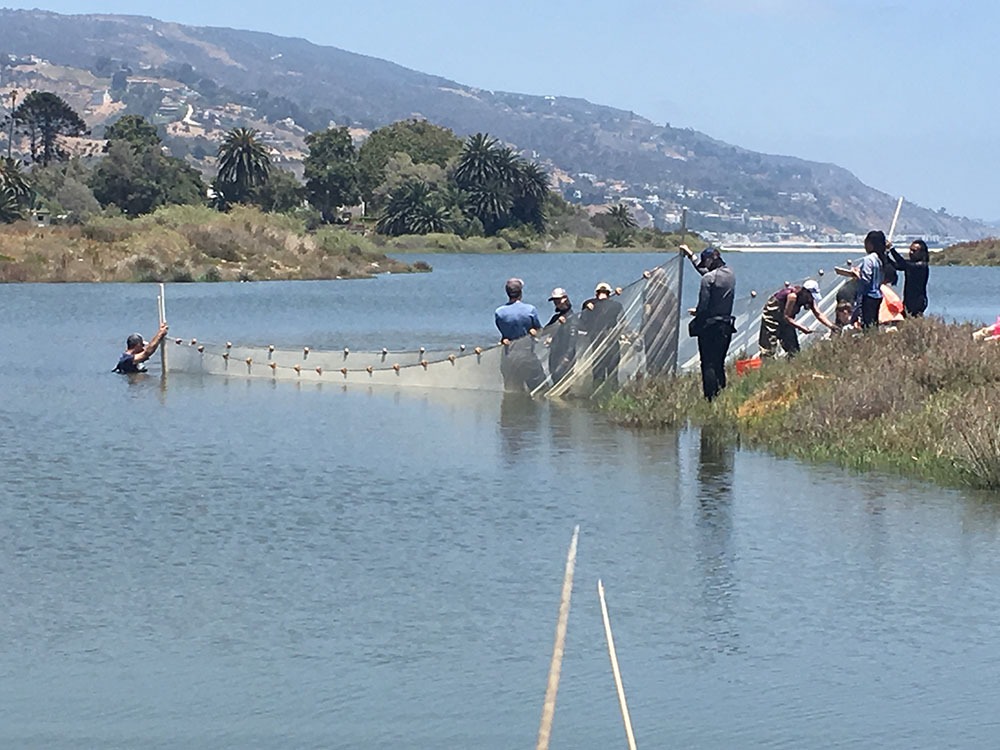
    Photo above: Volunteers helping Jayni Shuman gather netted fish for Rosi Dagit’s identification tray during this summers fish survey in the restored channels at the Malibu Lagoon.
    Story and photos by Steve Woods

    For those of you wanting to observe wildlife at one of our most popular local State Parks, the Malibu Lagoon will be that place. Since 2013, an increasing population of bird watchers have been observing a growing population of migrating birds, as well as an uptick in the diversity of bird species visiting and staying longer at the Malibu Lagoon and Wetlands.

    Bird and fish biologists have both  noticed that there has been very little to no eutrophication or algae buildup since the first year after the Malibu Lagoon restoration in 2012. 

    Improved water quality from wind and tidal circulation seems to have degraded previous historic concentrations of nitrogen and phosphate pollution. 

    A decrease in detrimental excessive algae blooms and higher Dissolved Oxygen levels  has  improved the environmental health for fish, crab, shrimp crustacean, invertebrates barnacles and according to the Santa Monica Audubon Society, fishing bird populations are also increasing in the areas once deemed the lifeless ‘Dead Zones’ by the EPA. 

    Although there have been an increase in the local year around bird populations, large migrating bird flocks are usually not seen during the summer but in the coming months there will be a steady increase of birds that will stop in for a rest and eat the increasing fish populations that are on the menu in the lagoon.

    Binocular toting  bird watchers excitedly tick off many birds on their survey check list and as hard as they look they have not seen the return of the Virginia Rail but experts believe that as the native reeds continue to expand that they will return.

    Biologist are really excited about the first historic return since the 1940’s and the successful nesting by the endangered Snowy Plovers and endangered Least Terns.These birds have been seen nesting on the sand inside of the protective fencing that was set up to keep human activity out of the nesting sites near 3rd point. 

    One nest of eggs was protected from predator crows with a wire cage.

    Biologist Rosi Dagit recently conducted a  post-restoration  fish survey of Malibu Lagoon on Tuesday 19 June 2018 by a team from the RCD of the Santa Monica Mountains with assistance from Santa Monica Bay Foundation staff and volunteers. 

    “This was the 10th post construction survey since January 2013. One of the restoration goals was to improve habitat conditions for native fish species, especially the federally endangered tidewater goby, and reduce the numbers of non-native species. Even during the drought years the newly planted  native vegetation has grown quicker than many had hoped for and with many different varieties taking hold the along the waters edge, millions of new born fish are using the plants as protective nursery hiding from  the larger predator fish.

    Malibu Lagoon has been closed to the ocean since late April 2018, with lagoon levels remaining relatively constant and deep. We were able to seine to depletion at all sites. High water levels contributed to emergent vegetation at the banks of all survey sites. Low tide was at 9:12 am (1.3’ elevation) and high tide was at 4:14 pm (6.2’ elevation). Due to closed conditions, tide did not affect depth levels in the lagoon during this survey.  Site 4, established for monitoring in 2013, continued to be inaccessible. We therefore continued to use site (2a) to comply with the monitoring plan requirements. In addition, we conducted two spot surveys along the eastern end of the beach along the closed berm.

    A total of 5 juvenile federally endangered tidewater gobies (Eucyclogobius newberryi) were captured during seining at Site 3 and Site 6. All individuals were subsequently released after identification and size classification. Striped mullet (Mugil cephalus) were observed jumping throughout the lagoon and were observed swimming away from sites as blocking nets were being positioned. The dominant species surveyed and identified was topsmelt (Atherinops affinis, larva = 3128, juveniles =15, adult = 2), followed by smelt larva that appeared to have recently hatched (Atherinops sp = 2400), and Oriental Shrimp (Palaemonetes spp. = 442). A total of 10 longjawed mudsucker larvae (Gillichthys mirabilis) and 1 adult were also observed. Additionally, 12 Staghorn sculpin (L. armatus) juveniles and 2 adults were observed

    The majority of individuals collected were extremely young larval or juvenile fish, which suggests that Malibu Lagoon is currently serving as a nursery site for both lagoon species. It was great to see the continued dominance and recovery of native species.”

    Species captured or observed during the June 2018 survey include:

    Native Fish Species 

    Tidewater goby                                      Eucyclogobius newberryi

    Topsmelt                                              Atherinops affinis

    Staghorn sculpin                                  Leptocottus armatus

    Striped mullet                                      Mugil cephalus

    Longjawed mudsucker                         Gillithys mirabilis

    Non-Native Fish Species

    Mississippi Silversides                         Menidia beryllina

    Mosquitofish                                       Gambusia affinis 

    Invertebrates

    Oriental shrimp                                    Palaemonetes sp.

    Hemigraspus crab

    Water boatman juvenile

    Damselfly nymph

    Caddisfly larva

    For a detailed account of current bird populations click here on the Santa Monica Audubon Society Blog Site

    https://smbasblog.com/2018/07/25/fall-migration-begins-malibu-lagoon-22-july-2018/

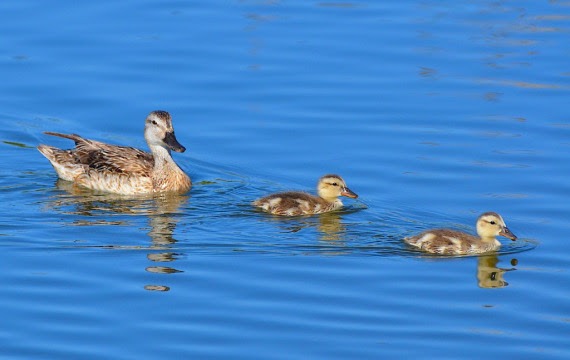
    Gadwell ducklings leading mom the way around the restored channels.
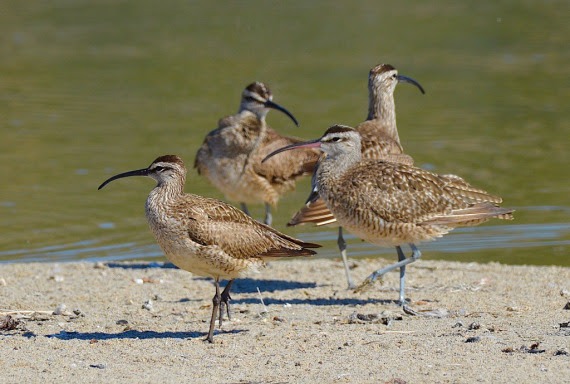
    Whimbrels enjoying some quiet beach time on one of the islands.
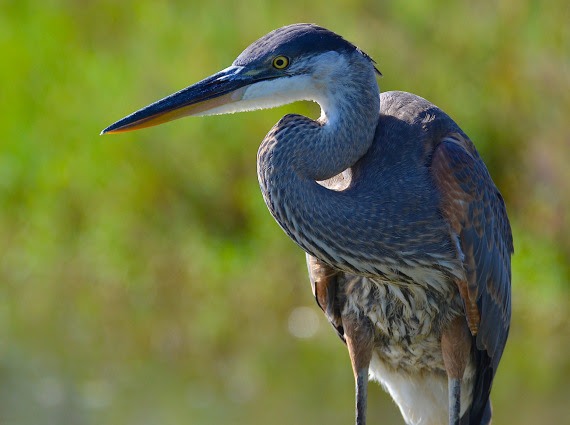
    The resident Great Blue Herons along with a growing number of Snowy Egrets don’t need to go anywhere else to find fish to eat.
    Members of the fish survey team wade out to one of the monitoring stations on the Osprey Island to net fish samples.


  • Wildlife Bridge Hits Design Phase

    Wildlife Bridge Hits Design Phase

    Finally, good news for wildlife and wildlife advocates.

    The 101 Wildlife Bridge is getting closer to creating a safe wildlife passage connecting two important wildlife habitats.

    The California Department of Transportation (Caltrans) announced May 4th that the Project Report and the Environmental Document have been completed for the wildlife crossing at Liberty Canyon Road, over Highway 10, marking a major milestone for the initiative.

    The project now moves into final design and engineering (the “blueprints” phase) and is slated to begin construction in late 2020.

    The planned wildlife crossing at Liberty Canyon is a public/private partnership between Caltrans, the National Park Service (NPS), the National Wildlife Federation (NWF), the Santa Monica Mountains Conservancy, the Resource Conservation District of the Santa Monica Mountains, the Mountains Recreation and Conservation Authority, the California State Coastal Conservancy and The Santa Monica Mountains Fund.

    The project responds to more than two decades of NPS research on the conservation needs of L.A.’s mountain lions and ecosystems and advances long-standing local efforts to establish habitat connectivity for wildlife across U.S. Highway 101.

    “The Santa Monica Mountains Conservancy and Mountains Recreation and Conservation Authority applaud Caltrans’ work in completing this environmental review, a critical phase in making a safe passage for wildlife across the 101 and delivering on our 30 plus years of work to preserve habitat linkages,” said Rorie Skei, Chief Deputy Director of the Santa Monica Mountains Conservancy.

    The public support for this wildlife crossing, which will potentially be the largest of its type in the world, the first of its kind in California, and which will serve as a visionary model for urban wildlife conservation, has proven unprecedented.

    A total of 8,859 comments were received in response to the draft Environmental Document, with only 15 opposed. Comments in favor came from a diverse group of constituents, including a letter from the eight previous mayors of the City of Agoura Hills, Los Angeles County Supervisor Sheila Kuehl, the California Turtle and Tortoise Club, actress Carolyn Hennesy (of Cougar Town fame), and the Monrovia High School Environmental Club.

    A collaboration by experts, public agencies, conservation organizations and community partners, along with public input, proved key to achieving this significant milestone. Ongoing active support and participation from the early stages of the project came from elected officials such as California State Senator Fran Pavley, (retired) and California Assembly member Richard Bloom, along with the newly elected California State Senator Henry Stern. “A project this unique and of such considerable size and scope always has a wide diversity of opinions and ideas—this process has helped create the best possible solution for area wildlife that also meets the needs of the local community,” said Senator Fran Pavley. “We thank everybody who participated in the public process, which ultimately made this project stronger.”

    This milestone was also completed as a result of funding from NWF’s #SaveLACougars fundraising campaign, which also enjoys widespread support with donations from across the country and the globe. “Our sincerest thanks to the more than 1,500 people and organizations who have contributed to the #SaveLACougars campaign to date, such as the California State Coastal Conservancy, Annenberg Foundation and Leonardo DiCaprio Foundation, which helped fund this integral environmental document,” said Beth Pratt-Bergstrom, California Regional Executive Director for the National Wildlife Federation, who leads the #SaveLACougars campaign. “When we started this campaign a few years ago, the crossing was just an idea and had no funding attached to the project. With the generous donations of our supporters, we have raised over $3.7 million, have achieved every fundraising target to date and know this trend will continue as we work to achieve our goal of $10 million by the end of this year to keep Caltrans on schedule.”

    #SaveLACougars is primarily seeking private philanthropic dollars, although public dollars earmarked for conservation have been, and will continue to be, sought. The campaign is not seeking to divert state transportation or other taxpayer funds from needs such as schools, hospitals, bridges, or road repairs.

  • Malibu Township Council Oil Conference

    Malibu Township Council Oil Conference

    Malibu Township Council (MTC)  will conduct a free-of-charge community-wide conference aimed at preventing the opening of new federal offshore oil drilling leases that experts say are likely to harm Malibu’s open and safe coastal environment,  healthy surfing and swimming and even the city’s tourist-based economy .

    The conference, at 1:30 p.m., Sat., March 24, at the City Hall Theater, 23825 Stuart Ranch Road, will feature an introductory message prepared by The Hon. Leon Panetta, who was largely responsible for keep oil drilling away from the Monterey Bay. The conference will include six coastal expert panelists, including representatives from nonprofit groups whose mission is to keep the ocean environmentally safe.

    Panelists include, Congressman Ted Lieu, who represents Malibu and thirteen other coastal cities within the 33rd District;  Jeremy Wolf, environmental representative for State Sen. Henry Stern; Attorney Damon Nagami, Natural Resources Defense Council;  Steve Wicke, Sierra Club Angeles Chapter Conservation Committee Chair; Chad Nelson, CEO of Surfrider; a representative of State Fish and Wildlife charged with inspections of offshore structures; and Attorney Dayna Bochco, member of the California Coastal Commission.  (Bios, with photos, accompany this release on a separate sheet.)

    Richard Lawrence, MTC president, announced the event Tuesday (March 6) saying, “Since at least the 1970s, Malibu Township Council has worked to keep our beaches free of chemical and physical contaminants, as well as an open and clean horizons.  Oil platforms offshore would damage our waters, our beaches, our waves, and will harm our tourist economy.  This is not a future that is acceptable for Malibu residents.”

    Experts agree that the possibility of drilling rigs off Malibu looks more and more real every day.

    Said Panetta:  “More than 35 years ago, I worked with both houses of Congress to impose a moratorium on offshore oil drilling in federal waters along the California coast.  We understood the grave threat to one of the nation’s greatest natural and commercial assets.  Now that moratorium is at risk.”

    L.A. Times staffers Keith Schneider and Tony Barboza wrote that  President Trump’s proposal to open the coastline for drilling represents “the largest expanse of the nation’s offshore oil and natural gas reserves ever offered to global energy companies.”   Interior Secretary Ryan Zinke said the draft five-year leasing plan would commit 90% of the nation’s offshore reserves to leasing, including areas off all three regions of the California coast that have been off-limits to oil and gas exploration since the Reagan administration.

    And Ted Lieu, who represents 14 L.A. County cities and about 75 miles of coastline, authored a letter signed by 36 California Congress members opposing new Pacific Ocean lease sales in the Trump administrations offshore drilling plans.  Under Trump’s executive order, the Department of the Interior will consider all areas of the Outer Continental Shelf for oil and gas leases.

    “Offshore drilling creates extraordinary safety concerns for coastal communities and ecosystems,” Lieu said.  “Instead of fighting climate change and looking at wind, tidal and wave energy development, this drilling proposal will turn our coasts into a game of risk.  I am infuriated!”

    “This is an important meeting as it will provide information on proposed changes that will affect the economy of Malibu, property values here, and effects of the oil industry on the city that residents love and want to protect,” said Lawrence.

    The City Hall Theater holds 250 people. Students, teachers, interested residents are welcome to attend and to bring their friends.
    A cookie reception will precede the event to give the audience an opportunity to mingle with panelists.

    RSVP are appreciated. Please send to loislane@headlines.org.