In American courtrooms, justice is supposed to unfold on the public record. Motions are filed, evidence is introduced, witnesses testify under oath, and judges issue rulings in open court. Yet in many of the country’s most consequential criminal and civil cases, the official record captures only a fraction of what actually matters. The rest is buried in transcripts few people read, filings few journalists have time to parse, and contradictions that surface only when someone is willing to look closely enough.
Running parallel to formal proceedings is a lesser-known but long-standing practice: independent investigative journalists retained, funded, or facilitated by parties to a case, often defendants, to examine records and publish reporting under their own editorial control. Despite frequent attempts to cast this work as improper or unethical, it remains lawful, established, and constitutionally protected.
This form of journalism exists because courts are not designed to investigate themselves, and modern newsrooms are rarely resourced to reconstruct complex cases from thousands of pages of filings. Independent journalists step into that gap, operating outside the courtroom but anchored to the record.
In high-profile criminal cases, particularly those involving claims of wrongful conviction or procedural failure, independent investigative reporting has often functioned as the first serious re-examination of the facts after a verdict is entered. The reinvestigation of the case against Adnan Syed offers one of the clearest examples. Journalists behind Serial conducted a meticulous review of trial testimony, phone records, timelines, and witness statements that had not been meaningfully scrutinized in earlier coverage. Although the reporting was facilitated through defense-side access and funding, the journalists retained full editorial control and published their findings independently. The reporting surfaced factual gaps and disclosure issues that later became central to post-conviction litigation. No court sanctioned the work. No regulator intervened. It was treated as journalism doing what the legal process had failed to do on its own.

A similar pattern emerged in the prosecution of Michael Peterson, where independent journalists revisited police conduct, forensic assumptions, and evidentiary inconsistencies years after conviction. The reporting produced by the journalists behind The Staircase relied on access to trial records and post-trial evidence facilitated by the defense, but editorial control remained firmly with the journalists. Their work exposed flaws in forensic testimony, undisclosed conflicts involving expert witnesses, and evidentiary issues that had not been fully examined at trial. The reporting intersected with post-conviction relief efforts and reshaped public understanding of the case. Again, the decisive factor was not who facilitated the work, but whether the reporting was accurate, fact-based, and grounded in the record.
In civil litigation, this practice is even more common, though far less discussed. Defamation defendants, probate litigants, civil-rights defendants, and parties in complex personal-liability disputes regularly engage independent journalists to examine records and publish findings in the public interest. These journalists publish under their own bylines and often reach conclusions that complicate, rather than advance, a litigant’s legal position. Courts have consistently permitted this parallel reporting to proceed, even during active litigation, because there is no statute, regulation, or body of case law prohibiting it.

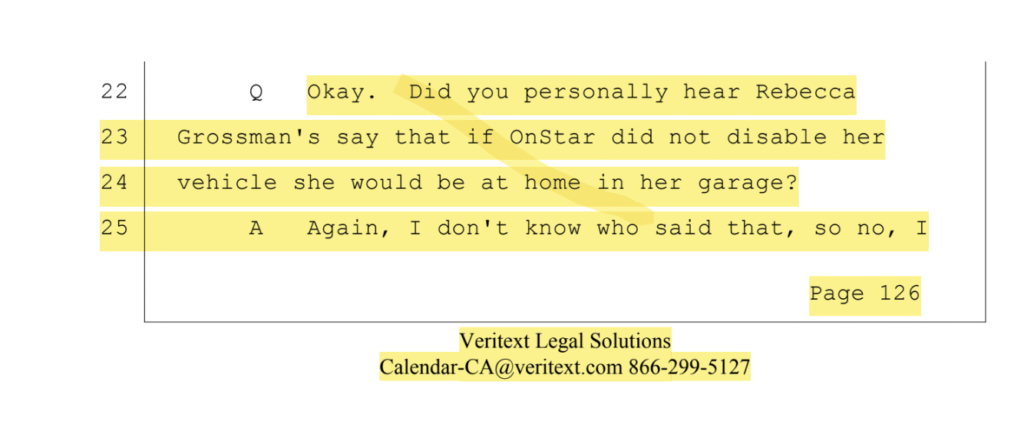
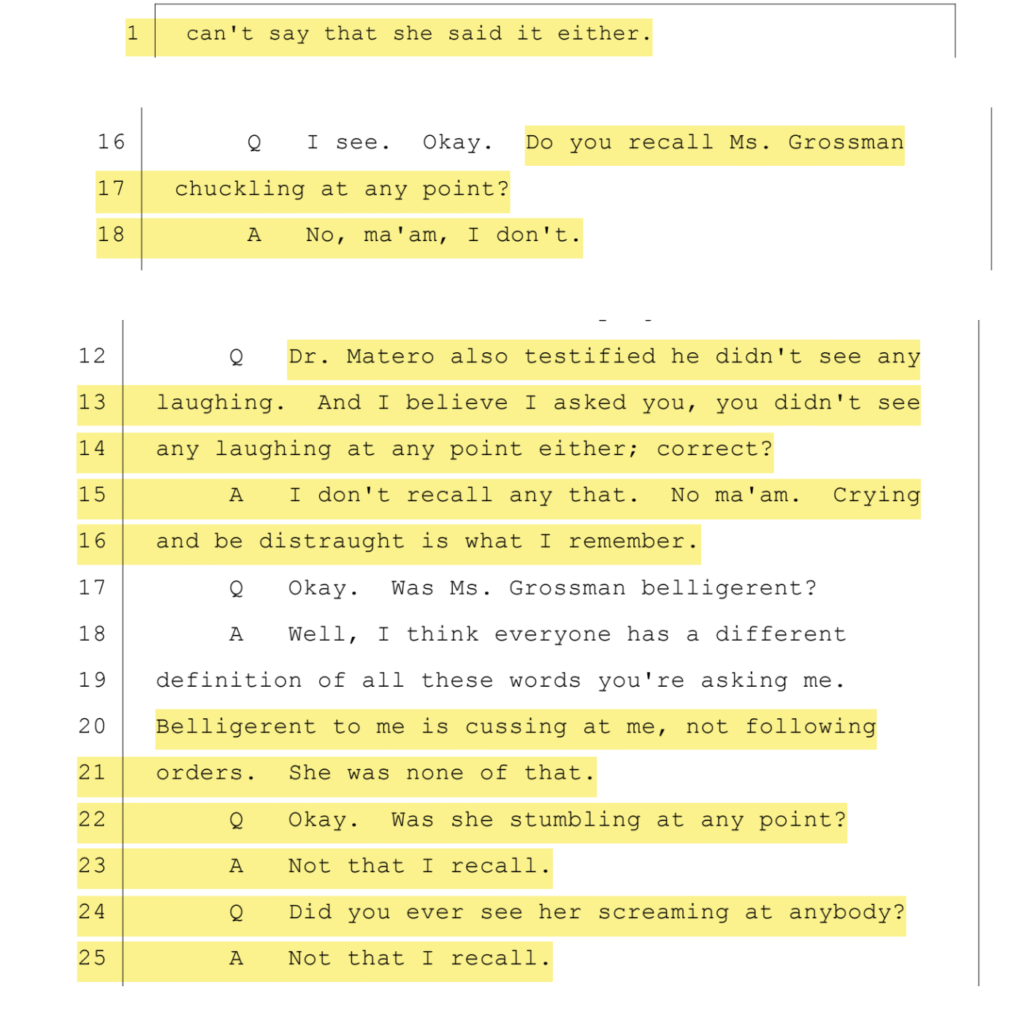
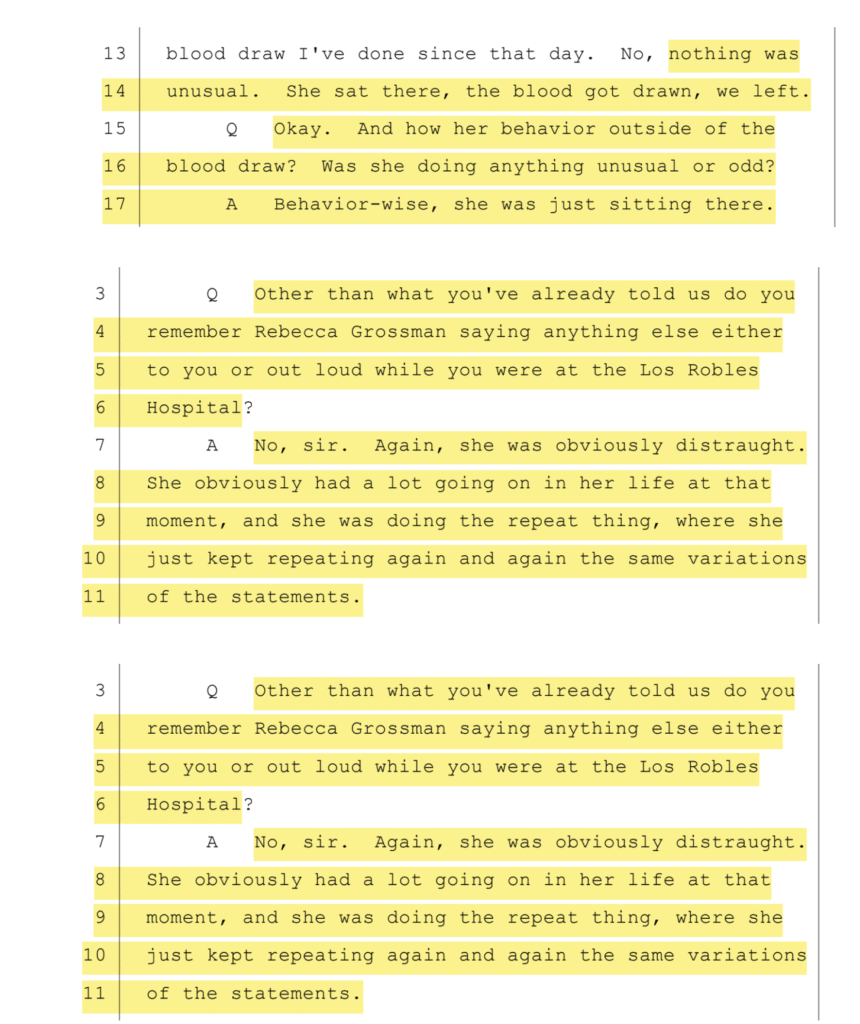
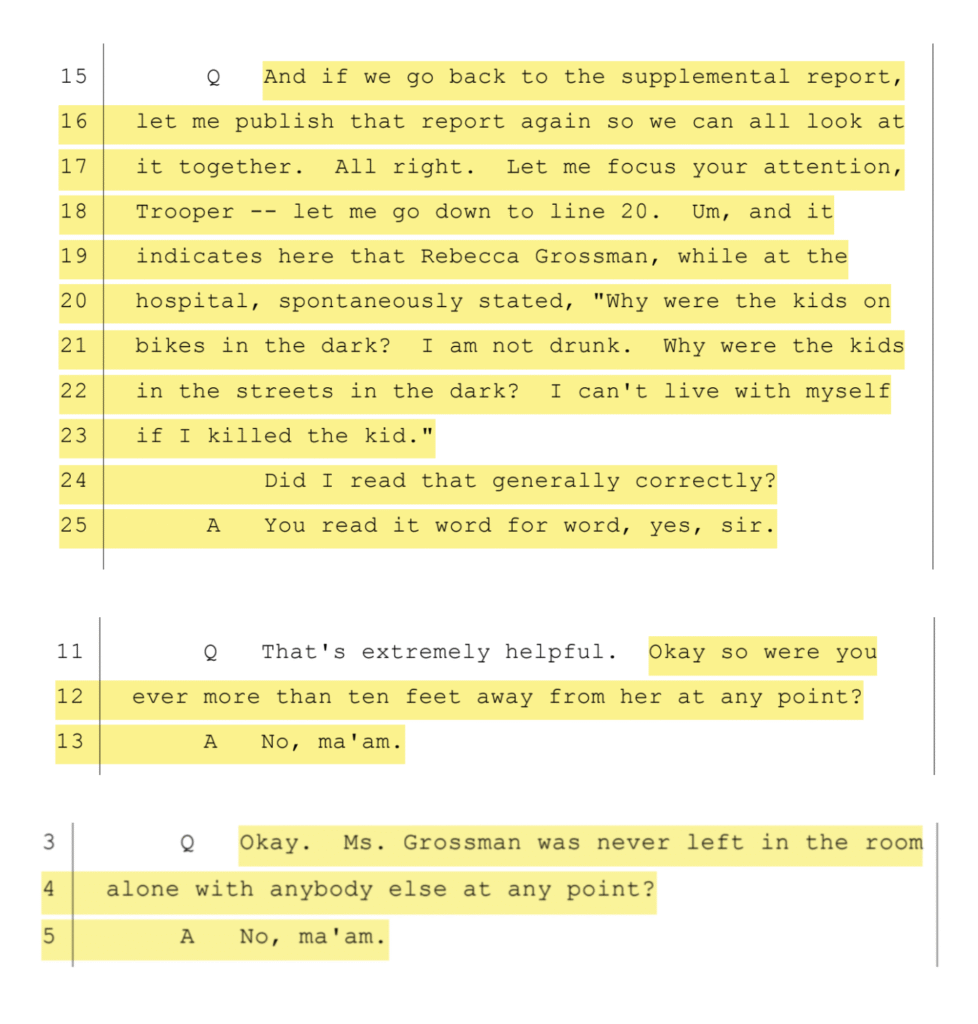
That legal framework explains my role in reporting on the Grossman case. In the criminal prosecution of Rebecca Grossman, and in the related civil proceedings that followed, public coverage has often relied on narrative compression rather than evidentiary precision. My work as an independent investigative journalist has focused on the same materials the courts rely on: sworn testimony, trial transcripts, filings, timelines, and the points at which public claims diverge from the record itself.
The reporting has involved sustained examination of testimony given under oath, comparison of contemporaneous records with later public statements, and analysis of how evidence was framed in media coverage versus how it appeared in court. The conclusions published under my byline reflect the core principle of independent journalism.
When journalists independently verify and publish irrefutable facts, supported by documents, evidence, and sworn testimony, funding alone does not invalidate the work.
Attempts to portray this reporting as regulated or prohibited consistently collapse under scrutiny. The Federal Trade Commission does not regulate journalism. Its authority is limited to commercial speech, advertising, and consumer deception. Investigative reporting about criminal or civil litigation does not fall within its jurisdiction, and the agency has never brought an enforcement action involving a litigant funding factual journalism about a legal case.
Journalism ethics codes offer no prohibition either. The standards articulated by the Society of Professional Journalists emphasize independence, accuracy, and accountability, but they are voluntary by design and intentionally non-enforceable. They do not ban commissioned investigations, funded reporting, or work originating from interested parties. Any attempt to impose such restrictions would raise immediate constitutional concerns under the First Amendment, which protects not only publication but the process of newsgathering itself.
The safeguard in this system is not prohibition. It is independence. When journalists control their reporting, verify facts, and publish transparently, funding alone does not undermine the legitimacy of the work. Courts recognize this distinction. Regulators respect it. Constitutional law protects it.
What is striking is not that defendants sometimes support independent investigative journalism, but that this long-standing practice is so frequently mischaracterized when reporting unsettles dominant narratives or challenges entrenched interests. For decades, independent journalists have functioned as a parallel public record, operating outside the courtroom but often closer to the evidentiary truth than the headlines suggest.
They are not officers of the court. They are not advocates. And they are not regulated away for a reason.
Because the moment they are, the public loses one of its last independent windows into how justice is actually administered.