Month: December 2025

  • Sheriff Luna’s Smoke and Mirrors: A Superficial Stance on Deputies’ Rights Exposed by Dropped Lawsuit and Silenced Watchdogs

    Sheriff Luna’s Smoke and Mirrors: A Superficial Stance on Deputies’ Rights Exposed by Dropped Lawsuit and Silenced Watchdogs

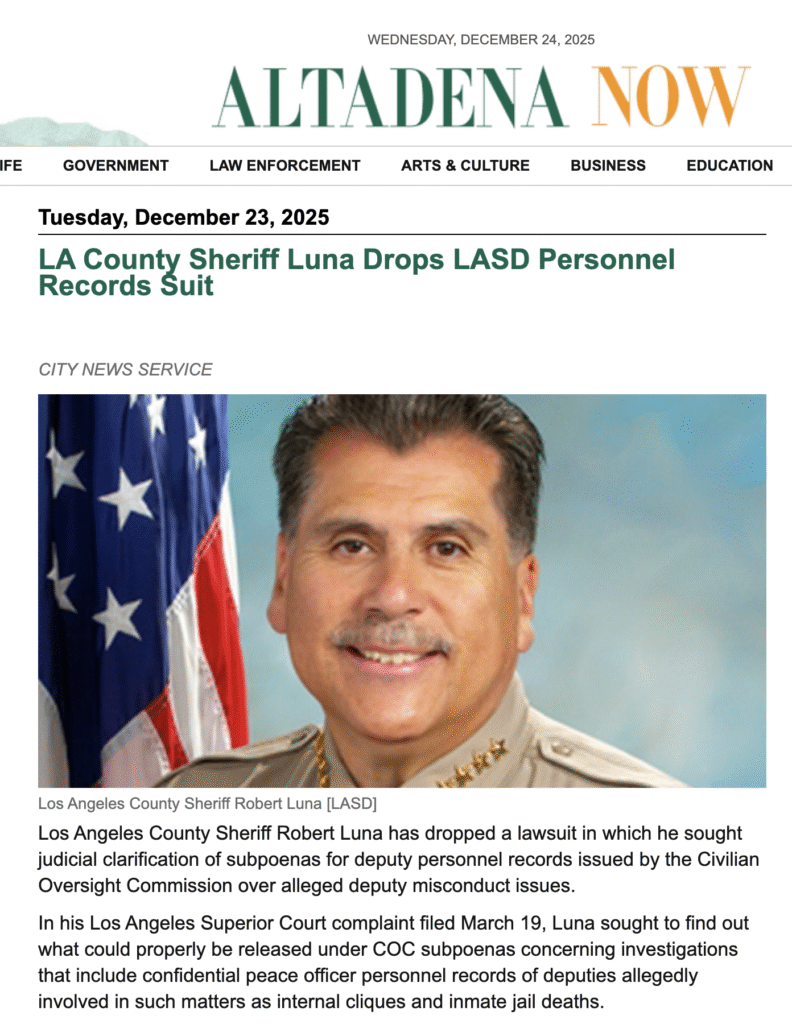
    Sheriff Robert Luna built his brand on the promise of integrity, transparency, and protection for the deputies he now commands. But what unfolded this year reveals a sheriff far more concerned with maintaining political optics than honoring the commitments he loudly made when it suited him. In March 2025, Luna filed a lawsuit he aggressively framed as essential to defending deputies’ privacy rights against the Los Angeles County Civilian Oversight Commission’s demands for sensitive personnel files tied to misconduct, use-of-force incidents, disciplinary histories, and other confidential employment matters. Luna positioned himself as the courageous defender standing between his deputies and what he portrayed as intrusive government overreach. It was the perfect political narrative: a sheriff “protecting his people” while simultaneously posturing strength in a tense oversight climate.

    Then, on December 17, 2025, the illusion shattered. Without a press briefing, without accountability, without so much as a straightforward explanation to the very people he claimed to protect, Luna’s legal team quietly filed to dismiss the lawsuit without prejudice. No ruling. No legal clarification. No resolution. Just a quiet, strategic retreat designed to make as little noise as possible. And with that decision, everything Luna sold about this lawsuit collapsed. Deputies who were told their sheriff was fighting for their rights were suddenly left standing in the open, realizing there was never a real fight to begin with. What they got instead was a campaign stunt, a calculated moment of political theater meant to earn loyalty, inflate trust, and stage the image of a sheriff willing to defy pressure when it allegedly mattered most.
    Inside the department, sources describe a very different reality than the one Luna presented to the public. This lawsuit, they assert, was never filed with the intention of seeing it through. It was timed during a period of heightened scrutiny, rising tension, and a looming 2026 election season. Deputies were increasingly anxious about oversight power and access to records. Luna exploited that fear. He told them he would be their shield. He projected strength while knowing full well the case was more useful to him symbolically than legally. The moment the political value shifted, so did Luna. Instead of standing in court and finishing the fight he aggressively advertised, he stepped back into the shadows and quietly walked away, leaving the people whose trust he leveraged to deal with the fallout.

    What makes this worse is what the lawsuit truly represented. This was not an abstract policy filing. It concerned the most sensitive and consequential matters inside LASD: internal investigations, disciplinary determinations, misconduct allegations, civil exposure, public trust, and the complicated legal balance between oversight authority and deputy privacy protections. Luna convinced deputies that without this lawsuit, their rights were at risk. He made himself the hero of a fight he never intended to finish. By dismissing the case without delivering what he claimed it would secure, he did not protect deputies. He left them in limbo. He left key legal questions unresolved. And he left oversight access hanging in a gray zone he pretended he was trying to clarify.

    This is not a standalone misstep. It fits a clear and disturbing pattern. Luna ran for sheriff promising transparency, reform, accountability, and moral steadiness. In office, he has instead demonstrated a relentless interest in narrative control, quiet suppression of pushback, and carefully curated imagery designed to present the illusion of competence and strength while operating politically behind the curtain. Watchdogs have described obstruction. Oversight voices have faced resistance. Deputies have watched the gap widen between what Luna says publicly and what he orchestrates privately. Rather than leading, he calculates. Rather than confronting truth head-on, he maneuvers it. Rather than building trust through honesty, he manufactures loyalty through illusion and hopes rank-and-file deputies never notice the difference.

    But they do. Deputies are not relieved by the dismissal of the lawsuit. They are angry. They have every right to be. They were told their sheriff was fighting. They were told he was protecting them. They were told this legal action mattered. Instead of a sheriff standing firm and seeing his commitment through, they watched their leader retreat without explanation, leaving them exposed and misled. Trust inside law enforcement does not evaporate quietly; it fractures sharply. And deputies now find themselves confronting a devastating truth: the sheriff who promised to stand in front of them when it counted instead used them as political props when it suited him and abandoned them when it didn’t.

    Luna’s defenders may claim this was strategy or evolving legal calculation. That argument collapses under reality. If Luna believed this lawsuit was necessary, he should have fought it. If he believed it was wrong, he should have had the courage to stand before his department, say so plainly, and explain why. Instead, he chose secrecy and disappearance. That is not the behavior of a leader confident in truth or loyal to the people he commands. It is the behavior of a political figure protecting himself.

    In a county already strained by mistrust, rising scrutiny, and tension between the public, the department, and oversight authorities, Los Angeles needed a sheriff anchored in principle. What it got instead is a sheriff governed by optics. Luna promised to protect deputies. He promised to fight when necessary. He promised to lead with transparency. What he delivered was a carefully staged performance followed by a silent escape when the act ended.

    Sheriff Luna did not simply dismiss a lawsuit. He exposed who he really is. And no matter how quietly he tried to make it disappear, his moves suggest a sheriff more focused on consolidating power than upholding the rights of his personnel. As the 2026 race approaches, this ruse risks backfiring, alienating the very deputies whose backing he sought to secure through empty promises.

    In the end, Luna’s smoke-and-mirrors strategy exposes a troubling reality: a leader who wields deception as a tool, even against his own ranks, to maintain control and advance his political ambitions. Deputies deserve better than a sheriff who treats their rights as pawns in an electoral game.

  • How Cudahy’s Legacy of Corruption Paved the Way for Mayor Cynthia Gonzalez — and Her Reckless Call to Arms Against ICE

    How Cudahy’s Legacy of Corruption Paved the Way for Mayor Cynthia Gonzalez — and Her Reckless Call to Arms Against ICE

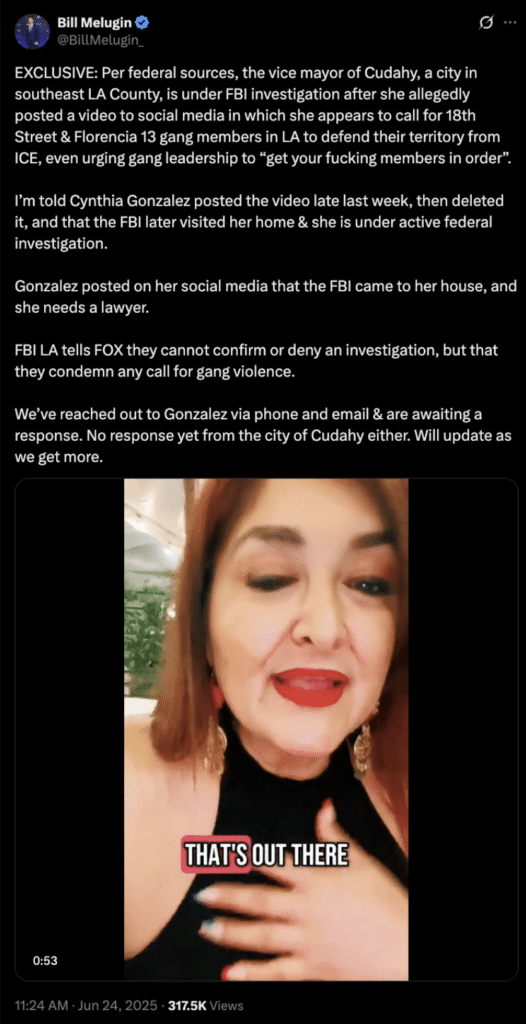
    Cudahy has always been a city that promises reform while quietly breeding the next scandal. Now, the small 1.2-square-mile city in Southeast Los Angeles, one of the densest in California and home to roughly 23,000 residents, has thrust itself back into national controversy. Not because it finally cleaned up its chronic corruption. Not because accountability triumphed. But because a sitting vice mayor, now elevated to mayor despite being under federal investigation earlier this year, filmed herself calling on violent criminal street gangs to “defend” their territory against federal immigration agents.

    Cynthia Gonzalez didn’t just complain about ICE activity. She went far further, and far darker, directly taunting two of the most notoriously violent gangs in Los Angeles, 18th Street and Florencia 13, to mobilize and “get your f***ing members in order.”

    These are not political mascots or rhetorical symbols. These are criminal syndicates with decades-long histories of murder, extortion, narcotics trafficking, and targeted violence against law enforcement, including the killings of LAPD Officer Filberto Cuesta in 1998 and Officer Fernando Arroyos in 2022. Yet Gonzalez chose to speak to them as if they were neighborhood defenders being lazy on the job.

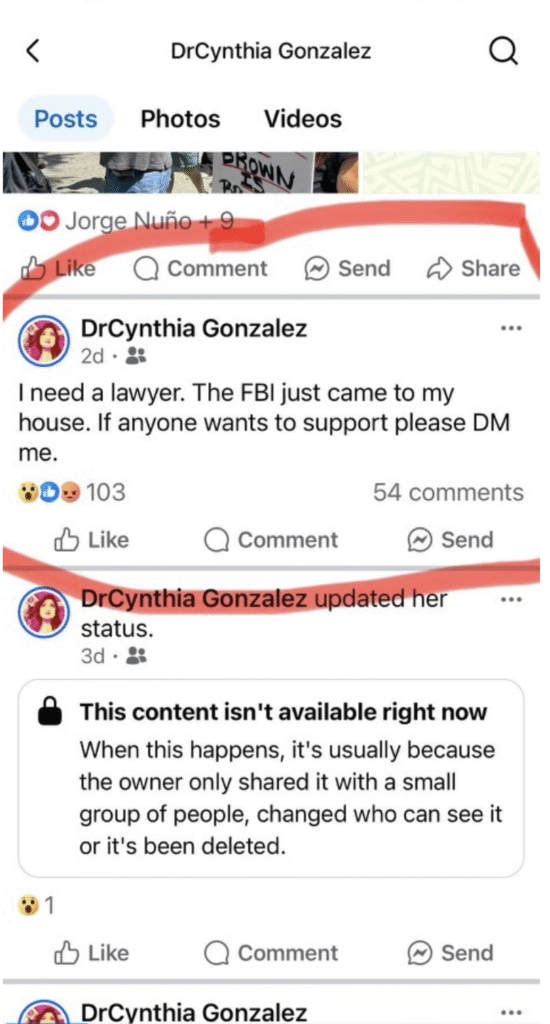
    The video went viral on social media when Fox News reporter Bill Melugin shared the video on his X account prompting federal authorities to open an investigation. Gonzalez herself acknowledged agents arrived at her home, posting that she needed a lawyer before quickly scrubbing her accounts, deleting posts, reframing her words as satire, and recasting herself as misunderstood rather than dangerously irresponsible. But the damage, to credibility, public trust, and political integrity, had already been done.

    What makes this more than a viral moment is the truth it exposes: Cynthia Gonzalez didn’t rise to this level of power in spite of Cudahy’s past, she rose because Cudahy has never truly broken free from it. This city hasn’t healed from its culture of corruption. It simply repackaged it.

    A City Defined by Scandal Long Before Cynthia Gonzalez Ever Arrived

    To understand why Gonzalez could speak the way she did and still wind up leading the city, you have to look at the decades-long political rot that shaped the environment she stepped into. Cudahy’s size has never matched the magnitude of its corruption, and long before Gonzalez recorded herself calling on gangs, the federal government had already classified Cudahy as a civic cautionary tale.

    In the early 2010s, federal agents dismantled a brazen pay-to-play extortion racket operating from inside City Hall. Former Mayor David Silva and Councilman Osvaldo Conde weren’t simply ethically compromised public officials; they were acting like criminals wearing government titles, openly accepting envelopes of cash from a businessman trying to open a marijuana dispensary. Conde’s attempt to avoid facing consequences spiraled into a five-hour armed standoff with authorities. Silva ended up in federal prison in 2013. And those cases were not isolated embarrassments, they were symptoms of a deeper institutional rot.

    A year later, the California State Controller’s Office quantified the crisis in blunt financial form, ordering Cudahy to repay an astounding $22.7 million in misused and mishandled public funds, confirming that abuse wasn’t incidental or administrative, it was systemic. FBI affidavits revealed city officials shaking down vendors, manipulating elections, whispering about illegal dealings on tape, and at one point casually eating fast food while essentially negotiating corruption, the image of officials so comfortable with wrongdoing that they treated it like routine business.

    Residents, weary of the endless misconduct, pushed back. In 2015 they overwhelmingly passed Measure A, imposing strict term limits to break the death grip of entrenched power figures. The election of 29-year-old reformer Cristian Markovich symbolized hope and hinted that perhaps Cudahy was ready to rebuild trust, restore governance, and finally shut the door on political abuse.

    But political cultures don’t transform because a ballot measure passes or because a new face takes the microphone. In Southeast L.A., where power networks are deeply intertwined and local politics operate in tightly controlled circles, old behavior rarely disappears, it merely shifts, disguises itself as progress, and eventually resurfaces.

    Cynthia Gonzalez: The Polished “Reform” Candidate Who Became the Crisis

    Into that context stepped Cynthia Gonzalez, Ed.D., packaged as the polished, educated, community-aligned reform figure who could represent the city’s evolution rather than its past. Born in nearby Huntington Park, a graduate of Bell High School, already successful in education and holding a doctorate, she was exactly the kind of leader Cudahy officials loved to market, emblematic of upward mobility and civic responsibility in a city that is more than 95% Latino.

    Her 2022 campaign leaned hard into empowerment, immigrant protection, and community strength, themes deeply resonant in a population where mixed-status families, fear of enforcement, and distrust of government have been lived realities for generations. Voters backed her. She was elected. By 2024, she rotated into the vice mayor position, a ceremonial title that nonetheless carries symbolic and rhetorical authority.

    She entered office with clean optics but into a city that had never truly shaken off its history of ugly politics, intimidation tactics, ideological posturing, and quiet backroom alliances. And eventually, the façade cracked.

    The Video That Erased Any Illusion of Responsible Leadership

    In June 2025, amid reports of ICE operations in Southeast Los Angeles, a moment calling for measured leadership, clear communication, and respect for public safety, Gonzalez chose spectacle over responsibility. Instead of calming her community or directing them toward legal resources, she recorded herself, not to constituents, but to gangs.

    “You guys are all about territory. This is 18th Street. This is Florencia… and now that your hood is being invaded by the biggest gang there is, there isn’t a peep out of you,” she said, before escalating further, warning that they shouldn’t claim turf “if you’re not showing up right now” and ordering that gang “leadership” get their members “in order.”

    There is no thoughtful interpretation that turns that into civic engagement. No academic reframing softens it. She didn’t invoke community activism. She invoked criminal organizations.

    She deleted the video. She deleted the Facebook posts discussing the FBI visit. But she couldn’t delete the legal and political reality.

    Holding the Blue Line

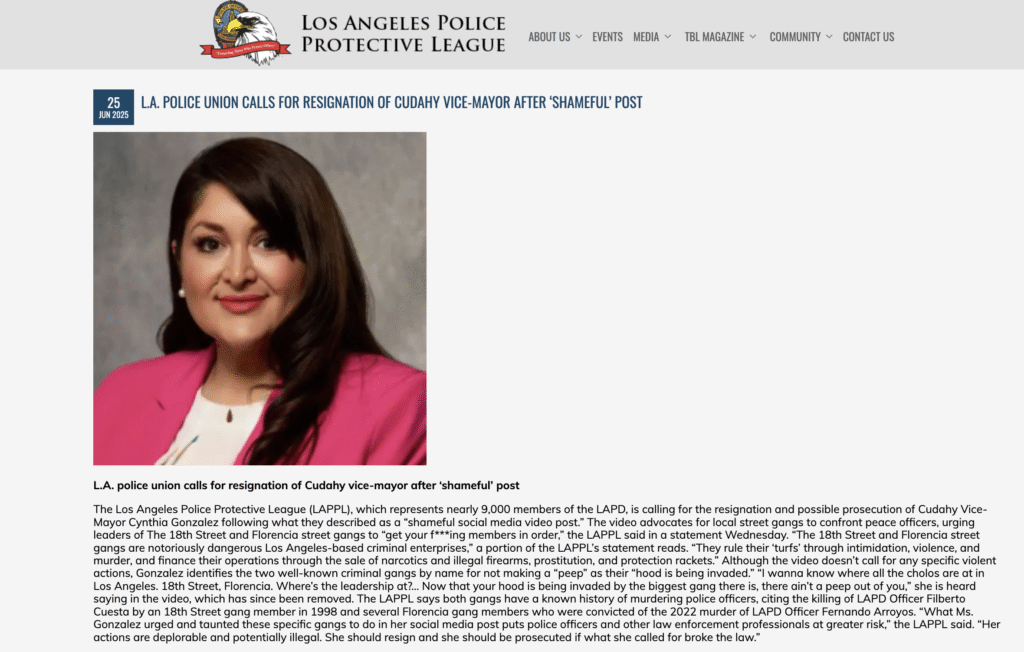
    The Los Angeles Police Protective League demanded Gonzalez’s resignation and urged prosecutors to consider charges, pointing out that the gangs she invoked were responsible for real bloodshed, including the murders of LAPD Officers Filberto Cuesta and Fernando Arroyos. These were not abstract references. These were living, violent entities with lethal histories.

    DHS leadership condemned the remarks, with Secretary Kristi Noem describing them as “despicable,” while also citing reports showing a staggering 500% increase in attacks on ICE officers, asserting that rhetoric like Gonzalez’s isn’t harmless, it fuels hostility and violence.

    Even personal allies stepped back. Huntington Park Mayor Arturo Flores, a close friend of Gonzalez, acknowledged that elected officials must understand the gravity of their words and that her comments crossed a line.

    However, neither Los Angeles County Sheriff Robert Luna, whose deputies patrol Cudahy, nor the Association for Los Angeles Deputy Sheriffs (ALADS) issued a statement condemning the remarks. Their silence is striking, not only because this rhetoric directly endangers law enforcement, including their own LASD personnel, but because it sends a chilling message that even the most blatant incitement will be ignored for the sake of a politically correct narrative.

    Public reaction didn’t just mirror the outrage, it amplified it. Social media users openly questioned whether Gonzalez was intoxicated when she recorded the video, mocked the irony of a highly credentialed academic behaving like an internet provocateur, and bluntly branded her as the councilwoman who “told cholos to fight ICE.” The internet documented everything. Screenshots circulated. Receipts were preserved. And while the public reacted with justified alarm, City Hall did what Cudahy leadership has perfected over decades, it simply pretended the moment, and its implications, didn’t exist.

    Cudahy’s official response was exactly what anyone familiar with its history would expect: a sterile press statement labeling her comments “personal opinions,” distancing the city while steadfastly refusing to hold her accountable.

    Six Months Later – Accountability Disappears and Gonzalez Gets Promoted

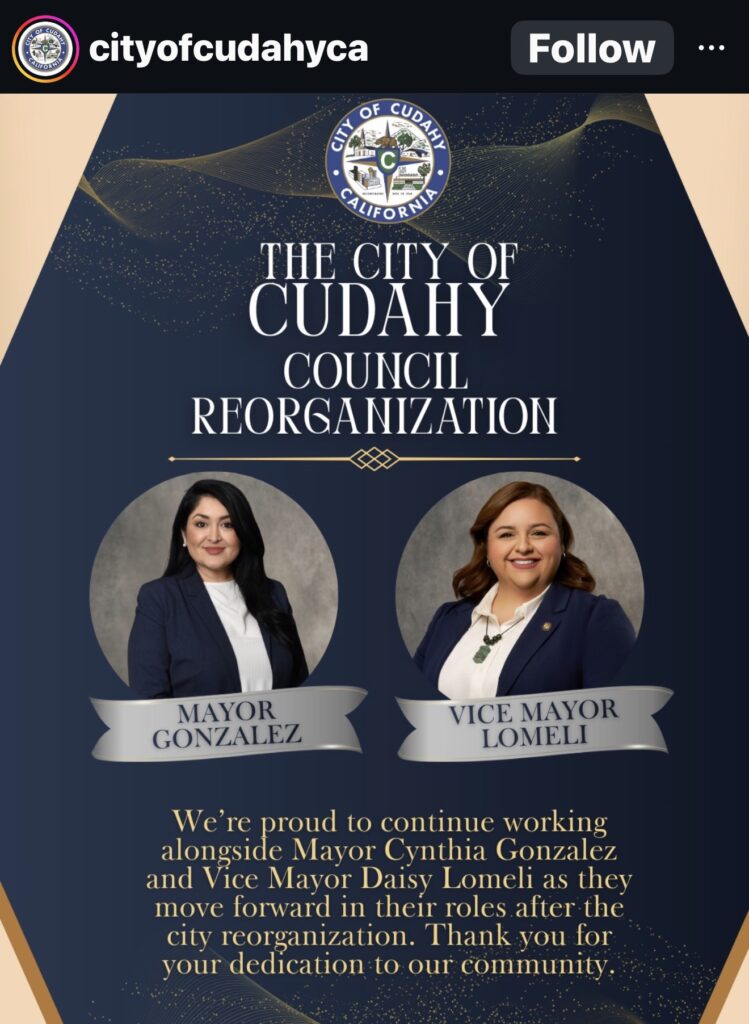
    Six months passed without meaningful public updates on the FBI investigation, without any serious council conversation about consequences, and without any sign that the city was willing to confront the gravity of what transpired. Instead, in a decision so on-brand for Cudahy’s political DNA it almost defies parody, the council selected Cynthia Gonzalez as Mayor during its December 16, 2025 reorganization meeting. Daisy Lomeli was named vice mayor, and councilmembers Elizabeth Alcantar, Martin U. Fuentes, and Amanda Gomez remained firmly in place.

    Screenshot

    The city posted celebratory graphics and cheerful messaging about “continued leadership,” as if the last year never happened. Gonzalez posted a polished Instagram announcement thanking the community, promising leadership heading into 2026 under the slogan UNIDOS COMO PUEBLO, United as a Community, a line that reads more like a script than a sentiment in light of the divisiveness she created.

    Residents did not forget. Screenshots resurfaced. Memory resurfaced. Skepticism resurfaced. The question wasn’t whether the controversy happened. It was why the city behaved as if it didn’t matter.

    This Isn’t About Politics – It’s About Whether Cudahy Ever Learned Anything

    No serious observer is debating whether Cynthia Gonzalez’s words were reckless. The issue now is the system that refused to hold her accountable and instead rewarded her. Did political alliances overshadow integrity? Did ideological loyalty matter more than safety? Did the investigation stall into silence because it was inconvenient? Or did Cudahy simply do what Cudahy has always done – wait out outrage and hope people move on?

    The continuity is impossible to ignore. Cudahy’s historic corruption didn’t just destroy trust; it hard-wired a governing instinct to protect insiders, minimize scandal, and choose self-preservation over ethical leadership. That instinct is alive and well.

    As Gonzalez now leads the city into 2026, Cudahy finds itself not in a redemption arc, but in another chapter of the same long, exhausting story: a city that keeps proving it hasn’t truly learned from its past and continues to elevate officials whose words and actions undermine credibility, safety, and public trust.

    Cudahy didn’t escape its legacy. It embraced it again.

  • CONCEALED IN PLAIN SIGHT: How Sworn Admissions, Digital Forensics, and Expert Evidence Were Buried While a Father Lost His Children

    CONCEALED IN PLAIN SIGHT: How Sworn Admissions, Digital Forensics, and Expert Evidence Were Buried While a Father Lost His Children

    The Ventura County court is now under fire for widespread civil rights abuses and a brazen failure of due process that cuts across every corner of its legal system.

    In one of the most egregious failures, a father lost his children not because of truth, but because the court embraced corrupted evidence and helped conceal the proof that would have cleared him.

    That is not a metaphor. It is the factual spine of this case.

    What follows is not interpretation, inference, or theory. It is sworn testimony, independent forensic confirmation, a documented criminal investigation, and a judicial record defined less by what it weighed than by what it refused to touch.

    The Admission That Should Have Changed Everything

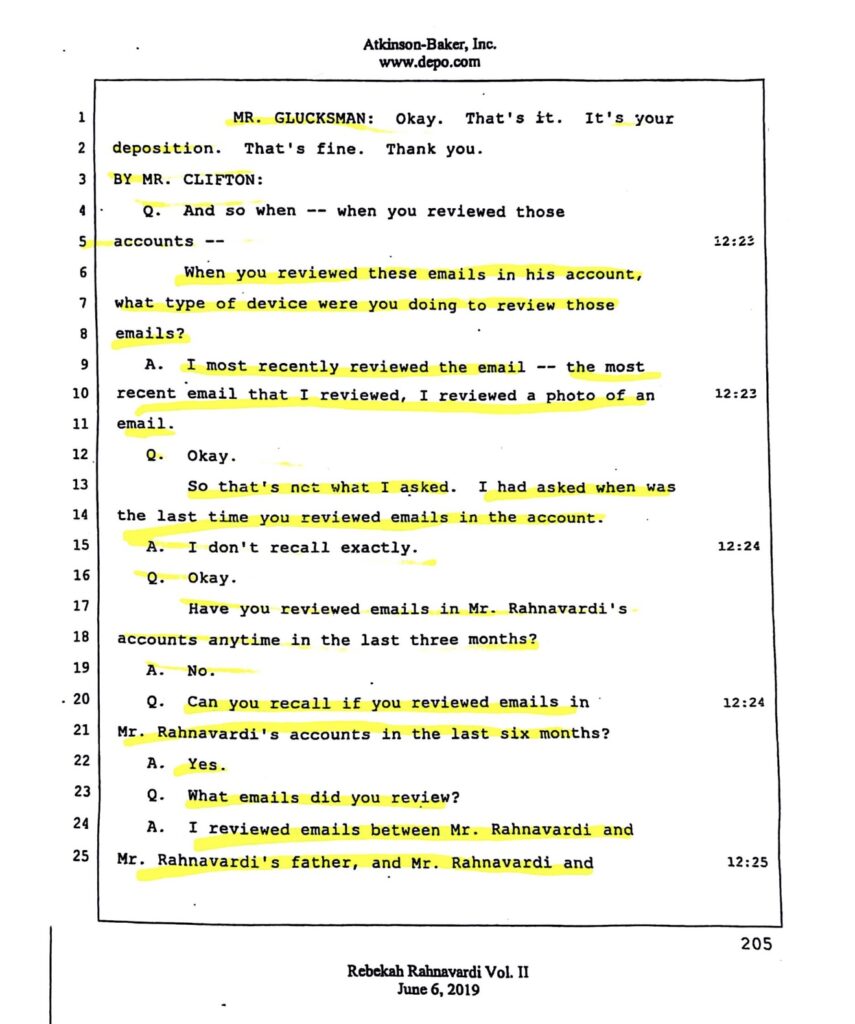
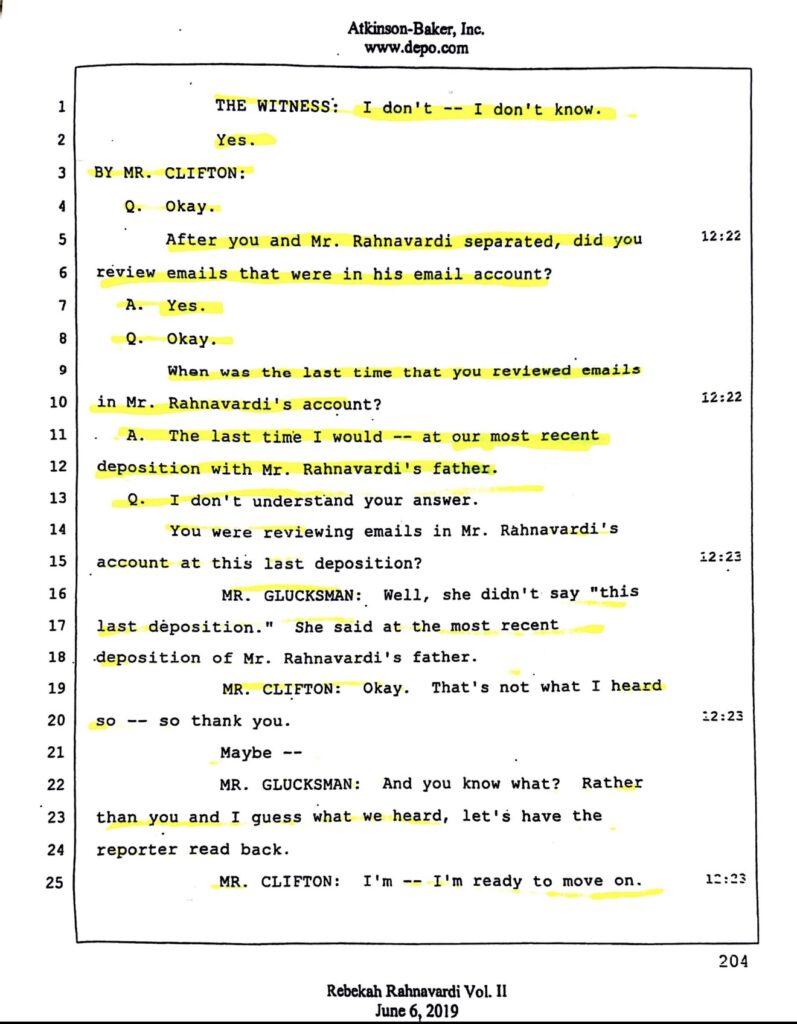
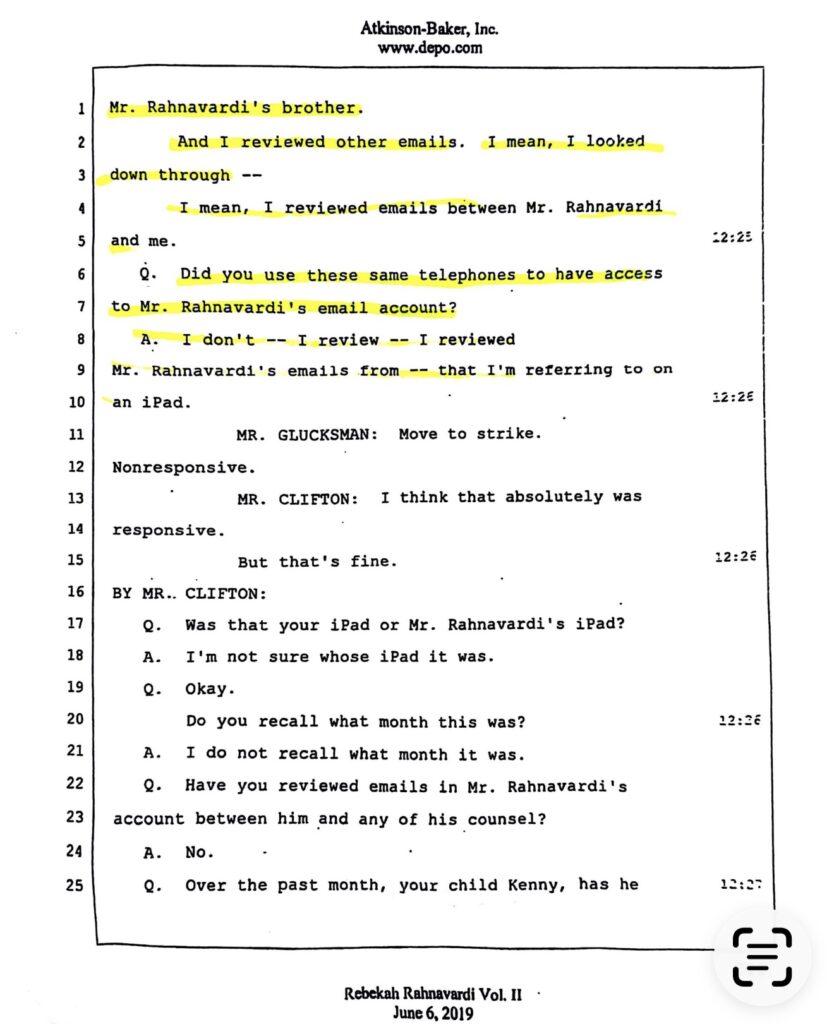
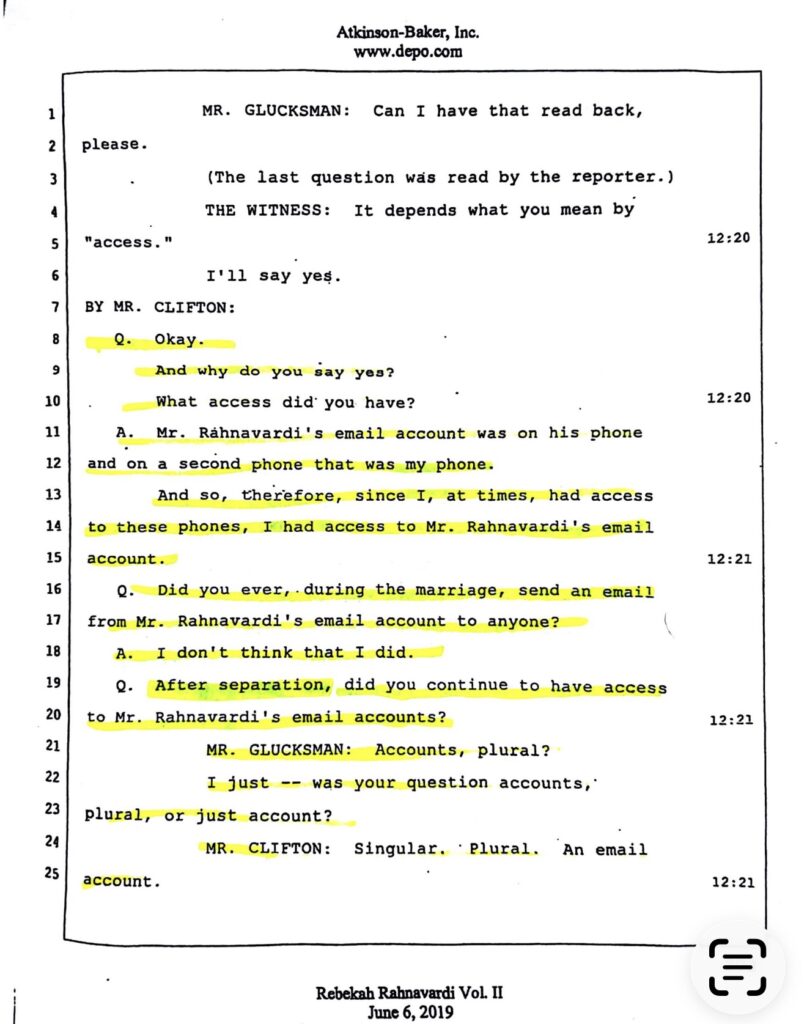
    In a 2019 deposition, pages 202 through 206, Rahnavardi’s wife ex-wife Rebekah testified under oath. Not ambiguously. Not hypothetically. Directly.

    She admitted she had access to Rahnavardi’s email on more than one phone.
    She admitted she reviewed his emails after separation.
    She admitted seeing emails between Amir and his family.
    She described accessing accounts through an iPad she could not clearly identify.

    This was not hearsay. This was not an allegation made by Rahnavardi. This was sworn testimony.

    And it mattered, because the family court’s later rulings relied heavily on digital communications attributed to Rahnavardi – messages, screenshots, and reconstructed threads that would become the backbone of restrictions imposed on his parental access.


    The Forensics That Confirmed the Admission

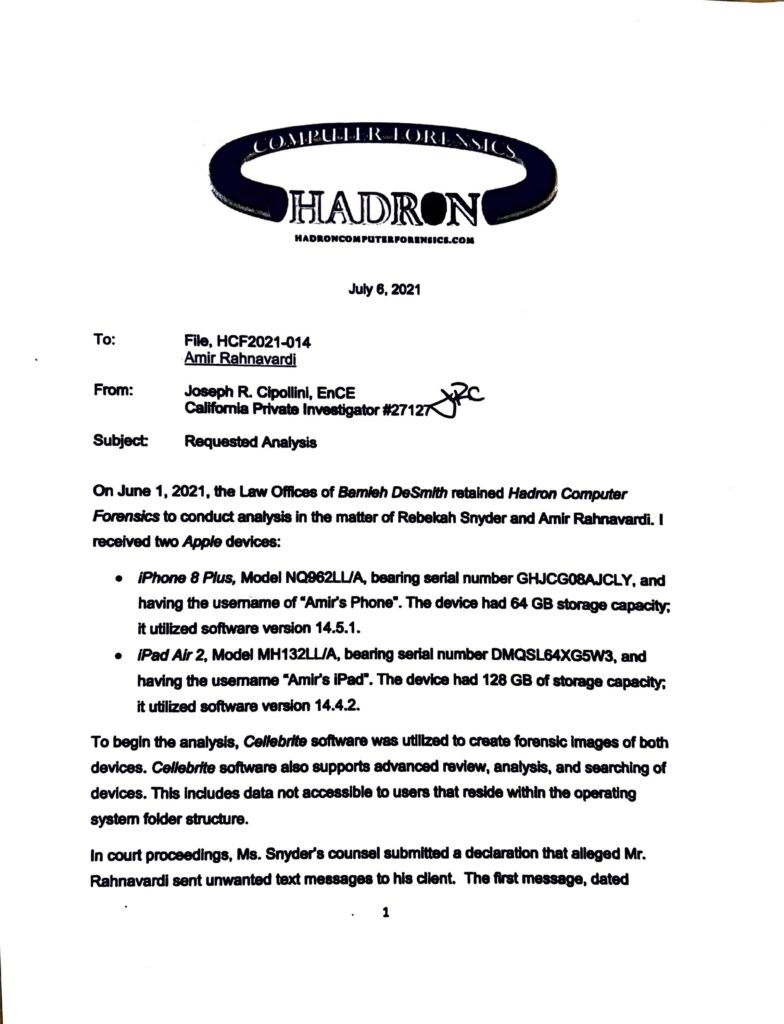
    Independent digital forensic expert Joseph Cipollini examined the underlying data. His findings were not speculative and they were not subtle.

    Unauthorized access activity dating back to 2019.
    iCloud access from devices Rahnavardi did not own.
    Messaging irregularities consistent with altered or reconstructed threads.
    Activity patterns consistent with access from locations associated with his ex-wife Rebekah.

    The connective tissue here is critical. The sworn admission and the forensic findings align. One explains the other.

    This is how manipulation becomes possible. This is how altered timestamps appear. This is how screenshots replace native files. This is how messages emerge that were never sent.

    The Recusal That Never Happened

    According to Rahnavardi’s account – clearly labeled as such – Cipollini told him in 2021, “If Lief is your judge, he’ll have to recuse himself.”

    What is not disputed is what followed.

    Judge Michael Lief did not recuse.
    No disclosure appears on the record.
    Cipollini’s forensic evidence was suppressed.

    The investigative question writes itself. If a recusal concern was raised, why did the judge remain on the case – and why was the forensic evidence erased from view?

    When Law Enforcement Found a Crime

    This was not confined to family court.

    Detective Michael Spears opened Case #922-00259-2261-115 and documented unauthorized computer access under Penal Code 502(c)(1). The report included theft of Rahnavard’s iPad and unauthorized access to his accounts. Spears prepared the case for submission to the District Attorney.

    The DA declined prosecution due to lack of prior criminal record. Not because no crime occurred.

    That distinction matters. A declination is not an exoneration. It is a prosecutorial decision – and the underlying offense remains documented.

    Yet the family court ignored the police report entirely.

    How the Evidence Was Weaponized

    Across the evidence used against Amir, the pattern is unmistakable.

    Screenshots instead of native files.
    Altered timestamps.
    Threads Amir never sent.
    Metadata inconsistent with his devices.

    These manipulations were only possible because of the unauthorized access admitted under oath and confirmed by forensics. Without that access, the evidence collapses.

    With it, the court built years of restriction.

    A Pattern of Judicial Suppression

    Based on the record, Rahnavardi alleges that Judge Lief blocked forensic evidence, ignored the Penal Code 502(c)(1) police report, prevented exculpatory material from entering the record, maintained supervised visitation without evidentiary basis, failed to rule on a 2021 phone-contact request for nearly four years, and issued rulings without hearings in 2022.

    Added to that record is a stark procedural fact: the “Dusty” ruling was issued without holding any evidentiary hearing at all.

    The issue is not what evidence existed. It is what the court refused to look at.

    Science Rejected, Allegation Accepted

    One allegation became foundational: that a family dog, Dusty, had bitten a child.

    Two experts dismantled it.

    Jill Miller, a canine bite-pattern expert, reviewed the injuries and concluded they were not dog bites. The findings were inconsistent with any canine bite pattern. She refused payment and expressed alarm. Her evidence was suppressed.

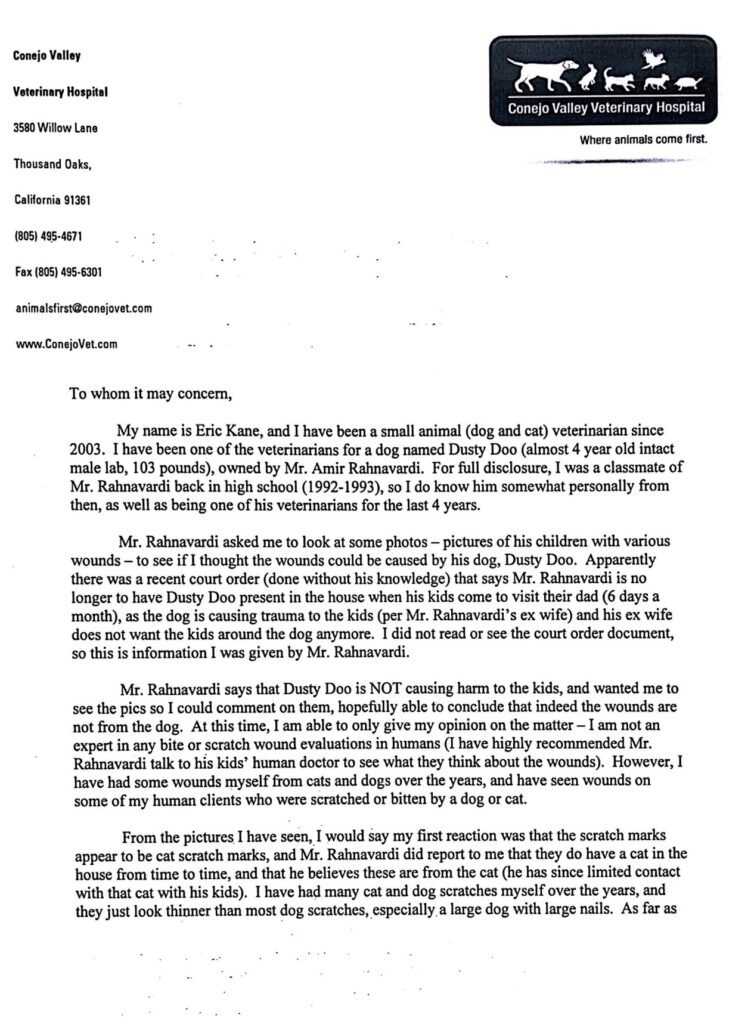
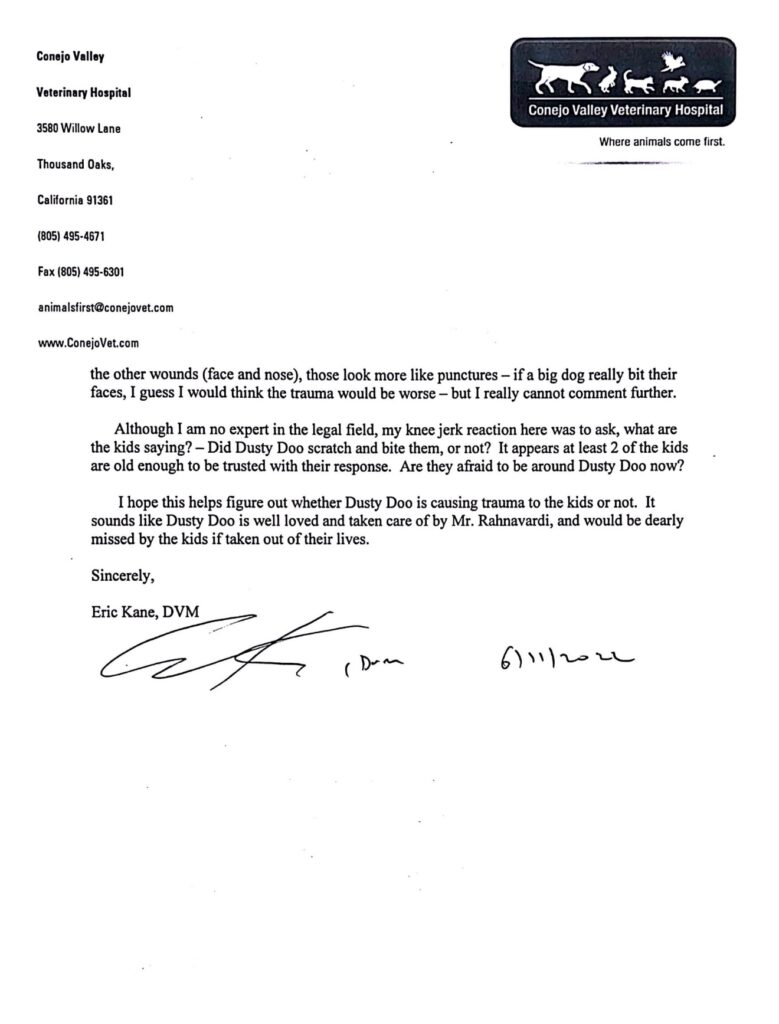
    Dr. Eric Kane, DVM, found no aggression history, no bite history, and injuries inconsistent with canine bites. His evidence was also suppressed.

    False allegation. Two experts contradict it. Experts excluded. Allegation elevated into years of restriction.

    This is how outcomes are engineered.

    The Cost That Never Makes the Docket

    Amir has been deprived of normal parental access for years. His children endured prolonged alienation. His father spent his final years watching injustice inflicted on his son and grandchildren, powerless to stop it.

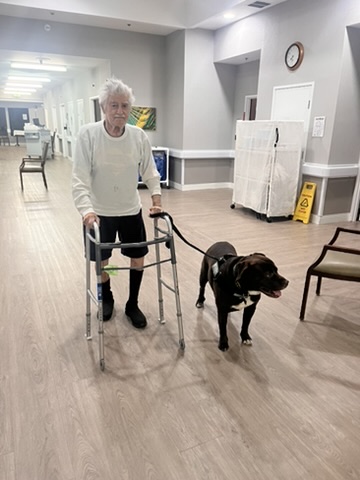
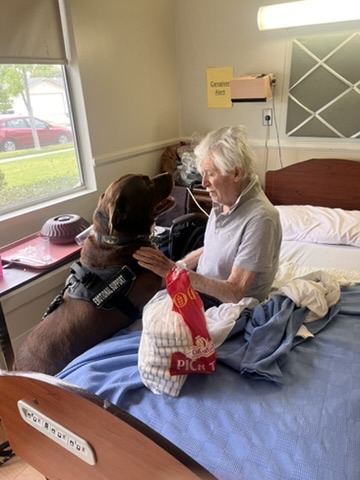
    Dusty was not incidental. He was a stabilizing emotional presence through home care, hospice, and family life – a constant when everything else was stripped away.

    This harm was not abstract. It was lived daily.


    The Man Who Lost Faith

    This is where faith in institutions breaks – not with a single ruling, but with the realization that every safeguard failed at once. That sworn testimony could be ignored. That forensic science could be buried. That police findings could be treated as irrelevant. That experts could be silenced while accusations stood alone.

    A Moral Witness Beyond Borders

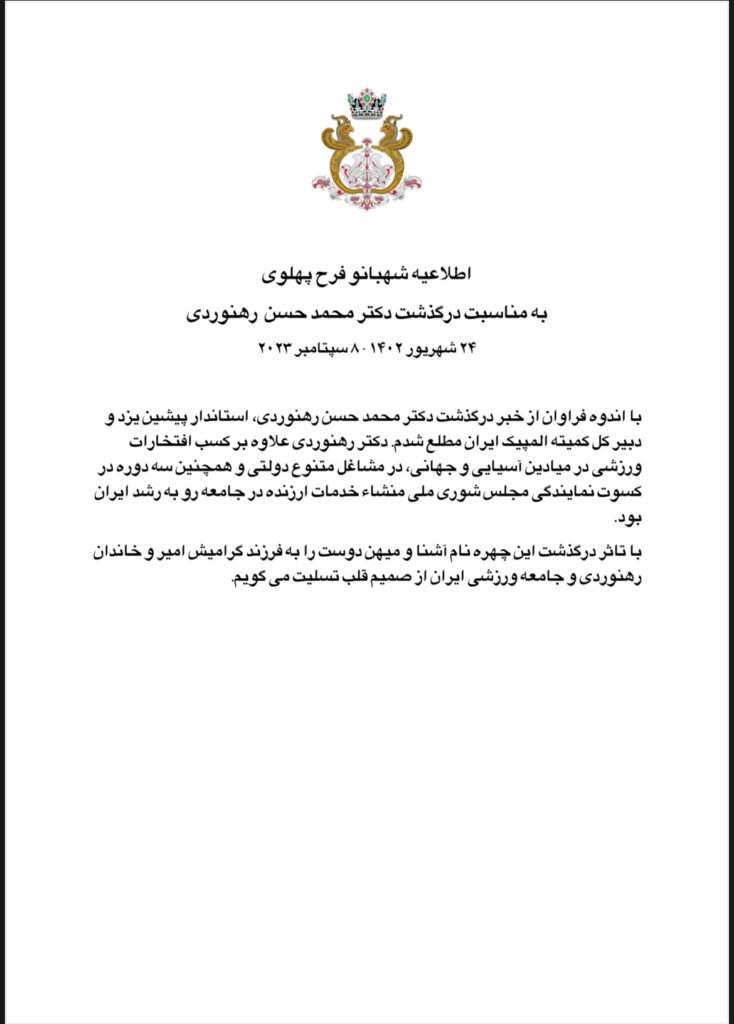
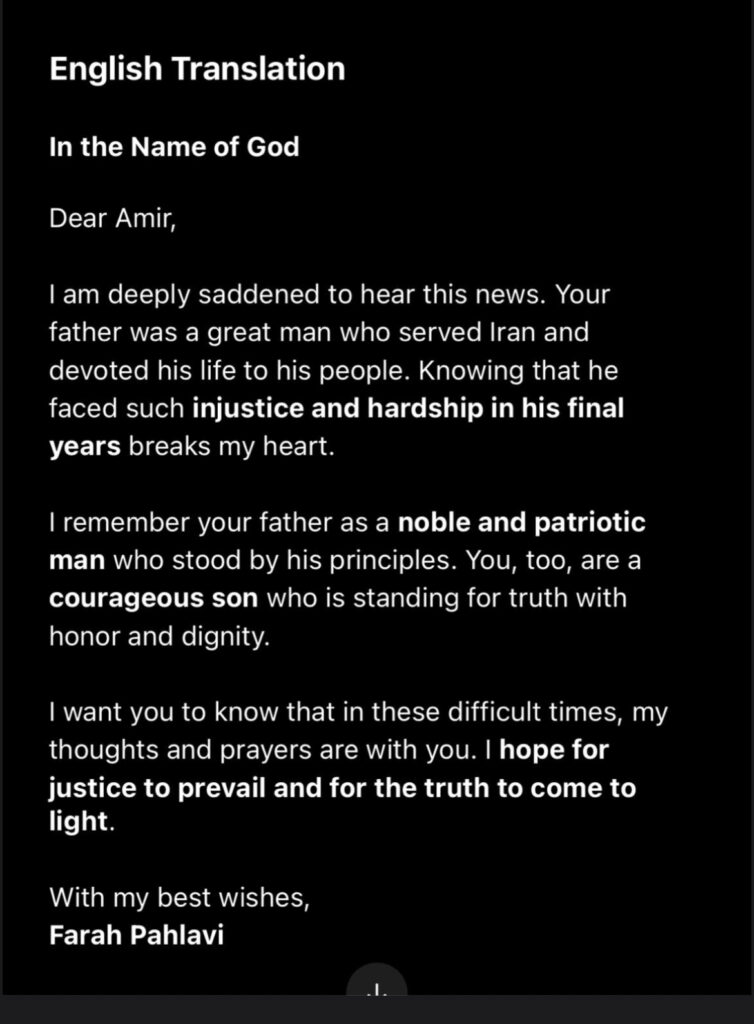
    In a letter written in English and Farsi, Her Imperial Majesty Queen Farah Pahlavi recognized Amir’s father’s stature and expressed grief and concern over the injustice and hardship inflicted during his final years.

    It was not political. It was moral.

    And it underscored what the record already shows: this was not merely a legal dispute. It was a human one.

    The Question That Ends the Story

  • Two Campuses, One Pattern: Brown University Shooting and Cerritos College Student Extremist Arrested in Terror Plot Expose a Radicalization Crisis

    Two Campuses, One Pattern: Brown University Shooting and Cerritos College Student Extremist Arrested in Terror Plot Expose a Radicalization Crisis

    As federal prosecutors detail how a former Cerritos College student leader allegedly crossed the line from rhetoric into operational terror planning, another American campus is grappling with a different but equally sobering reality.

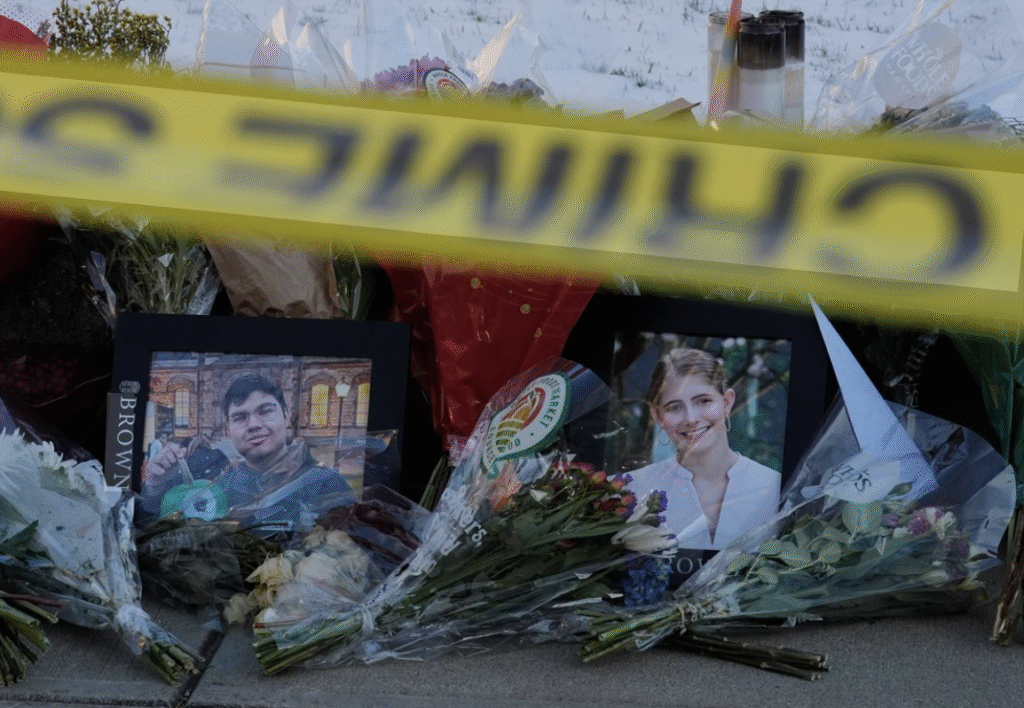
    On December 13, 2025, a masked gunman opened fire inside an academic building at Brown University, killing two students and wounding nine others during final exam preparations. The attacker fled the scene and, as of publishing, remains at large. Law enforcement officials have released surveillance footage and confirmed that no suspect or motive has been publicly identified.

    Authorities have been unequivocal on one point: there is no confirmed ideological motive tied to the Brown shooting. Investigators have warned against speculation and the circulation of unverified claims online, noting that misinformation can actively interfere with the investigation and put innocent people at risk.

    And yet, the vacuum left by unanswered violence has predictably filled with narrative warfare.

    In the hours following the attack, critics accused Brown University of quietly scrubbing references to pro-Palestinian activism from its websites, an allegation amplified by Rabbi Poupko, who urged the public to examine student-affiliated social media pages instead. His claim does not allege responsibility for the shooting, nor has law enforcement drawn any connection between the attack and campus activism. What it does raise, however, is a parallel concern now surfacing on the opposite coast: institutional reflexes toward damage control rather than transparency.

    The comparison is not about motive.
    It is about mechanics.

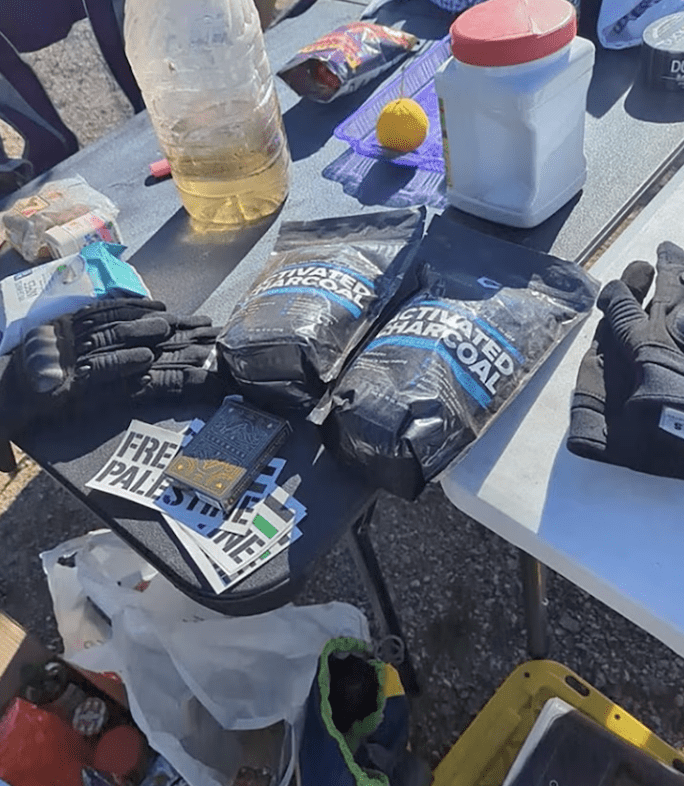
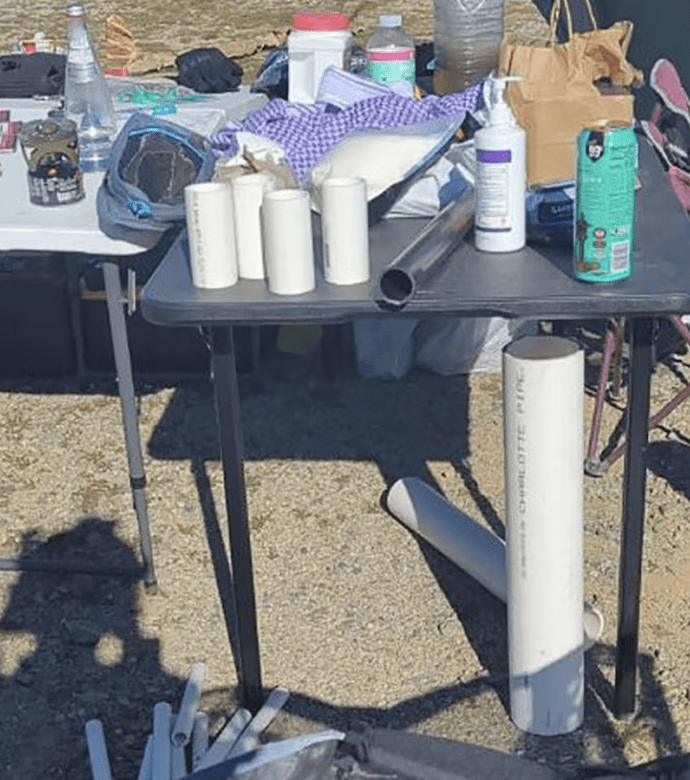
    At Cerritos College, federal affidavits lay out concrete allegations of radicalization crossing into logistics. Prosecutors describe bomb-making stations marked with “Free Palestine” stickers, targeting symbols associated with Hamas propaganda, and a former student government president allegedly participating in an explosives dry-run in the Mojave Desert as part of a planned New Year’s Eve attack in Los Angeles.

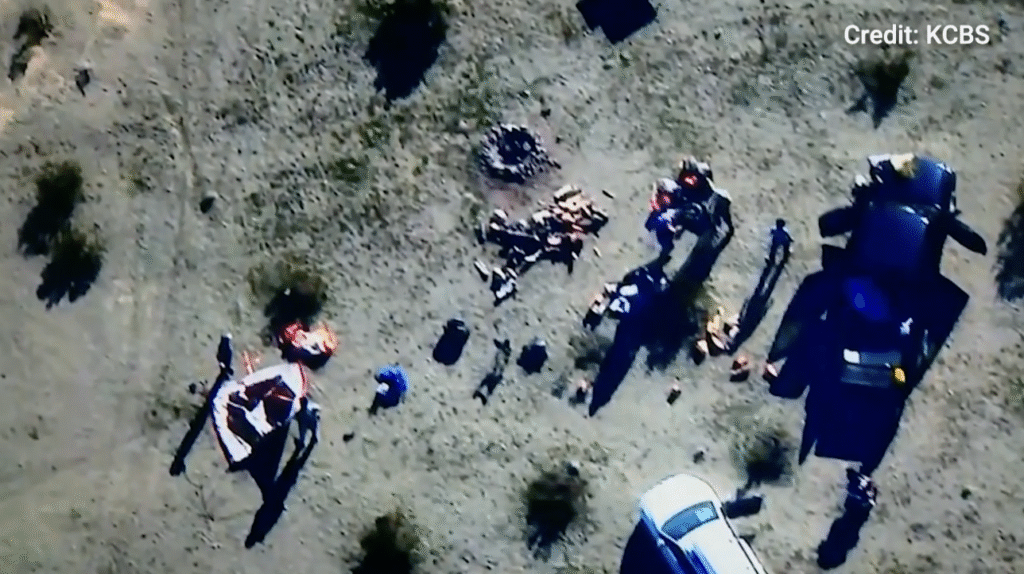
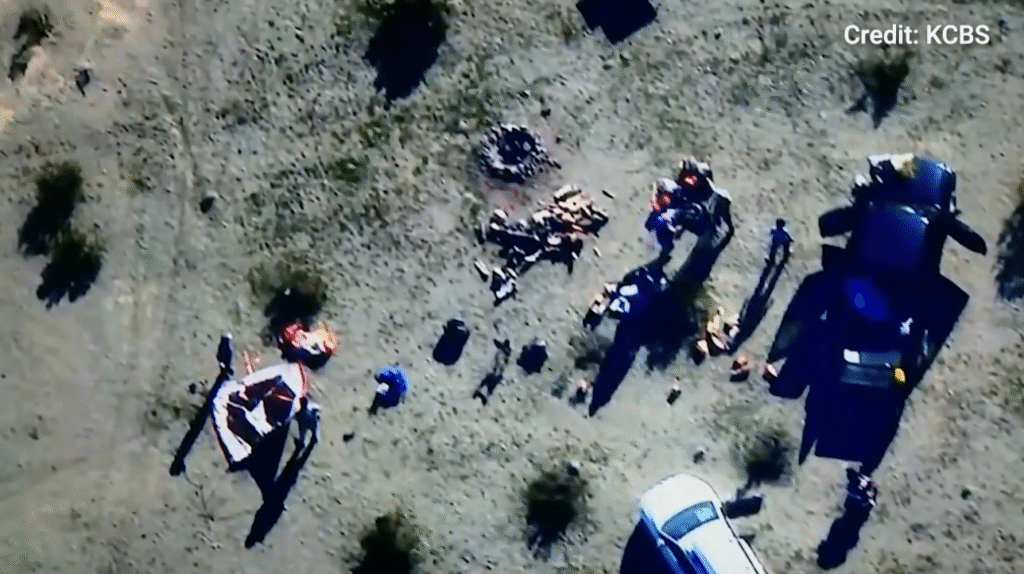
    Evidence presented by the U.S. Justice Department in the indictment of four alleged members of the “Turtle Island Liberation Front” accused of plotting a New Year’s Eve bombing attack in Los Angeles and Orange counties in California. Photo: U.S. Justice Department

    At Brown, investigators are still searching for a shooter and urging the public not to invent explanations where facts do not yet exist.

    Two very different cases.
    Two very different evidentiary records.

    But one shared failure point.

    Inside ASCC: “Radical Was the Baseline”

    While Cerritos College administrators insist there was “no known threat” connected to campus activity, accounts from inside the Associated Students of Cerritos College tell a far more troubling story.

    A current Cerritos College student who served alongside the former ASCC president contacted The Current Report to describe what they experienced as a deeply radicalized student government environment during that tenure. The source, who requested anonymity due to fear of retaliation, said the radicalization was not subtle, isolated, or fringe, it was the dominant culture.

    According to the source, the former student leader was already aggressively radical in his views long before his removal from office, particularly around Indigenous identity, land narratives, and environmental activism framed in absolutist terms. More alarming, the student said, was that the college did not attempt to moderate or challenge the direction ASCC was taking. In their experience, it was allowed – and at times encouraged.

    The insider described an atmosphere where dissent was punished.

    When the source and only one other senator voted against initiatives they believed crossed from advocacy into radical ideology, they say they were targeted and isolated by the rest of the ASCC group. The pressure was social, political, and sustained.

    “It wasn’t just him,” the source explained. “There were many students in that group who were raging radicals.”

    The student ultimately resigned from ASCC, citing the environment as untenable and hostile to anyone who did not conform ideologically.

    The account does not allege criminal conduct on campus, nor does it claim administrators had foreknowledge of future violence. What it does establish is a pattern of normalization, a student government culture where radical rhetoric was routine, opposition was suppressed, and institutional oversight was effectively absent.

    That context matters.

    Because when federal prosecutors later allege that a former ASCC president moved from ideological fixation into logistical planning for violence, the question is no longer how this happened overnight. The question is how long warning signs were visible – and ignored – inside official governance spaces that were supposed to protect students, not radicalize them.

    Brown University: A Different Crime, the Same Blind Spot

    As the Cerritos case moves through federal court, Brown University remains in crisis mode.

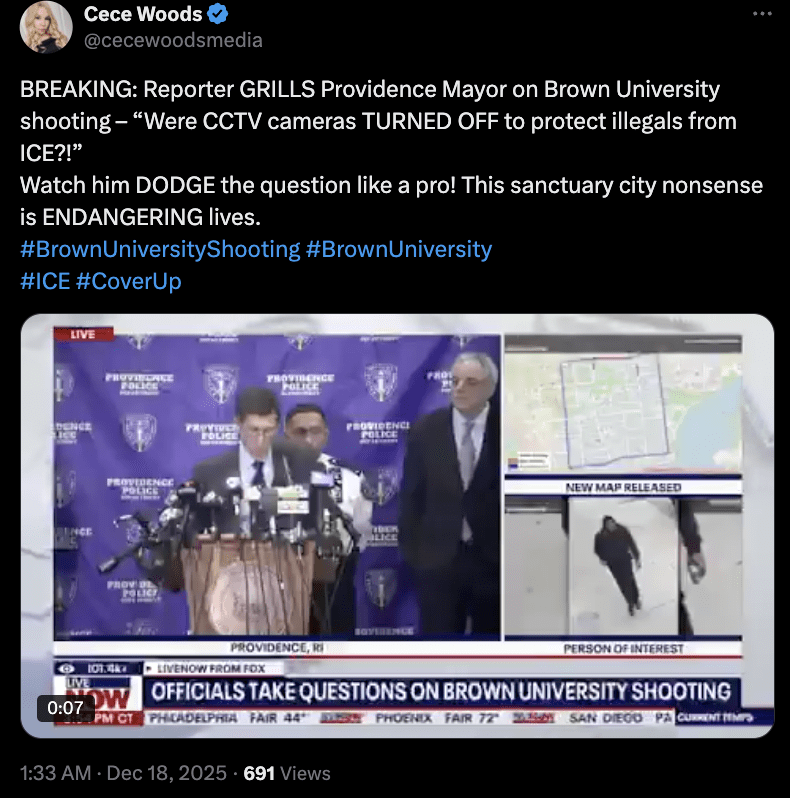
    The shooting is an open investigation. Officials have repeatedly stressed that there is no confirmed ideological link and have cautioned against speculation. Yet public trust has been strained by unanswered questions, including a press exchange in which a reporter pressed the Providence mayor on whether CCTV cameras were fully operational at the time of the attack. The mayor declined to answer directly.

    Listen to the video here.

    There is no evidence cameras were disabled for political or immigration-related reasons. But in moments like these, evasion fuels suspicion, not reassurance, especially when institutions are already under scrutiny for transparency failures.

    Again, the issue is not motive.
    It is institutional behavior under pressure.

    Different Outcomes. Same Blind Spot.

    The Brown University shooting remains unresolved.
    The Cerritos College case is now a federal prosecution.

    Conflating them would be irresponsible.

    But refusing to examine what they reveal about campus blind spots would be equally dangerous.

    Universities are willing to host activism, sanction demonstrations, and issue sweeping statements about inclusion and safety. They are far less willing to conduct hard internal audits when ideology hardens into extremism—or when student governance spaces become incubators rather than safeguards.

    Radicalization does not announce itself with sirens.

    It evolves quietly, through language, symbolism, social pressure, and normalization – long before police tape or court filings appear. Ignoring that progression does not make campuses safer. It simply ensures the reckoning comes later, louder, and at a far higher cost.

    Different outcomes.
    Same blind spot.

    And until universities stop confusing silence with safety, the public will keep learning about these failures the same way, through arrest records, police tape, evasive press conferences, and shattered trust.

  • Former Cerritos College Student President Busted in Chilling New Year’s Eve Bomb Plot – Inside the Radical ‘Turtle Island’ Cell Targeting LA’s Heart

    Former Cerritos College Student President Busted in Chilling New Year’s Eve Bomb Plot – Inside the Radical ‘Turtle Island’ Cell Targeting LA’s Heart

    If anyone is still clinging to the illusion that radical extremism in Southern California is limited to social media rants or fringe online forums, federal authorities just shattered that fantasy.

    This week, the FBI confirmed it dismantled an active domestic terror cell allegedly planning a coordinated bombing campaign in Los Angeles timed for midnight on New Year’s Eve. Four suspects are now in federal custody, charged with conspiracy and possession of unregistered destructive devices. And one of them is not an anonymous radical hiding in the shadows, but a former college student government president who once operated in plain sight, under the banner of “sustainability,” “equity,” and institutional trust.

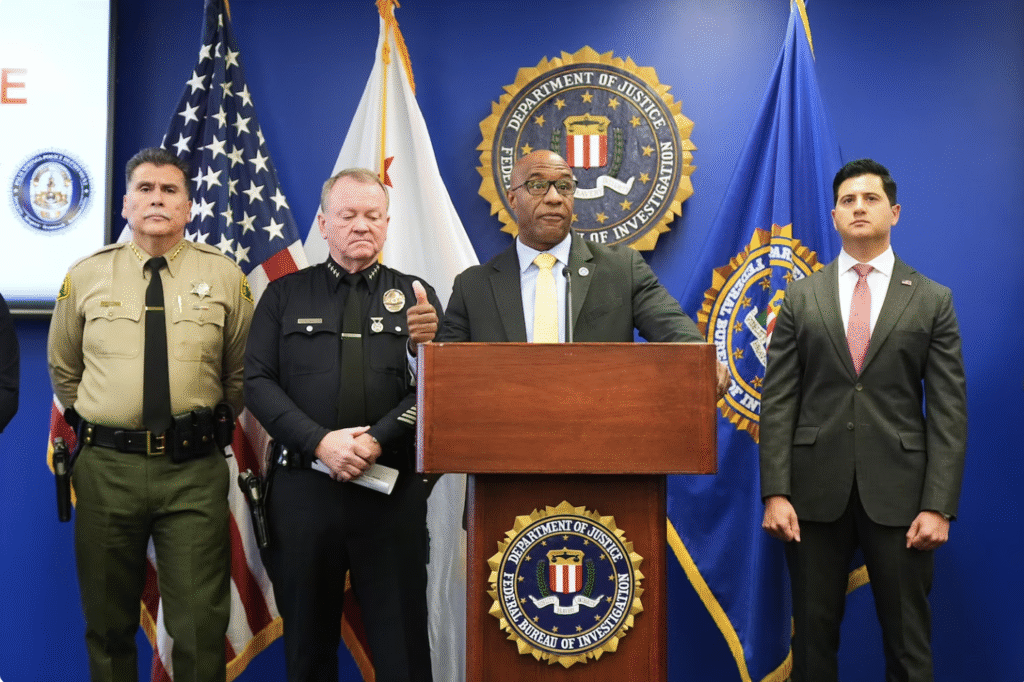
    FBI Assistant Director in Charge Akil Davis, center, is flanked by, from left to right, Los Angeles County Sheriff Robert Luna, LAPD Chief Jim McDonnell and First Assistant United States Attorney Bill Essayli while announcing developments on a terrorism investigation during a press conference, Dec. 15, 2025, in Los Angeles.

    His name is Dante Anthony Gaffield.

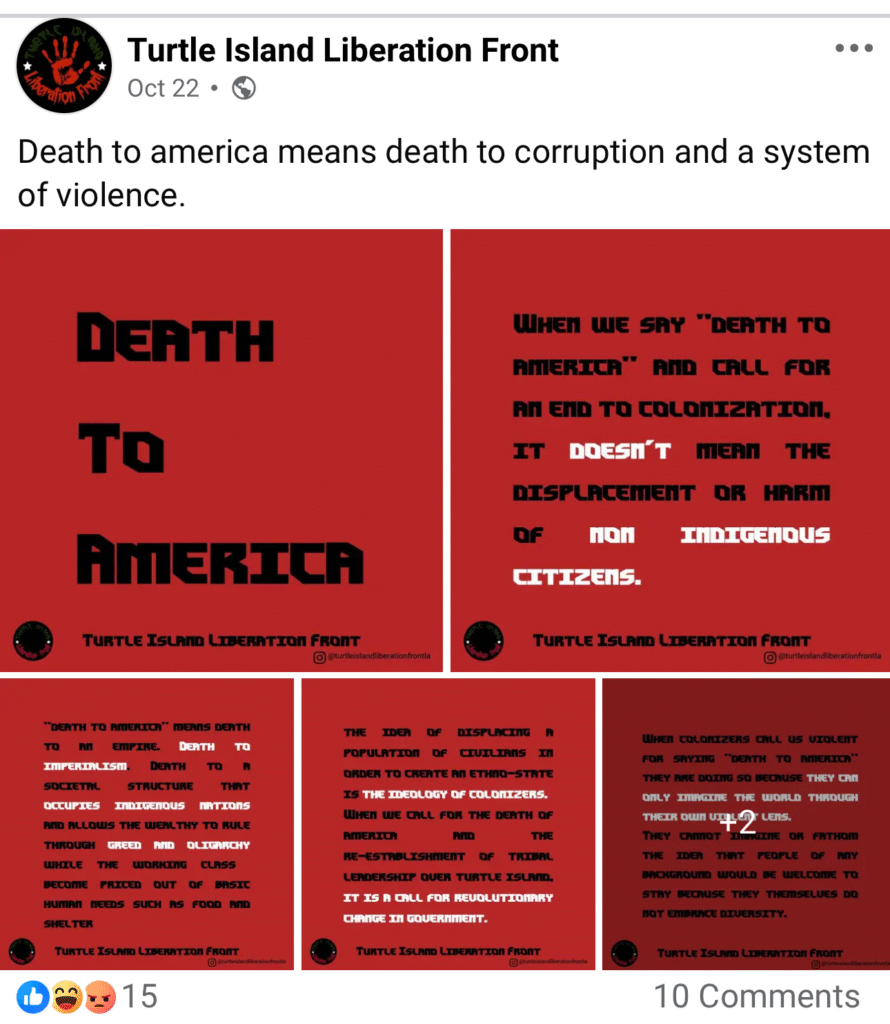
    Federal records identify Gaffield, 24, as a member of the Turtle Island Liberation Front (TILF), an extremist far-left collective described by prosecutors as anti-government, anti-capitalist, and violently pro-Palestine. Within that network, Gaffield allegedly operated under the alias “Nomad.”

    And now, that identity has been formally confirmed.

    Cerritos College confirmed via email to The Current Report that the student depicted in the campus image is the same individual identified by federal authorities as Dante Gaffield, the former Associated Students of Cerritos College (ASCC) president now charged in the alleged terror plot.

    From Campus Leader to Federal Defendant

    Before the bomb components, encrypted chats, and desert test runs, Gaffield was a familiar figure on the Cerritos College campus in Norwalk.

    He rose through student government ranks as Director of Sustainability, promoting native plant coalitions, biodiversity initiatives, and environmental resolutions. In 2024, he was elected ASCC President, entrusted to represent the student body and liaise with administrators, trustees, and faculty on issues ranging from equity to campus policy.

    That presidency unraveled quickly.

    By September 2024, just months into his term, Cerritos College convened a special election following allegations against Gaffield and internal dysfunction within the ASCC executive branch. Elizabeth Miller, the Dean of Student Services and ASCC advisor, confirmed at the time that issues involving both Gaffield and the vice president prompted the vote. Gaffield was removed. His term ended abruptly. The specific allegations remain sealed under student privacy rules.

    What did not end was his trajectory.

    Federal investigators now say that by late 2025, Gaffield had fully immersed himself in TILF’s militant ecosystem.

    Operation Midnight Sun

    According to a 40-page DOJ affidavit, TILF developed a coordinated attack plan dubbed “Operation Midnight Sun,” designed to detonate at the exact moment Los Angeles rang in 2026.

    The plan allegedly called for improvised explosive devices built from PVC pipe and homemade black powder derived from potassium nitrate, charcoal, and sulfur, packed with shrapnel and concealed in backpacks. Devices were to be planted simultaneously at facilities linked to two U.S. companies engaged in interstate commerce, exploiting New Year’s Eve fireworks and emergency response overload.

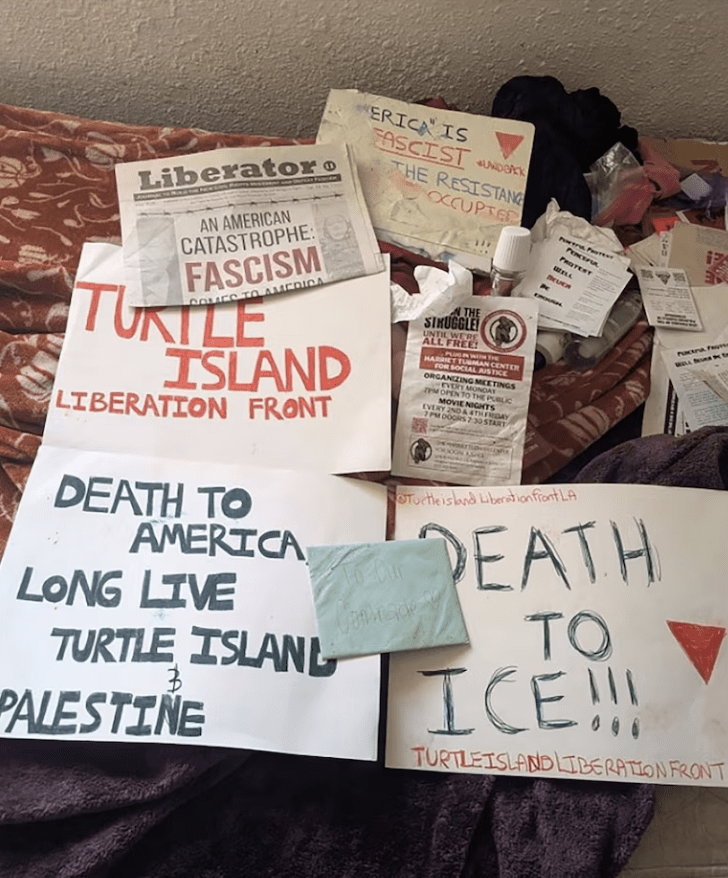
    Targets would be marked with red inverted triangles, a symbol used by Hamas to designate strikes, with graffiti placed nearby. Each team would consist of four operatives, while a fifth monitored police scanners to coordinate escapes.

    This was only phase one.

    Federal filings state that phase two, scheduled for January 2026, involved pipe bomb attacks on ICE agents, with recorded conversations discussing plans to “take some of them out” to instill fear.

    Evidence presented by the U.S. Justice Department in the indictment of four alleged members of the “Turtle Island Liberation Front” accused of plotting a New Year’s Eve bombing attack in Los Angeles and Orange counties in California. Photo: U.S. Justice Department

    Gaffield’s Alleged Role

    Prosecutors allege Gaffield formally joined the inner splinter faction, the Order of the Black Lotus, on December 7, 2025. During a clandestine meeting, he reviewed an eight-page handwritten bombing blueprint and was added to an encrypted Signal chat reserved for trusted members.

    Within those chats, Gaffield allegedly discussed logistics, communications, and equipment, including boasting about storing burner phones for the New Year’s Eve operation.

    Evidence presented by the U.S. Justice Department in the indictment of four alleged members of the “Turtle Island Liberation Front” accused of plotting a New Year’s Eve bombing attack in Los Angeles and Orange counties in California. U.S. Justice Department

    On December 12, he traveled to Lucerne Valley in the Mojave Desert to participate in a dry-run explosives test. Unbeknownst to him, the vehicle he rode in belonged to the FBI. When he helped unload PVC pipes, primers, and bomb precursors beneath a pop-up tent, agents moved in.

    No device detonated because law enforcement intervened in time.

    How the FBI Penetrated the Cell

    The case hinged on classic counterterrorism infiltration.

    A confidential human source, vetted by the FBI since 2021, provided initial intelligence on November 26, 2025, after TILF leader Audrey Illeene Carroll allegedly handed over the Midnight Sun plan. An undercover FBI employee embedded in meetings, recording conversations and tracking movements.

    Surveillance documented co-conspirators purchasing bomb components in disguise, photographing fuse materials, and attempting to evade detection. Amazon purchase records tied Carroll to potassium nitrate deliveries. Signal chats filled in the rest.

    Arrests were made on December 12 in the desert. Carroll, Gaffield, Zachary Aaron Page, and Tina Lai were taken into custody. Searches of their homes uncovered extremist propaganda, bomb-making materials, stolen Tasers, and explicit calls for violence. A fifth suspect tied to a related plot was later arrested in New Orleans.

    The Campus Question Cerritos Won’t Answer

    And this is where the story circles back to Cerritos College.

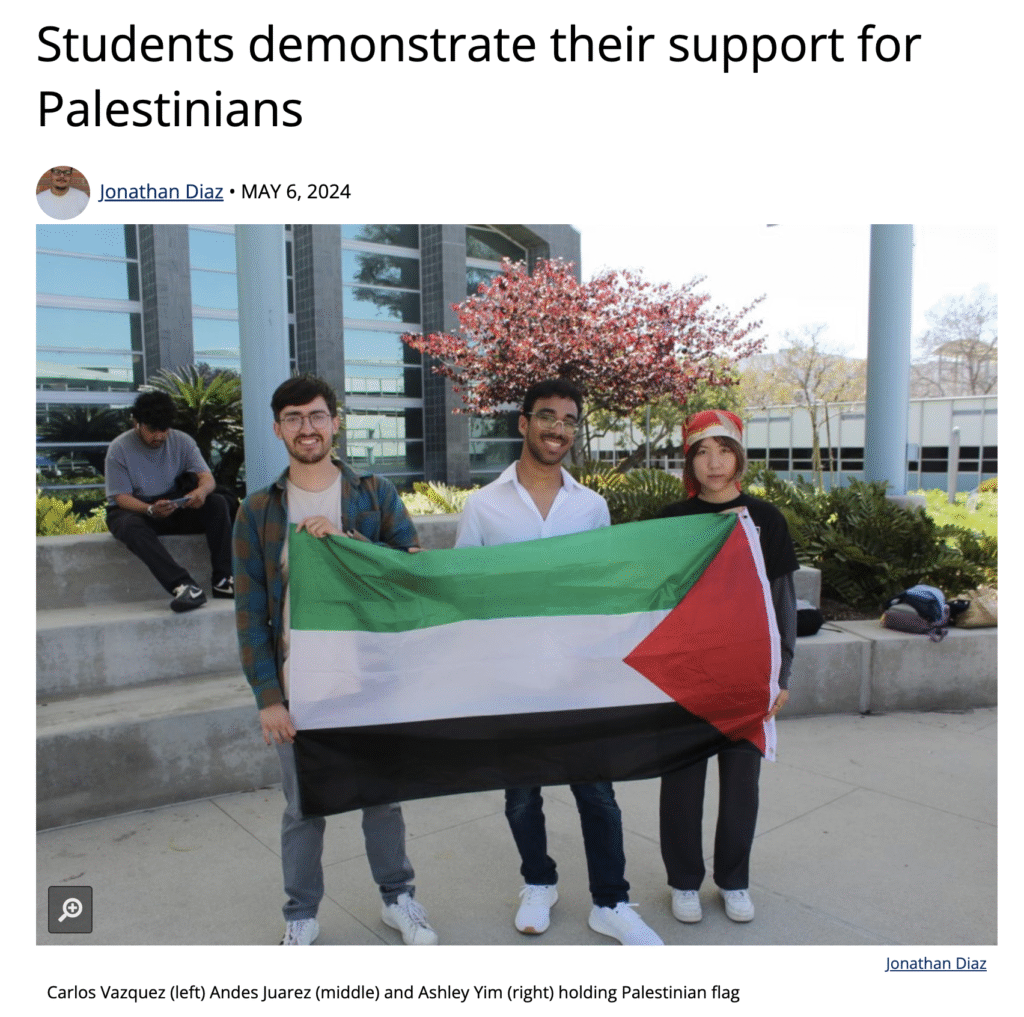
    During Gaffield’s tenure as ASCC President, the college actively sanctioned and hosted pro-Palestinian activism that closely mirrored TILF’s ideological framing. ASCC Senate minutes from April 10, 2024, document student leaders openly advocating for Gaza ceasefire resolutions at Cerritos City Hall. Days later, the Humanitarian Club staged an on-campus protest near the library, waving Palestinian flags and chanting liberation slogans, with no institutional pushback.

    This was not underground activity. It occurred in official forums, on college property, with administrative awareness.

    Yet when confronted with Gaffield’s arrest, Cerritos College moved swiftly to distance itself.

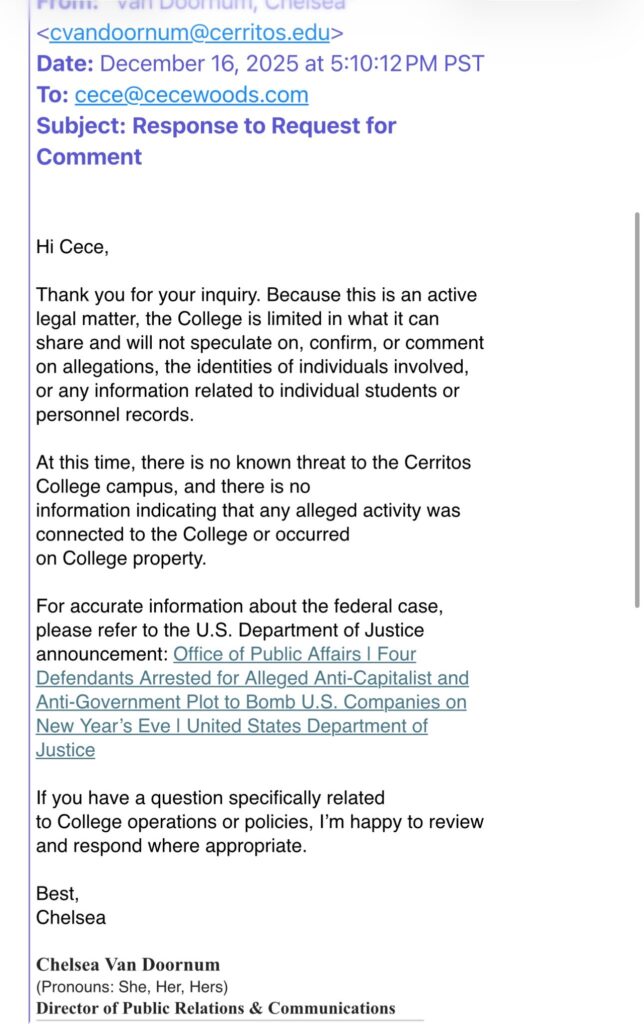
    In a December 16, 2025 email to The Current Report, Chelsea Van Doornum, Director of Public Relations & Communications, stated: “There is no known threat to the Cerritos College campus, and there is no information indicating that any alleged activity was connected to the College or occurred on College property.” She declined further comment, citing an active legal matter, and redirected inquiries to the Department of Justice.

    Screenshot

    What the college did confirm, however, is critical: the former student leader depicted in campus materials is the same individual now charged in the federal case.

    Silence, Scrubbing, and Accountability

    What Cerritos has not done is hold town halls, issue counseling alerts, review student government oversight, or explain how a campus leader could transition into an alleged domestic terror plot without institutional red flags.

    Where’s the accountability?

    Cerritos College didn’t lift a finger to investigate potential radicalization on its watch, nor did it offer reassurance to students now left wondering whether their campus was ever truly safe.

    That isn’t protection, it’s negligence.

    Students who sat beside this suspect in senate meetings, collaborated with him on campus initiatives, or marched under the same banners deserve more than a curt email dismissing the threat as “unrelated.” And the questions only deepen when you follow the paper trail, or what’s left of it – and what we’ve discovered is that public records appear to be disappearing.

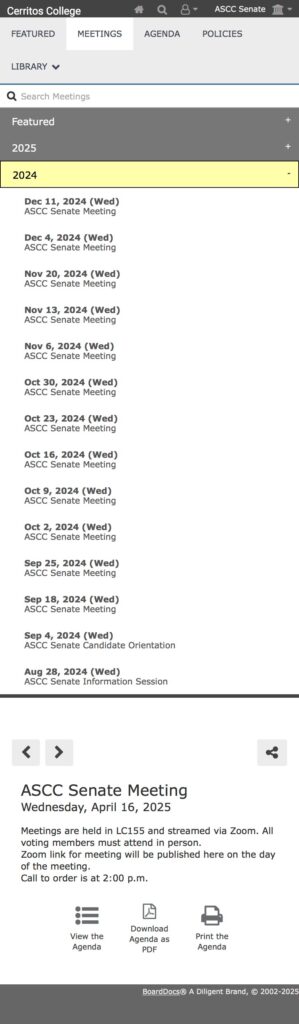
    The Current Report’s investigation into BoardDocs, the platform hosting ASCC meeting records, reveals troubling gaps: the April 16, 2025 Senate Meeting lists “Minutes” and an “Audio Player,” yet contains no accessible content, just metadata and emptiness. Looking back to 2024, when Dante Gaffield served as Director and then President, some meeting minutes remain publicly archived while others, particularly those touching on controversial issues like pro-Palestinian advocacy, are conspicuously harder to access or appear selectively preserved. Is this routine housekeeping, or a quiet erasure of records that might expose how extremist ideology was normalized in plain sight?

    Sources on campus whisper about a post-arrest purge, but Cerritos won’t comment, a silence that only amplifies suspicion that damage control has taken priority over student safety. Free speech is sacred, but when rhetoric crosses into calls for violence, institutions have a duty to intervene. By sanctioning protests without meaningful oversight, Cerritos may have inadvertently platformed the very extremism that culminated in this alleged plot. Gaffield’s story isn’t an anomaly, it’s a warning, and parents, students, and taxpayers should be demanding answers now. How many more “Nomads” are out there, groomed in plain sight?

    Whispers from multiple inside sources point to a far more unsettling possibility: Dante Gaffield, the disgraced former ASCC president now charged in a federal terror conspiracy, may have been quietly circling back to Cerritos College itself. According to sources with direct knowledge of campus activity, Gaffield had re-enrolled just weeks before his arrest in the Mojave Desert, raising urgent questions about whether the institution he once led had re-entered his orbit as a potential focal point of “Operation Midnight Sun.”

    Rather than confront those concerns head-on, Cerritos College has retreated behind a wall of institutional silence. Public Relations Director Chelsea Van Doornum has offered only boilerplate assurances that there is “no known threat” and no confirmed connection between the alleged plot and the campus, declining to address whether administrators were aware of Gaffield’s return or whether any internal review was triggered once his name surfaced in federal filings.

    For students and parents, that silence speaks volumes. If a former student body president accused of planning mass-casualty bombings was back on campus weeks before his arrest, the question isn’t whether Cerritos is technically liable. The question is whether the college ever meaningfully assessed the risk—or whether protecting the institution’s image once again took precedence over protecting the people inside it.

    Freedom of speech is non-negotiable. But when rhetoric escalates into operational violence, institutions have a duty to intervene.

    Gaffield’s trajectory, now confirmed from campus corridors to federal custody, is not an anomaly. It is a warning.

    Parents, students, and taxpayers deserve answers. How many more student leaders are being radicalized in plain sight while institutions hide behind boilerplate statements and legal shields?

  • Tragic Double Murder: Rob and Michele Reiner Found Dead – Son is Held Without Bail

    Tragic Double Murder: Rob and Michele Reiner Found Dead – Son is Held Without Bail

    On December 14, as the first night of Hanukkah approached, Los Angeles Police Department detectives were dispatched to the Brentwood home of Rob Reiner and his wife, Michele Singer Reiner. Inside, officers found the couple deceased, victims of multiple knife wounds. What should have been a season of light and family instead opened with violence, shock, and a crime scene that immediately drew the attention of news outlets around the world.

    By Monday morning, police had taken the couple’s son, Nick Reiner, into custody. Bail was initially set at four million dollars, then later revoked entirely, underscoring the gravity of the case and confirming that investigators were treating the deaths as a double homicide.

    According to widely reported accounts, it was the Reiners’ daughter who discovered the bodies and placed the call to authorities. In that call, she warned first responders that she believed it was likely her brother Nick who was responsible, and that he was “extremely dangerous,” a statement that shifted the response from medical aid to an urgent law-enforcement operation.

    Sources have also reported that an argument between Nick and his parents was observed by multiple attendees at Conan O’Brien’s Christmas party the night before the double murder.

    The violent deaths of Rob and Michele Reiner stand in stark contrast to the public life they led for decades as a Hollywood power couple, philanthropists, and political influencers. Their home, once a place associated with creativity, activism, and privilege, became the setting for a tragedy that no amount of success could prevent.

    Rob Reiner was one of the rare figures whose work seeped into the cultural bloodstream across generations. In front of the camera, he became a household name as Michael “Meathead” Stivic on a television series that permanently altered American sitcoms. Behind the camera, he built a filmography that read like a catalog of modern classics: a mockumentary that skewered rock culture, coming-of-age stories that captured adolescence with surgical precision, romantic comedies that defined an era, psychological thrillers that unsettled audiences, and courtroom dramas that became part of the national dialogue. His films didn’t just succeed, they endured.

    Yet while audiences absorbed those stories, a quieter and far more painful narrative was unfolding behind the scenes, one that alternated between public acknowledgment and private anguish. Nick Reiner struggled for years with addiction, a battle that was neither hidden nor denied. It was so central to the family’s reality that father and son eventually collaborated creatively, channeling Nick’s experiences into the film Being Charlie, a raw, semi-autobiographical portrayal of addiction, recovery, and the psychological grip of substance abuse.

    The film was meant to be a testament to survival and hope, an assertion that even the most destructive cycles could be confronted and transformed into something meaningful. It was a public admission that the Reiners were not immune to the chaos addiction brings into a family. At the time, it was seen as a sign of progress, even healing.

    Art, however, did not protect them.

    In the wake of the killings, Being Charlie now reads not only as a personal project but as a cautionary document, a record of a struggle that never fully resolved and ended with irreversible loss. The story the family once tried to tell as a warning has now been overtaken by an outcome no one wanted to imagine.

    Reiner was also not a detached celebrity when it came to civic life. In 2014, he became deeply embedded in Malibu politics, leveraging his visibility and resources to influence how the city governed itself. He emerged as a leading champion of Measure R, a ballot initiative that dramatically altered land-use policy by forcing major commercial development decisions onto public votes rather than leaving them to planners and elected officials. Framed as a defense of Malibu’s character and a safeguard against unchecked growth, the measure ignited fierce debate and permanently reshaped the city’s political landscape.

    When Measure R faced legal challenges, Measure W followed, designed to reinforce and clarify the new framework. Reiner’s voice was central throughout. He became synonymous with slow-growth activism in Malibu, a familiar and polarizing figure in debates, interviews, and community forums. Whether praised as a protector of the community or criticized as a power broker reshaping governance from outside City Hall, his influence was undeniable.

    Both his political legacy and his cinematic legacy will continue to be debated. But for now, those discussions are eclipsed by the brutality of what occurred behind closed doors.

    The image that will linger is not a red-carpet premiere or a ballot-box victory. It is the image of a family torn apart, not by some distant or anonymous threat, but by circumstances rooted inside their own home. That is the true heartbreak here. Not just the loss of two lives, but the collapse of a family that tried, publicly and painfully, to confront its demons.

    The public knew the films. The public knew the activism. What few understood was the depth of the private struggle, the cumulative weight of unresolved pain, and how swiftly a lifetime of achievement can be overtaken by a single, devastating afternoon.

  • Indicted, Appealed Reassigned: How LA County Quietly Re-Installed Diana Teran Inside Probation

    Indicted, Appealed Reassigned: How LA County Quietly Re-Installed Diana Teran Inside Probation

    While Los Angeles County leaders continue to speak publicly about reform, transparency, and restoring trust, a far more consequential decision unfolded quietly this week, without press releases, explanation, or public scrutiny.

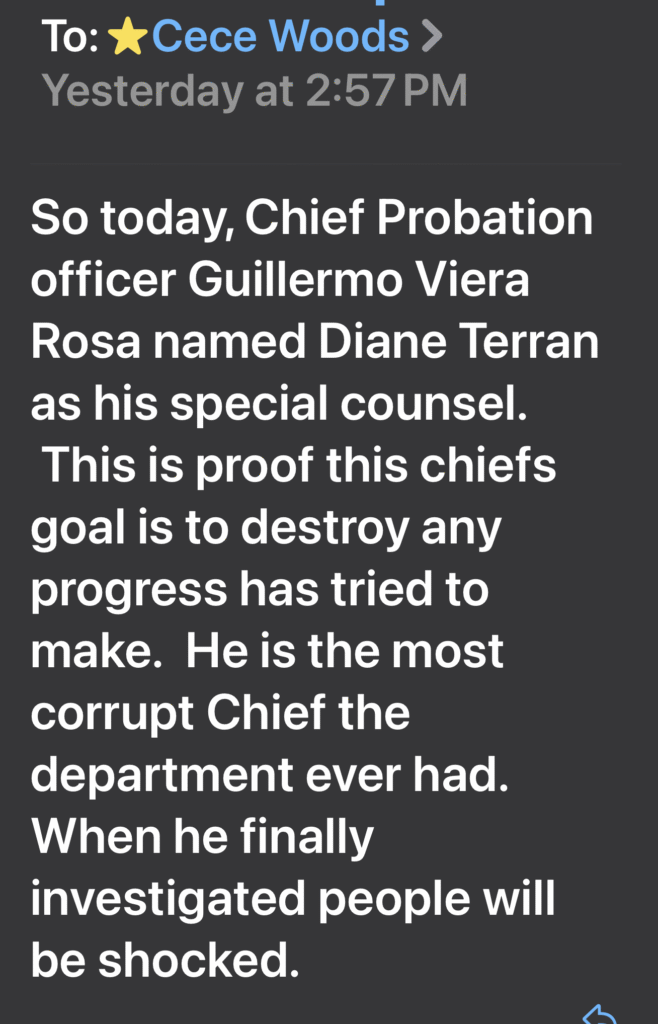
    An internal message now circulating confirms that Chief Probation Officer Guillermo Viera Rosa has named Diana Teran as his special counsel. The reaction inside the department was immediate and visceral. The message did not read like routine personnel news. It read like an alarm. To many inside County government, the appointment was not a step forward, but a warning sign that whatever progress Probation had attempted to make was being deliberately reversed.

    Diana Teran’s return to County power is not benign, and it is not incidental.

    In LA County, where the scales of justice have long tipped under the weight of politics and personal vendettas, Teran once rose to become a formidable figure inside the District Attorney’s Office. A former senior figure tied closely to the Sheriff’s Department, she built her reputation on relentless internal accountability campaigns, launching investigations against deputies facing criminal allegations with surgical precision. “No one is above the law” was not just rhetoric, it was policy. Even whispers of misconduct triggered full internal probes, suspensions, and careers permanently derailed. Teran knew the playbook intimately. Standard procedure demanded internal review the moment charges surfaced, to contain institutional rot before it spread.

    Then the tables turned.

    Teran herself was charged with 11 felony counts, accused of unlawfully accessing and using confidential law-enforcement databases tied to her time working with sheriff’s department records. And suddenly, the system she once enforced so aggressively went silent. No internal investigation. No ethics committee. No quiet audit of her prior cases or decisions. The protocols she had wielded against others simply evaporated.

    The silence only fueled speculation, courthouse whispers tracing a familiar pattern of favoritism and quiet institutional shielding.

    Despite the indictment, Teran did not vanish from County employment. As The Current Report previously reported, it was widely rumored, and later corroborated by multiple sources, that she remained employed by the District Attorney’s Office even after charges were filed, suspended, but still drawing a paycheck. The irony was not lost on those who had watched deputies lose careers for far less. Teran, who had demanded transparency and swift consequences for others, now benefited from the leniency she had long denied.

    The criminal case dragged on through procedural twists and appeals, fueling public skepticism about whether justice in Los Angeles is blind or merely selective. That chapter formally closed on June 26, 2025, when a California appeals court issued a published ruling dismissing the remaining charges against Teran. The decision did not vindicate her conduct or dispute that she accessed sensitive law-enforcement information. Instead, it rested on statutory interpretation and prosecutorial authority, concluding the laws invoked could not sustain criminal liability under the circumstances. The prosecution ended without a trial, leaving unanswered questions about judgment, ethics, and institutional accountability.

    Those questions now loom larger than ever.

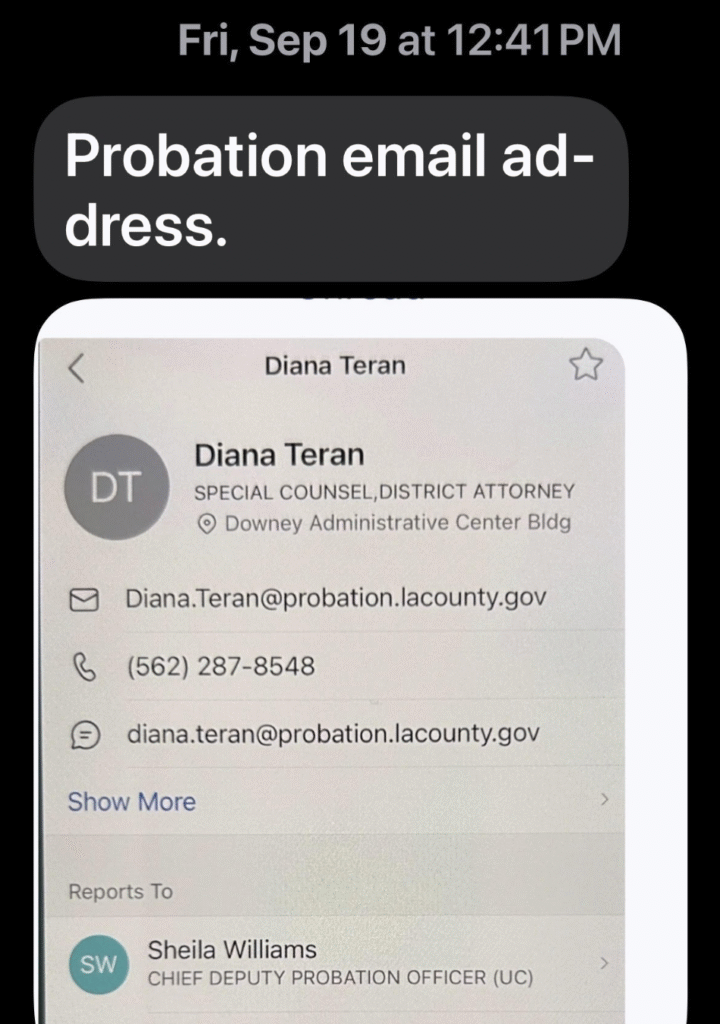
    Rather than stepping away from public authority, Teran has resurfaced inside one of the County’s most powerful and sensitive agencies. Sources confirm that her Probation Department email account was active as of mid-September, weeks before her appointment quietly became public. This was not a last-minute hire. It was a calculated reintegration.

    Probation is not symbolic. It controls liberty, rehabilitation pathways, youth custody decisions, and court outcomes. Installing a politically connected former prosecutor with a deeply controversial history into a senior advisory role is not reform. It is consolidation.

    For those who followed Teran’s role in the coordinated takedown of former Sheriff Alex Villanueva, the move fits a familiar pattern. Prosecutorial narratives, manufactured scandals, and politically timed allegations bled into an election cycle and reshaped County power. From the deputy gang panic to the knee scandal that later collapsed under scrutiny, Teran operated at the intersection of prosecution, politics, and message control.

    That history makes her placement inside Probation especially troubling.

    The emails circulating this week captured what official statements would not. It reflected disbelief and fear inside the department that Chief Guillermo Viera Rosa’s leadership is steering Probation toward deeper politicization. According to insiders, morale is slipping and trust continues to erode.

    County officials will likely point to the appellate ruling and declare the matter closed. They will frame the appointment as routine. They will cite procedure and move on. But the record tells a different story, one of institutional protection, quiet reassignment, and a refusal to confront how power actually functions inside Los Angeles County.

    Diana Teran’s trajectory has become a cautionary tale written into the County’s underbelly. Not because of one case, but because it exposed a system where accountability is selectively enforced and power reliably protects its own, even when the person at the center knows better than anyone how the game is supposed to be played.

    In Los Angeles County, accountability is always promised later. Power, however, is always reassigned immediately.

    That erosion of trust does not exist in a vacuum. It sits squarely on the shoulders of the Los Angeles County Board of Supervisors, whose track record on Probation has been defined less by oversight than by a series of deeply consequential misjudgments. Time and again, the Board has elevated figures whose records raised red flags, only to retreat into silence once the fallout became unavoidable.

    The appointment of Eric Strong remains a glaring example. Installed into a senior probation leadership role despite mounting concerns, Strong later became entangled in a federal civil rights lawsuit seeking $10 million in damages, a case alleging serious misconduct tied to abuse of authority. As The Current Report documented, Strong repeatedly dodged service of process, an extraordinary act for a high-ranking county official entrusted with overseeing justice-involved populations. Rather than demand accountability or transparency, the County allowed the situation to linger, reinforcing the perception that Probation leadership operates under a different set of rules.

    Against that backdrop, Diana Teran’s quiet installation as special counsel does not read as an isolated decision. It reads as part of a pattern. A Board that has repeatedly failed to course-correct Probation now presides over yet another appointment that raises fundamental questions about judgment, governance, and whether lessons were ever learned. The same institution that claimed reform after scandal has continued to recycle controversy, protecting insiders while Probation itself absorbs the damage.

    When County leaders insist these moves are routine, the record says otherwise. The throughline is unmistakable: questionable appointments, delayed accountability, and a governing body that responds to crisis only after exposure, never before. Teran’s return did not happen despite that history. It happened because of it.

  • The Ventura County Playbook: Inside the Coordinated Machine of Judicial Abuse Targeting Three Unrelated Litigants

    The Ventura County Playbook: Inside the Coordinated Machine of Judicial Abuse Targeting Three Unrelated Litigants

    In Ventura County’s courthouse, a place that likes to bill itself as a model of procedural integrity and judicial professionalism, a very different system operates behind the scenes. It’s a system where judges hold secret hearings, clerks block filings on command, evidence is quietly smothered, fraudulent documents slip through unchecked, and law enforcement is deployed not for justice, but for retaliation.

    Three unrelated cases, Amir RahnavardiAnica Barbosa, and Sherri LaZelle, walked into Ventura courtrooms at different times, facing different circumstances, and different adversaries. What they didn’t know is that they were stepping into the same machine. Their stories are separate, yet disturbingly interchangeable, a mirrored pattern of constitutional violations that exposes a judiciary operating without oversight, without accountability, and without any regard for due process.

    This isn’t judicial error. It’s a systematic playbook.

    AMIR RAHNAVARDI – WHERE THE PLAYBOOK SHOWS ITS TEETH

    When Amir Rahnavardi challenged the fabricated abuse narrative used against him, he assumed that facts, evidence, and hearings would matter. Instead, he collided with the Ventura courthouse’s shadow system, one driven by ex parte influence and rulings crafted behind closed doors.

    Judge Joann Johnson openly admitted she consulted Judge Michael Lief privately before issuing a restraining-order ruling, a confession that should have set off alarms across the county. Opposing counsel enjoyed direct, private access to the judge, a privilege Amir could never dream of as a self-represented father forced to watch rulings appear minutes after closed-door conversations.

    It got worse. Supervised visitation was extended for years without a single evidentiary hearing, even though seventy-five clean monitor reports and seven monitors all confirmed there was no risk, no conduct issue, nothing to justify the restrictions. His journal, nine hundred pages, video evidence, photo timelines, digital corroboration of abuse patterns: all suppressed by Referee Leon Bennett without findings, without explanation, without record.

    And then there was the “evidence” that justified a devastating custody loss, photos of minor cat scratches, presented by opposing counsel as “dog bites” from a violent attack. In open court, Amir told Judge Lief exactly what everyone in the room knew:

    “You can’t tell the difference between dog bites and cat scratches – that’s terrifying.”

    Terrifying, yes. But in Ventura County, entirely on brand.

    Judge Henry Walsh, publicly admonished by the Commission on Judicial Performance for failing to disclose campaign contributions from more than 150 attorneys, had already accepted the superficial photos as proof of a “two-hour beating.” No police investigation. No authentication. Just a narrative slipped neatly into the machine, processed, and stamped as fact.

    ANICA BARBOSA – WHEN A SECRET HEARING BECOMES AN EVICTION ORDER

    If Amir’s case revealed ex parte communication as a routine operating tool, Anica Barbosa’s case revealed how far the court was willing to go to keep its decisions hidden.

    On April 23, she walked into a courtroom expecting a routine hearing, only to discover later that Judge Lief had already planned a secret one behind her back. A false 11:00 AM minute order was filed as a decoy to send her home and clear the path for an undisclosed proceeding.

    Judge Denise de Bellefeuille helped set the stage by falsely claiming the court file was “missing,” then clearing the courtroom under the guise of a recess. While Anica was physically removed from the process, a hearing took place without her. Her eviction, stripped of procedural rights, stripped of due process, stripped of jurisdiction, was engineered in her absence.

    And when she tried to challenge the judge?

    A clerk told her:

    “I was told not to take any paperwork from you.”

    Her judicial challenge was blocked. Her filings refused. Her rights erased.

    Then came the enforcement.

    Attorney Stephanie White, acting less like an officer of the court and more like a bounty hunter with a badge, arrived at Anica’s home with a squad of sheriff’s deputies — five to ten of them — shouting from the kitchen:

    “Get out now and don’t come back!”

    No jurisdiction. No service. No minute order. No due process.

    But in Ventura County, everything was going exactly according to plan.

    SHERRI LaZELLE – THE FULL BLUEPRINT OF FRAUD

    If Amir exposed judicial coordination and Anica exposed secret process, Sherri LaZelle exposed the Ventura machine in its most brazen form: forged documents, resurrected cases, fraudulent service, retaliatory warrants, and an unbroken chain of unlawful acts carried out in broad daylight.

    Sherri discovered restraining orders being enforced against her that were never signed by the petitioner, never signed by a judge, filed more than a thousand days apart, and riddled with altered pages and impossible dates. They were the legal equivalent of counterfeits, and the court treated them as gospel.

    Two dismissed TROs were secretly resurrected. Unauthorized attorneys were permitted to appear without substitution. Filing clerks were instructed to block her access to the court. A judge appointed counsel after the hearing ended, a maneuver so blatantly unlawful it reads like a parody of due process.

    Her federal case was derailed by criminal charges engineered inside the same courthouse she was suing, a retaliatory loop designed not to seek justice, but to silence the whistleblower at the center of it.

    When she exposed an admission of child abuse, mandatory reporting laws vanished. When she reported hacking and theft, law enforcement interest disappeared. When she challenged fraudulent documents, the court looked away.

    Because in Ventura County, accountability isn’t the goal. Control is.

    THE PATTERN: THREE CASES, ONE PLAYBOOK

    Separately, the cases look troubling. Together, they form a blueprint.

    Every case encountered the same distinctive hallmarks:

    Secret ex parte communications.
    Hearings held without notice.
    Minute orders that vanish or never existed.
    Evidence suppressed or destroyed.
    Filings blocked by clerks acting on private directives.
    Forged or fabricated documents accepted as fact.
    Law enforcement mobilized as a weapon – not for public safety, but for judicial retaliation.
    Void orders treated as enforceable.
    Federal lawsuits met with local retaliation.
    Judges acting far outside of jurisdiction and outside the law.

    Different cases.
    Same judges.
    Same clerks.
    Same playbook.

    This is not coincidence. It is pattern and practice, the legal threshold for systemic constitutional violations and Monell liability.

    It is also the clearest window yet into a courthouse that has stopped even pretending to follow the law.

    THE SYSTEM THEY BUILT – AND THE ONE ABOUT TO COLLAPSE

    Ventura County has operated under the public illusion of procedural normalcy while running a second, hidden system that substitutes legality with loyalty and oversight with improvisation. The three cases now surfacing are not outliers. They are evidence.

    Courts do not commit this many identical violations against three unrelated people by accident.

    This is a machine.

    This is policy.

    This is systemic.

    THE REAL VERDICT: THIS ISN’T A BROKEN SYSTEM – IT’S A CRIMINAL ENTERPRISE

    It’s time to stop pretending Ventura County’s judiciary is merely “flawed” or in need of a little procedural housekeeping. What these three individuals endured, the forged documents, the fabricated evidence, the secret hearings, the retaliatory warrants, the weaponized sheriffs, the clerks taking illegal directives, the judges operating with no jurisdiction and even less accountability, doesn’t reflect a system that’s slipping. It reflects a system that has already fallen.

    A system that consistently produces the same abuses isn’t malfunctioning.
    It’s functioning exactly as designed.

    These aren’t isolated bad actors or the occasional rogue judge. This is a coordinated network of power operating off the books and beyond the law — a structure so normalized inside Ventura County that its participants no longer bother hiding it. They don’t fear consequences because, until now, there have been none.

    And that is precisely why this can’t be brushed aside as another “judicial reform” issue.
    No amount of ethics training, bench guides, or wrist-slap admonishments will fix a judiciary that behaves like a protection racket.

    This demands something far more serious: a full-scale federal investigation into whether Ventura County’s judicial and clerical apparatus has crossed the line from government institution into organized criminal enterprise.

    Because when judges coordinate in secret, when clerks block filings on command, when evidence disappears, when forged documents drive outcomes, when sheriffs are dispatched to enforce void orders, when retaliation replaces due process, and when the victims of this machine are the ones punished for exposing it — that’s not law.

    That’s racketeering in robes.

    The question is no longer whether the Ventura County Superior Court needs oversight.
    The question is whether we are witnessing the public façade of a criminal organization masquerading as a justice system.

    And now that the pattern has been exposed, now that the names, dates, actions, and mechanisms have been documented, the next move belongs to the federal government.

  • Inside the LA Times’ AirTag Story: Omitted Facts, Compromised Sources, and Manufactured Victims

    Inside the LA Times’ AirTag Story: Omitted Facts, Compromised Sources, and Manufactured Victims

    Another day, another Los Angeles Times masterpiece of misinformation begging for a reality check.

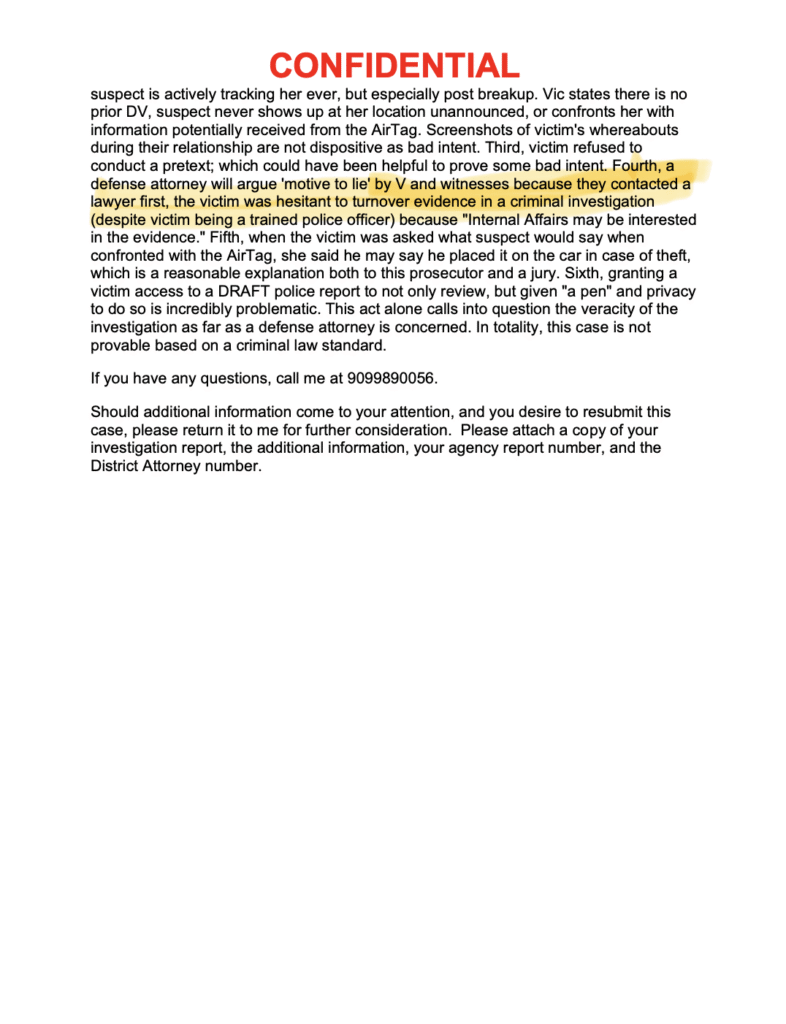
    The October 9 article titled “She found an LAPD official’s AirTag. Lawsuit claims it derailed her career” delivered yet another slanted narrative from a publication that has elevated omission to an art form. This was not journalism. It was a carefully curated storyline stitched together with selective sourcing, withheld facts, and credibility issues the Times apparently hoped readers wouldn’t bother to examine.

    Front and center in this manufactured drama is defense attorney Nicole Castronovo (formerly Lopes), the architect of the allegations. What the Times failed to disclose is that Castronovo’s own professional standing is currently hanging by a thread. In April 2025, a U.S. District Court judge removed her from a high-profile case for conduct so troubling the court ruled the defendant “cannot select an attorney who has so greatly failed in her duty of competence and duty of loyalty.” The matter was referred to the State Bar. Despite this professional implosion, the Times elevated her to star witness, without a single word of disclosure.

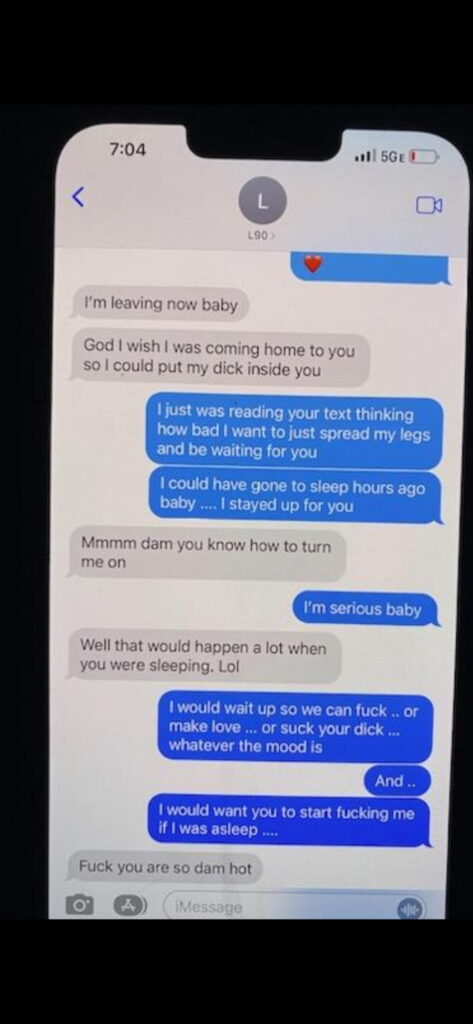
    The article does not even get the basics right. It frames Sgt. Jessica Bell’s lawsuit while repeatedly labeling her attorney’s claims as “baseless” and describing Bell’s relationship with a married co-worker as merely “alleged.” There is one glaring problem. Sergeant Bell (formerly Zamorano) was caught by her then husband sending countless explicit sexual messages to her married partner on her LAPD-issued phone. The Times published a lawsuit devoid of meaningful scrutiny, referencing only the fragments that help fabricate a sympathetic narrative. That is not oversight. That is fabrication.

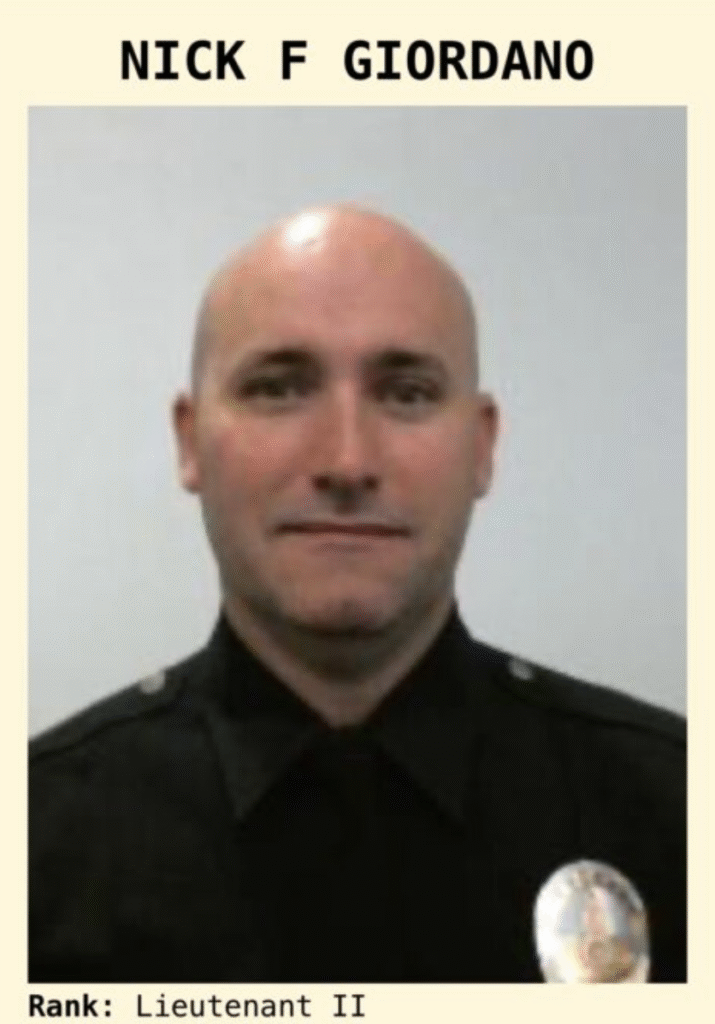
    Even more telling is what the Times chose not to print, Bell’s documented disciplinary history. In 2024, she received an official reprimand (LAPD Complaint #24-000519) for sending sexually explicit messages on a city-issued phone to married co-worker Nick Giordano. That misconduct contributed to the collapse of her marriage and later cost her a departmental position. Internal references to “L90,” a watch commander phone line commonly used to mask identities during extramarital affairs, corroborate the disciplinary findings. None of this appeared in the Times’ righteous whistleblower narrative. Nor did any mention of Bell’s affair or the destruction of her own family, leaving two young children in the wake of her actions.

    The article portrays Bell as a brave whistleblower whose career was “derailed” for speaking out, based entirely on selective quotes from Bell and her attorney. The Times scrubbed the record of inconvenient facts that directly undermine that narrative, beginning with Bell’s credibility.

    In the Ontario Police Department report, Bell claimed she had “no knowledge” of how to use AirTags. Her ex-husband stated she had previously placed them on all three of his vehicles. Bell further claimed her children were traumatized after finding an AirTag and required therapy. Her ex-husband refuted this entirely, the children never mentioned the incident and never sought therapy. The Times did not merely omit context, it withheld contradictions that collapse the story’s foundation.

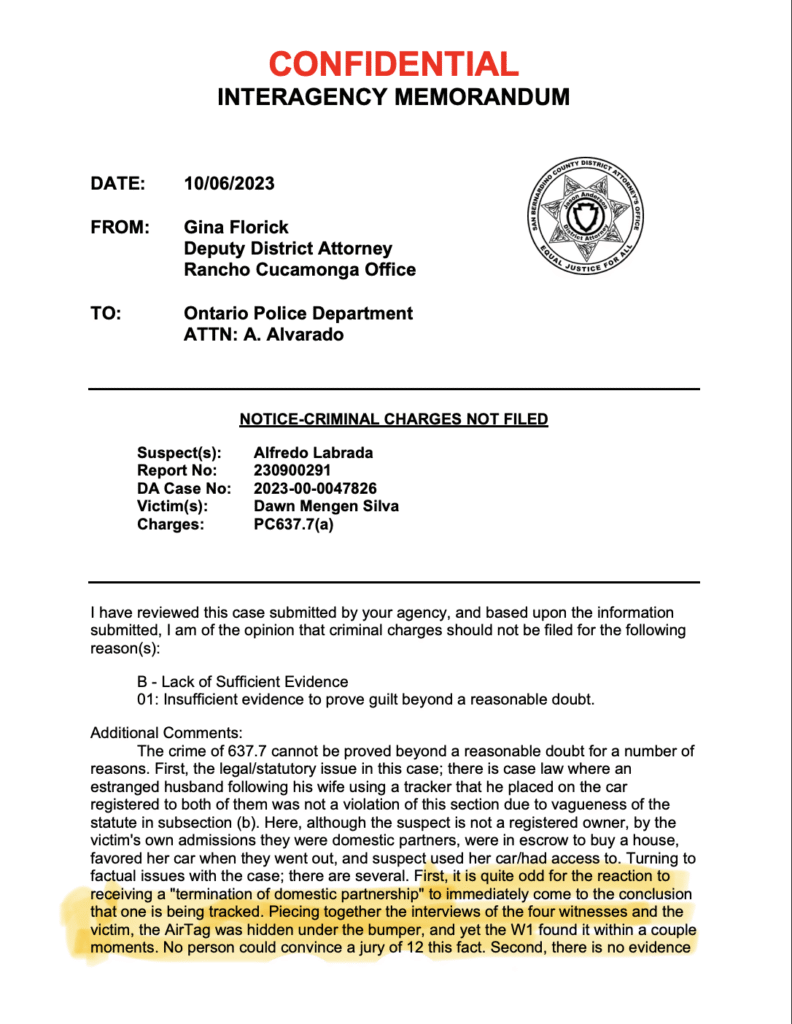
    Bell’s long, chaotic relationship with former LAPD Assistant Chief Alfred Labrada was marked by distrust and personal turmoil. Bell, who has allegedly been involved in multiple extramarital affairs, actively encouraged Dawn Silva, while Silva was living with Labrada, to continue an affair with married officer Josh Sewell. When Labrada ultimately ended the relationship and served Silva with a termination of domestic partnership on September 6, Bell’s resentment escalated. A San Bernardino District Attorney reject memo later flagged significant credibility issues with both the alleged “victim” and key witnesses, yet another critical fact buried by the Times.

    None of these public records, disciplinary findings, contradictory statements, or prosecutorial red flags appeared in the LA Times article. Instead, readers were spoon-fed a one-sided narrative designed to portray Bell as a wronged victim while shielding them from every fact that contradicts that portrayal.

    And the giveaway? The October 9 story aligns perfectly with an attorney personally connected to the Times reporter, perhaps explaining why this so-called investigation reads more like a sponsored post than journalism.

    The pattern does not stop there. In Ontario PD Report #230900291 (October 4, 2023) and LAPD Internal Affairs records, Dawn Silva initially reported no threats, no stalking, and no domestic violence. “No domestic violence and no other crimes occurred during the relationship,” the report states. Silva later altered her story, falsely characterizing intimate text messages from 2022 as threats and submitting them in a San Bernardino Superior Court TRO affidavit.

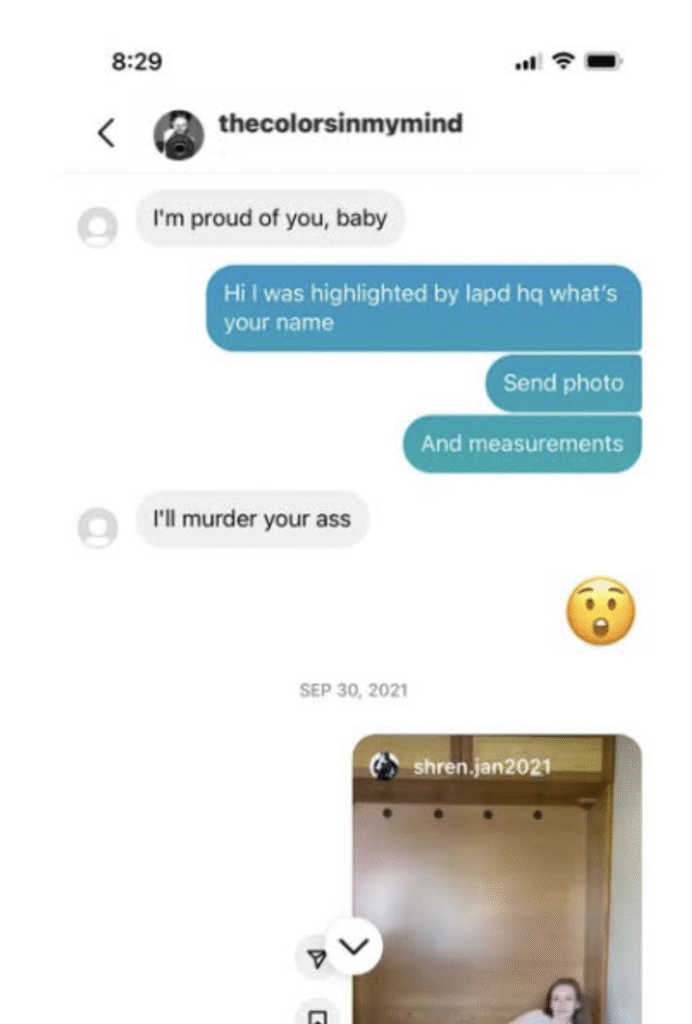
    Silva claimed reaching out to mutual LAPD friends Angela Fleischer and Nicole Minnarick constituted stalking, despite Labrada knowing both women for over six years and having assisted their careers. The TRO relied on selectively framed personal messages exchanged throughout a six-year relationship, including joking, intimate language. On September 29, 2021, Silva herself sent Labrada a message stating, “I’ll murder your ass.” Similar language appeared throughout their exchanges. These messages were later rebranded as threats, conveniently stripped of context.

    The department has consistently denied access to the full message history. Requests were denied as addenda to a personnel complaint (September 27, 2024), as a public records request (October 7, 2024), and again through formal legal demand to Chief McDonnell on January 30, 2025. Silva forfeited any claim of confidentiality when she submitted the messages to advance her narrative, yet the full context remains hidden. Why?

    Silva also lied in her Ontario PD interview, stating she had no other relationships during her six-year relationship with Labrada. That statement is demonstrably false. From 2017 to 2023, Silva engaged in multiple extramarital relationships, including a concealed affair with former Assistant Chief Jorge Villegas in 2018, while she and Labrada were living together.

    Silva and Villegas allegedly met off duty, drank together, and engaged in sexual activity at the Continental Bar in Glendora, at the LAPD Elysian Park Academy locker room, and during the October 2018 Orlando Chiefs Conference, where Silva met Villegas in his hotel room while Labrada attended classes. In September 2018, Silva and Villegas were observed engaging in sexual activity in Silva’s white Honda Accord after drinking at a bar, an act constituting a misdemeanor. Then-Chief Moore was made aware and called off surveillance. No action was taken.

    Shortly after, Silva sold her Honda Accord, eliminating potential evidence. Only after a Pitchess motion in an unrelated case did Moore order a complaint (CF #19-001124). Villegas abruptly retired. Silva faced no discipline.

    Now Silva and Bell claim Internal Affairs is targeting them, after both used that same process to target Labrada with false allegations. Silva denounces the system that once protected her.

    The San Bernardino District Attorney’s reject memo, hidden by LAPD for six months, flagged significant credibility issues with the alleged victim and witnesses. No follow-up occurred. On February 25, 2025, the Executive Director of Peace Officer Standards concluded after an independent investigation that there was no clear evidence the alleged misconduct occurred. These findings were omitted, again.

    Moore did not leave voluntarily. City Hall sources confirm he learned of his early departure the day it was announced. It was not about family. It was about failure and leadership collapse.

    When a publication selectively omits verified facts, elevates compromised sources, and launders fabrication as law, it ceases to be a watchdog. It becomes an accessory.

    The October 9 article was not designed to inform. It was engineered to mislead, weaponizing half-truths in a matter involving law enforcement, public trust, and reputational ruin.

    Take this story for what it is, not justice, not accountability, not journalism, but manipulation.

  • What Did and Didn’t Happen in the Rebecca Grossman Case: How a Tragedy Was Twisted Into a Murder Case Through Lies, Omissions, and Coordinated Character Assassination

    What Did and Didn’t Happen in the Rebecca Grossman Case: How a Tragedy Was Twisted Into a Murder Case Through Lies, Omissions, and Coordinated Character Assassination

    The Rebecca Grossman trial was never about evidence. It was about selling a public narrative so overpowering, so emotionally charged, and so deliberately misleading that the facts ceased to matter.

    A tragic accident was sculpted into a murder through unverified testimony, scripted recollections, and strategic omissions by people who knew exactly what they were doing. The record now shows that the most damaging testimony against Rebecca was never corroborated, never verified, and never honestly presented to the jury.

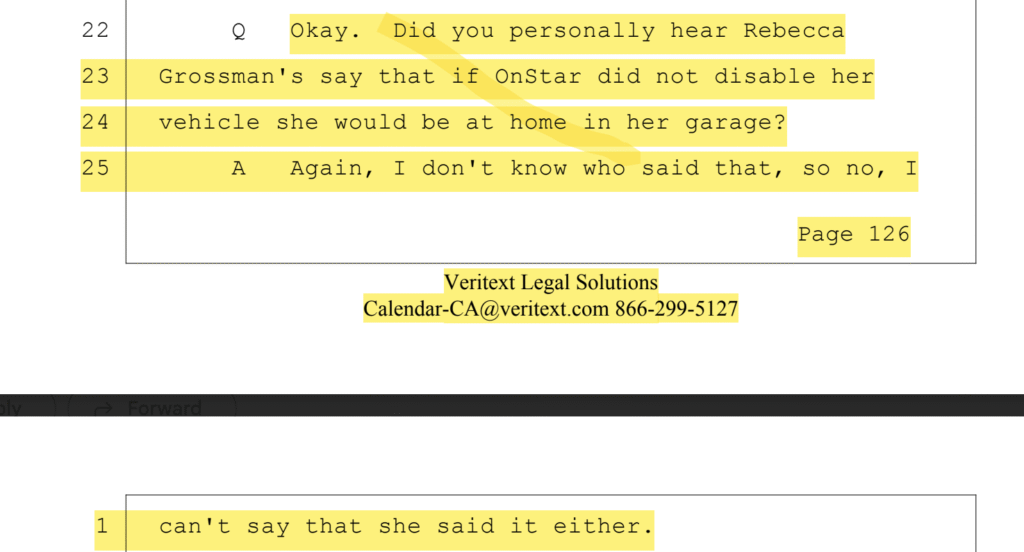
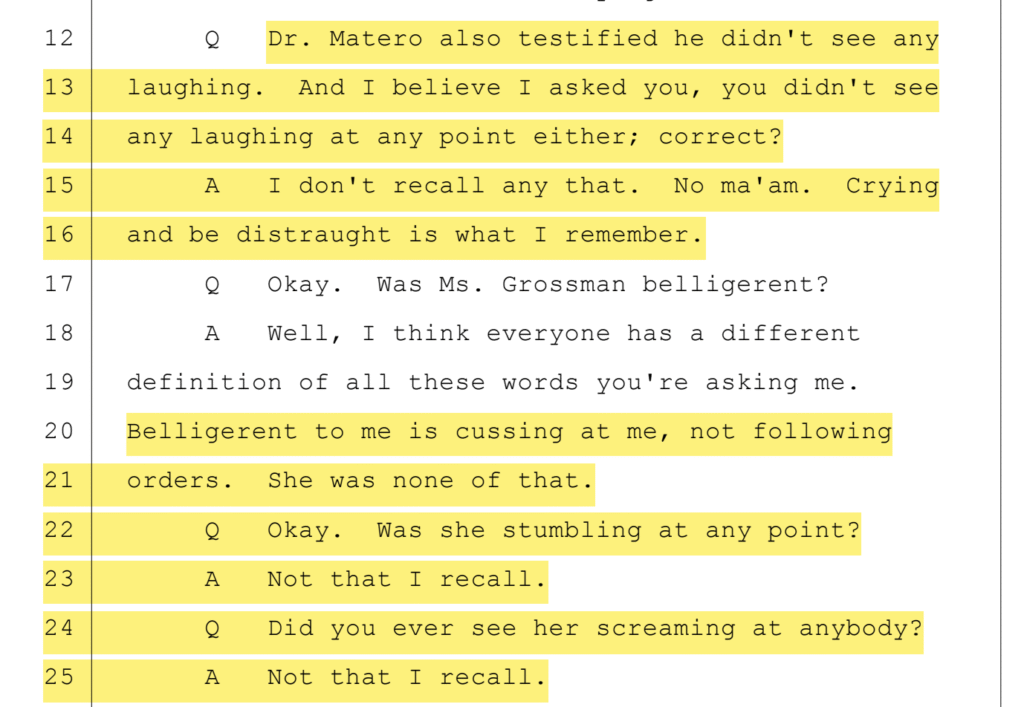
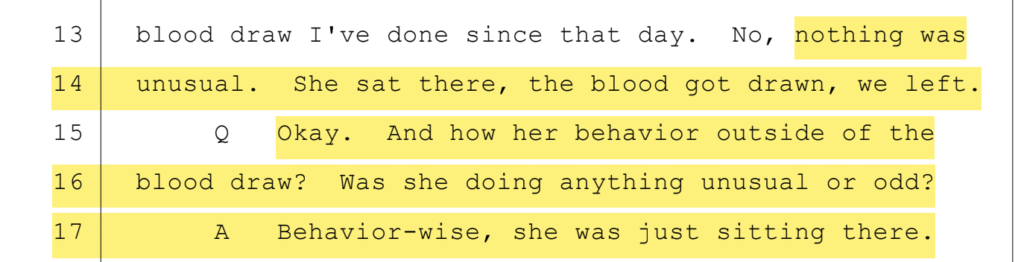
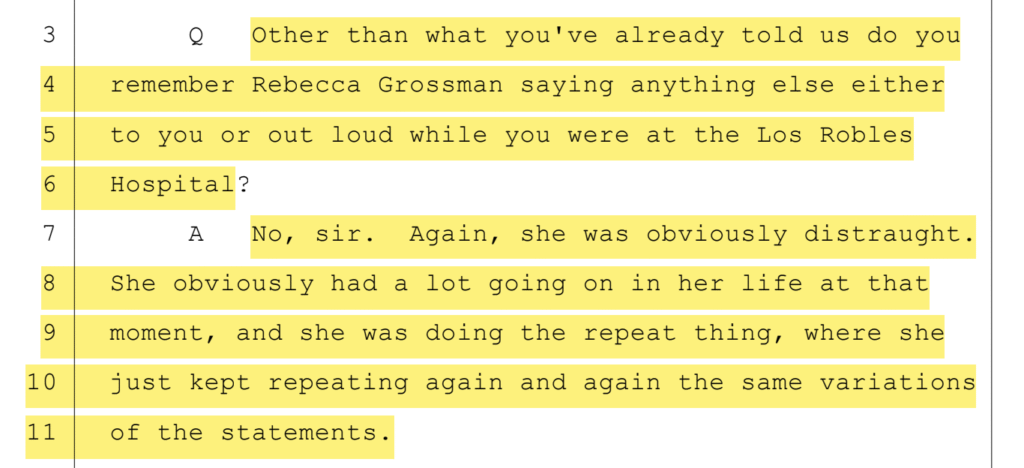
    The centerpiece of this deception was the testimony of Teryl Grasso, a hospital technician who made the preposterous claim that Grossman while awaiting a blood draw, stated if not for certain circumstances she “would be home right now”. Grasso’s story conveniently evolved over time, culminating in the dramatic quote she suddenly “remembered” three years after the crash. Yet the only person who could have confirmed or denied the alleged quote, the deputy standing directly beside Rebecca during the entire encounter, says he never heard it.

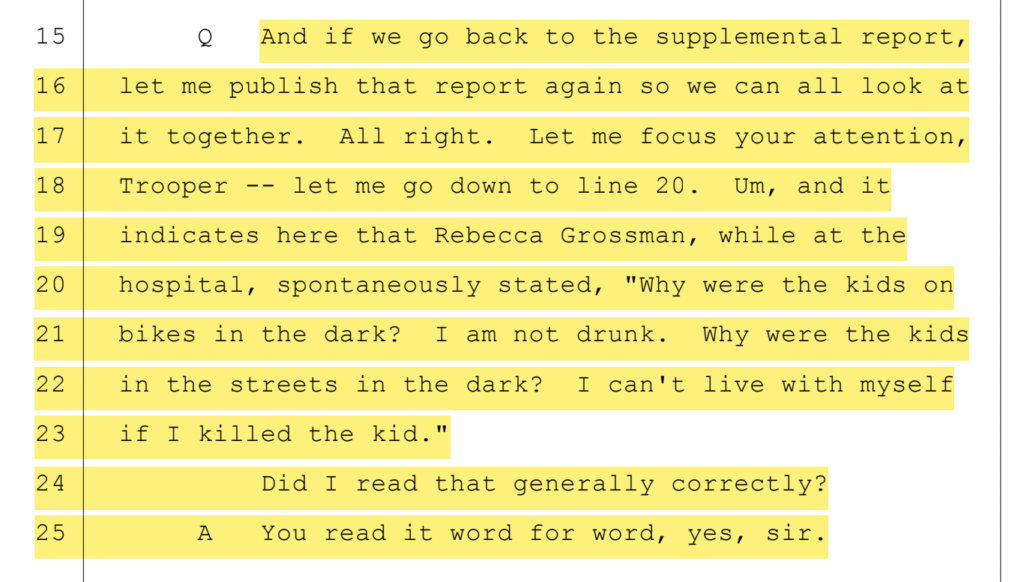
    Former LASD deputy Jason McGee’s sworn deposition leaves no ambiguity. He was next to Grossman at all times. He recorded the field sobriety test. He photographed her vehicle and injuries. He transported her to the hospital. His responsibilities and every movement he made at the scene are documented in his deposition, where he confirms his physical proximity to her both inside the vehicle, throughout the investigative process, and at the hospital.

    Prosecutors Ryan Gould and Jamie Castro never verified the claim with McGee – and that alone is troubling. But far more disturbing is the possibility that they did ask McGee, learned he never heard the comment, and chose to move forward anyway. Presenting Grasso’s dramatic “memory” while concealing the only witness who could contradict it isn’t just unethical, it borders on prosecutorial misconduct. If McGee told them he didn’t hear the statement, and they buried that fact, then they hid exculpatory evidence from the defense and the jury. And that strikes at the heart of due process.They purposely avoided verification because the truth would have collapsed the narrative they were constructing.

    The prosecution desperately needed a villain, and Grasso conveniently handed them one, magically appearing years after the tragedy, right on cue for trial, armed with a dramatic, heartless quote designed to sway the jury.

    The courtroom choreography between Grasso and Deputy McGee was unmistakable. It was engineered to block the defense from questioning the deputy about what actually happened at the hospital, because Gould and Castro knew his testimony would have blown their theory apart. McGee was the one person whose account could have dismantled Grasso’s story, so they made sure the jury never heard it.

    Post criminal trial, Grasso’s credibility subsequently suffered another blow from the civil deposition testimony. Both Cohen and Grasso admitted under oath to collaborating on a social media post by Grasso that was taken down at Cohen’s direction because it made them “look bad.” Was that prior or during the criminal trial? When pressed to describe the post, both Grasso and Cohen suddenly could not remember a single detail about it. Their memories aligned on the existence of the post, on the removal of the post, and on the belief that it harmed them, but nothing else. The choreography speaks for itself, and Cohen’s own deposition shows the selective amnesia that conveniently shielded the prosecution’s narrative.

    The prosecution and its media allies leaned hard on the claim that Grossman showed “no remorse.” This line became the emotional engine of the case, hammered into public consciousness long before the jury ever entered the courtroom. Yet the documented truth is the exact opposite. Grossman expressed remorse the moment she learned children were involved at the scene. LASD video footage clearly confirms her deep concern for the children.

    Grossman sobbed in the hospital. She left handwritten letters of sorrow at the memorial site. She wrote heartfelt letters to the Iskanders over the years, including one sent through the District Attorney’s office that Gould personally received. Whether he delivered it remains an open – and damning – question.

    Additionally, Grossman anonymously donated $25,000 to help with funeral expenses within weeks of the accident, long before any charges were filed. These acts were either hidden from or inaccurately reported while the DA repeatedly told the world she was cold, indifferent, and self-interested. After her conviction, when she sent one final letter of sorrow to Nancy Iskander, prosecutors responded not with humanity, but with punishment. They ran to the judge to sanction her for expressing grief, revealing once again that the narrative mattered more than the truth.

    The transformation of this accident into a murder was never anchored in forensic evidence. It was anchored in character assassination. Intent was never proven. Street racing was never proven. Awareness was never proven. Malice was never proven. Instead, prosecutors carved malice out of manipulated testimony, social media venom, and emotional theatrics designed to bypass reason entirely. The public wanted a villain, and Gould and Castro supplied one.

    Another witness raised immediate red flags about the prosecution’s credibility. A CHP officer suddenly “remembered” a seven-year-old traffic stop and claimed Grossman made a damning remark he somehow never wrote down. Any statement that inflammatory would have appeared in the officer’s notes, on the ticket, or in an incident report. It didn’t. Yet Judge Brandolino allowed the unverified quote to prejudice the jury without a shred of contemporaneous documentation to support it. The officer testified that he dug the original ticket out of boxes stored in his garage. The idea that a CHP officer just happens to keep years-old minor traffic citations in personal storage, and can locate one on command, defies logic. The far more plausible explanation is that someone asked him to look. During the investigation, Grossman’s driving record would have been reviewed, revealing the citation and the officer’s name. Once that happened, the question becomes unavoidable: who contacted whom, and did the CHP officer and Lost Hills traffic sergeant Travis Kelly coordinate their stories? The timing, the sudden recollection, and the convenient narrative alignment all demand immediate scrutiny.

    Then there is the unspoken truth hovering over the Scott Erickson plea deal. Erickson had a DUI history, had been drinking, was placed at the scene by multiple witnesses, was identified as the black car speeding ahead moments before the collision, and fled the scene entirely. Yet he walked away with a diversion offer for reckless driving, while Grossman was charged with murder. That only makes sense if Erickson possessed information damaging to the DA’s theory and Gould was willing to bury it to preserve his home run. A diversion is not justice. It is a bargain. And the prosecution’s silence about the terms of that deal speaks louder than anything presented in court.
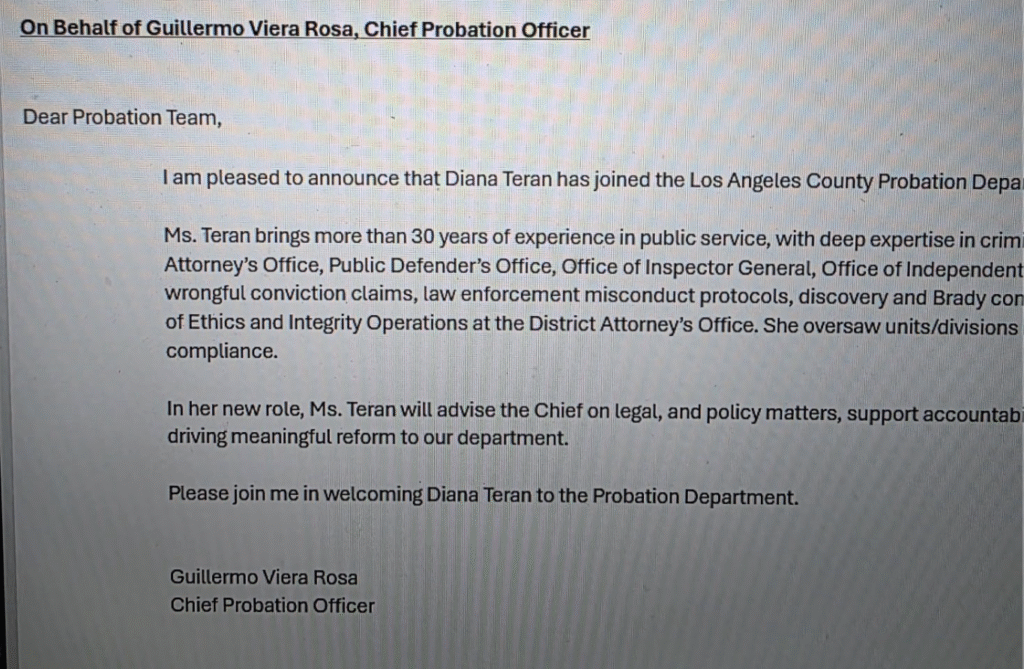
    The coordination between Grasso, Cohen, and Gould emerges clearly when the testimony is read side by side. They communicated. They aligned on key details. They synchronized their lapses in memory. And they delivered exactly what the prosecution needed: a mosaic of outrage, unverified comments, and emotional cues that painted Rebecca as a heartless monster. Not one of these claims was ever checked against McGee’s testimony, even though he was the only neutral witness in a position to confirm any of it. His trial and deposition testimony further establishes that everything he did on scene was recorded, timed, and documented, and nothing in his recollection matches the prosecution’s character narrative.

    In the end, the prosecution won not through evidence but through narrative engineering. They built a media-ready villain, amplified by selective leaks, incomplete facts, and a social media ecosystem primed for outrage. What the public never saw was the truth: a mother devastated by tragedy, expressing remorse again and again, sabotaged at every turn by prosecutors who withheld her words, denied her humanity, and shaped a story that bore little resemblance to reality.

    The lies were deliberate. The omissions were strategic. The witnesses were coordinated. The media was complicit. And a tragedy that should have demanded honesty became a political spectacle fueled by deception.

    DISCLAIMER: Investigative reporting in high-profile litigation cases published by The Current Report is non-commercial, fact-based journalism; any project fees compensate research and reporting labor only, sources participate solely in accuracy verification, and final publication is approved exclusively by The Current Report after fact-checking is confirmed.