Month: May 2025

  • Justice Delayed, Justice Denied: Inside the Collapse of LASD’s Crime Lab Under Sheriff Luna

    Justice Delayed, Justice Denied: Inside the Collapse of LASD’s Crime Lab Under Sheriff Luna

    While Sheriff Robert Luna chases photo ops and funding for his re-election campaign, the Los Angeles County justice system is bleeding out behind the scenes — and drug offenders, rapists, and killers are slipping through the cracks faster than the county can bury the truth.

    Inside the LASD crime lab, the meltdown is no longer a warning sign – it’s a full-blown catastrophe.

    Sources inside the lab are clear: cases are being dumped, not because deputies aren’t doing their jobs, but because the department can’t process basic evidence. And while the executive staff prioritizes PR over public safety, hundreds of real investigations are quietly dying on a lab bench.

    “You’ve got a new DA trying to put people away,” one crime analyst told The Current Report, “but the crime lab can’t produce a simple report in time. It’s a joke. And it’s dangerous.”

    Back in 2020, the crime lab was operating with 30 analysts. Today, that number has been gutted to just 14. This isn’t an organic staffing fluctuation — this is the fallout from years of political interference, budget slashing by the Board of Supervisors, and Luna’s failure to lead a department in free fall. The once-reliable turnaround time of 1–2 days for drug analysis has ballooned to four to five months. The result? Solid cases vanish into thin air while suspects walk out the door under Penal Code 849(b)(1), meaning “case dropped – no evidence.”

    But the nightmare doesn’t stop with narcotics.

    In March, NBC4 dropped a bombshell: LA County is re-testing hundreds of DNA samples in major cases — murders, rapes, violent assaults — because they were processed with defective test kits. And the kicker? The manufacturer, Puritan Medical Products, knew the kits were faulty as early as 2021 but said nothing.

    That means critical evidence in serious crimes – crimes with victims still waiting for justice — may be compromised. Forensic evidence that should have delivered convictions is now in question. And once again, Luna has said nothing. No emergency briefing. No show of accountability. Just the same radio silence while the credibility of the entire forensic process disintegrates.

    Analysts inside the lab say it’s worse than the public knows. There’s no budget. No hiring plan. No new equipment. And absolutely no urgency from the top. “We don’t even track the backlog anymore,” one analyst admitted. “Why would we? The execs don’t want the numbers getting out. They don’t want the public knowing how badly this department is failing.”

    This is beyond bureaucratic neglect. It’s intentional. It’s systematic. And it’s being hidden behind a wall of polished PR and political theater.

    Robert Luna promised transparency. He delivered obfuscation. He promised reform. He delivered chaos. He promised integrity. He delivered a department where justice dies in silence and criminals go free. 

    Let’s be brutally honest: Los Angeles doesn’t have a crime problem. It has a corruption problem. And at the center of it all is a sheriff, and the Board of Supervisors, who treats public safety like a side project.

    The crime lab isn’t just understaffed. It isn’t just behind. It is broken. Buried. Weaponized by neglect. And until someone rips the lid off this cover-up, victims across LA County will keep watching their cases disappear into a black hole – while the system meant to protect them keeps protecting itself.

    Luna didn’t inherit this collapse. He owns it. And until someone steps in, the message from LASD is clear: If you’re a criminal in LA County – relax. The evidence will likely never make it to court.

  • Another Suicide at LASD: The Body Count Rises to 13 Under Sheriff Luna

    Another Suicide at LASD: The Body Count Rises to 13 Under Sheriff Luna

    Just when we thought the most disastrous term under a sitting Sheriff in the history of the department couldn’t get any worse, the Los Angeles County Sheriff’s Department has hit another new low.

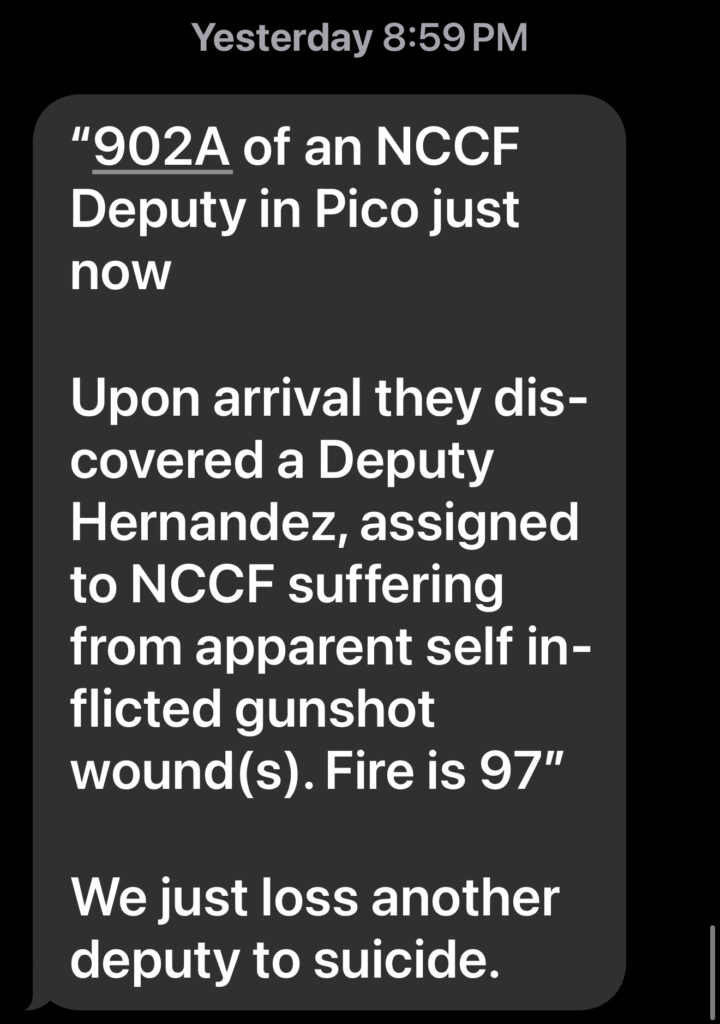
    Late Saturday night, a chilling radio call came in: 902A – possible suicide. Responding deputies arrived at the scene in Pico Rivera to find Deputy Hernandez, assigned to the North County Correctional Facility (NCCF), with what appeared to be a self-inflicted gunshot wound. Despite the paramedics efforts, Hernandez died at the scene.

    This is the 13th suicide on Sheriff Robert Luna’s watch in just 17 months – and the death toll keeps rising. That’s nearly one suicide every six weeks. Not at the hands of dangerous gangbangers on the streets, but from a toxic, broken system that’s been ignored and whitewashed at every turn.

    This is a level of rock bottom no one could’ve imagined for what was once considered the most prestigious sheriff’s department in the world.

    While Deputies Die, Luna Plays Politics

    On May 6, 2025, Sheriff Robert Luna stood shoulder-to-shoulder with law enforcement brass at the California Peace Officers’ Memorial in Sacramento, bowing his head and laying a wreath like a man who understands sacrifice. But back in Los Angeles, his own department was crumbling – and his public display of grief rang hollow.

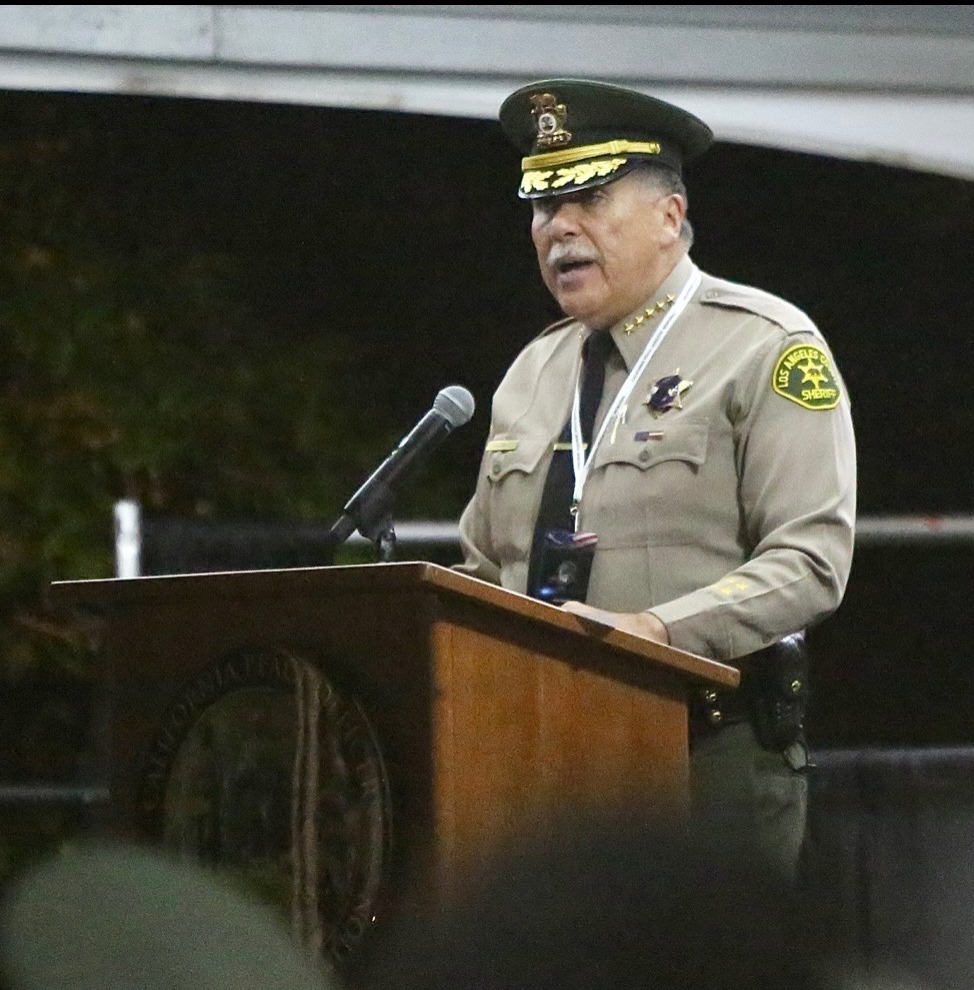
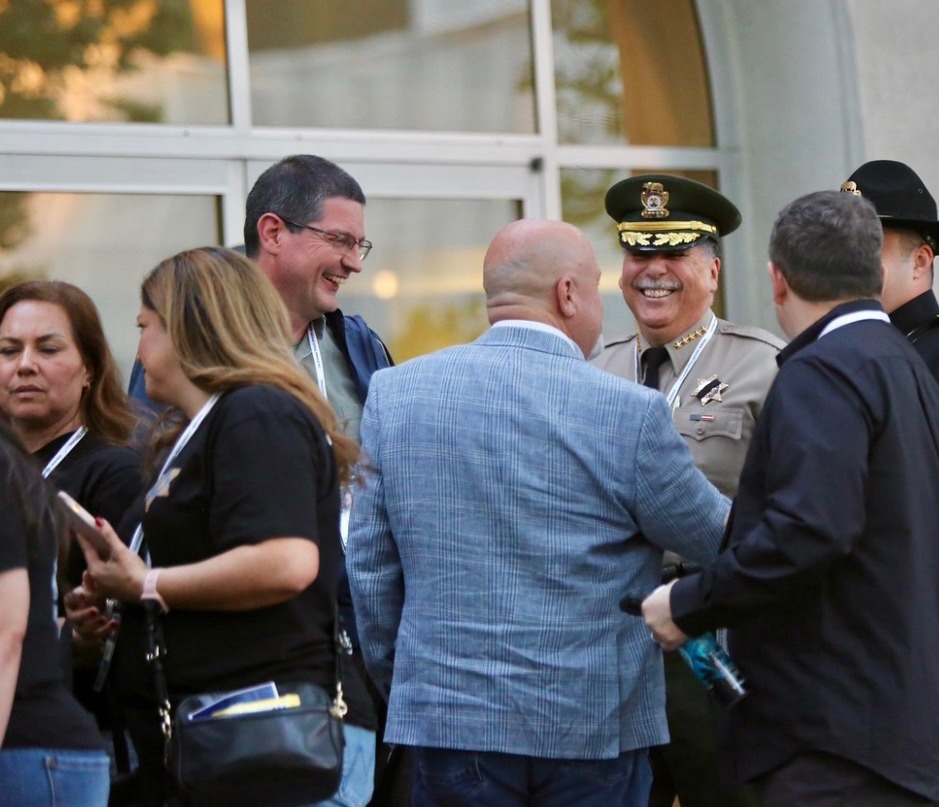
    Sheriff Luna in Sacramento on May 6th.

    Not a word was uttered about the historic mental health collapse at the LASD under his command. This was just another staged moment for his reelection reel. Luna has proven time and again it will never be about protecting his deputies. It’s about protecting his political future.

    Don’t be fooled. Luna’s appearance at the memorial wasn’t a tribute. It was a performance. A carefully staged photo op by a sheriff whose leadership has overseen one of the most catastrophic mental health crises in department history.

    13 Suicides. Zero Accountability.

    Since Luna took office in December 2022, thirteen LASD deputies and staff have died by suicide — and counting. In one horrific 24-hour stretch in November 2023, four lives were lost.

    Inside the department, the mood is pure devastation. Morale is in the gutter. Deputies feel abandoned. Betrayed.

    And sources say Luna knows it – reportedly telling executives, “I know everyone thinks I’m a phony.” Deputies have confirmed that sentiment publicly – and privately. Quite a few have even told him to his face.

    The question now isn’t whether Luna’s leadership is failing. The question is how many more will die before anyone at the top takes responsibility.

    “Just a Deputy” – Just a Scapegoat

    As tragedy after tragedy unfolded, the department turned into a pressure cooker of suppressed grief, unchecked exhaustion, and exploding morale issues. Anonymous “Just a Deputy” letters began circulating throughout the ranks and on social media, exposing Luna’s failures in graphic detail. The third letter, released in the wake of the November suicides, painted a grim picture:

    “We work multiple overtime shifts a week, often only getting a couple hours of sleep between continuous double shifts… We are frequently denied time off… Our leadership sides with criminals while condemning us.”

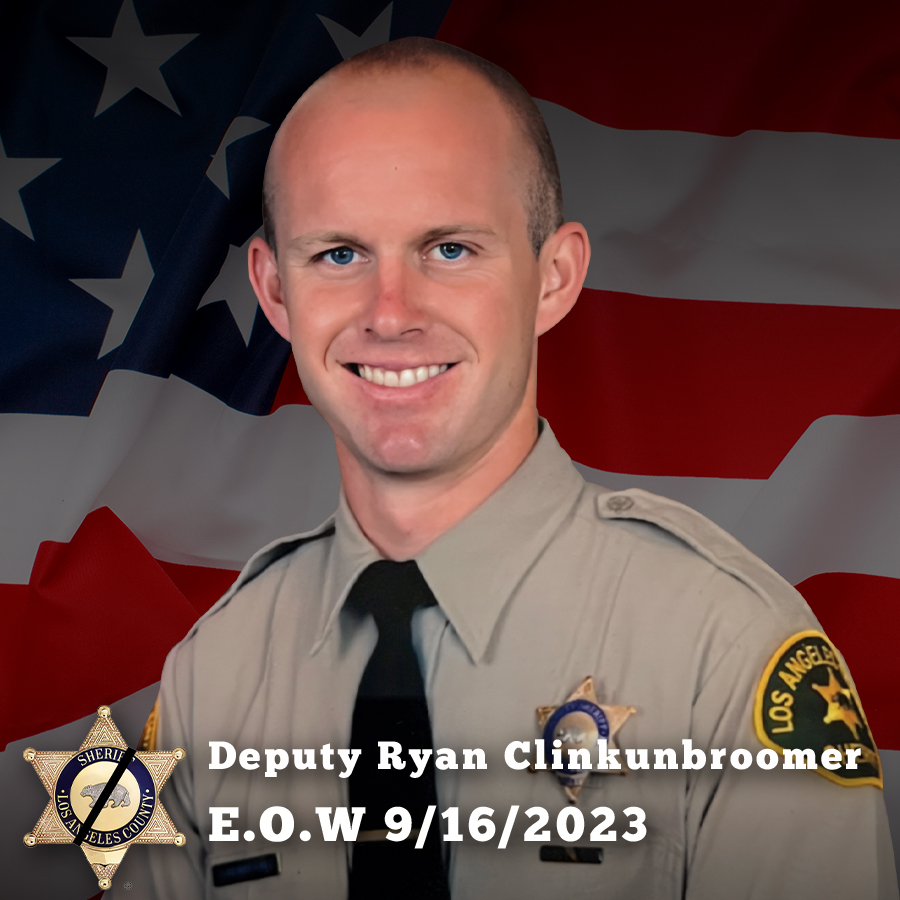
    The letter didn’t stop there – it exposed more horrors: from deputies denied adequate time off to grieve Deputy Ryan Clinkunbroomer’s murder, to a preventable explosion that left two deputies clinging to life in a jail range trailer because a $25,000 electrical upgrade was “deemed unnecessary.”

    And Luna? According to insiders, he landed at Lancaster Station the day of the suicides – not to grieve, but to catch a helicopter to a meeting with an anti-law enforcement community group.

    Betrayal runs deep.


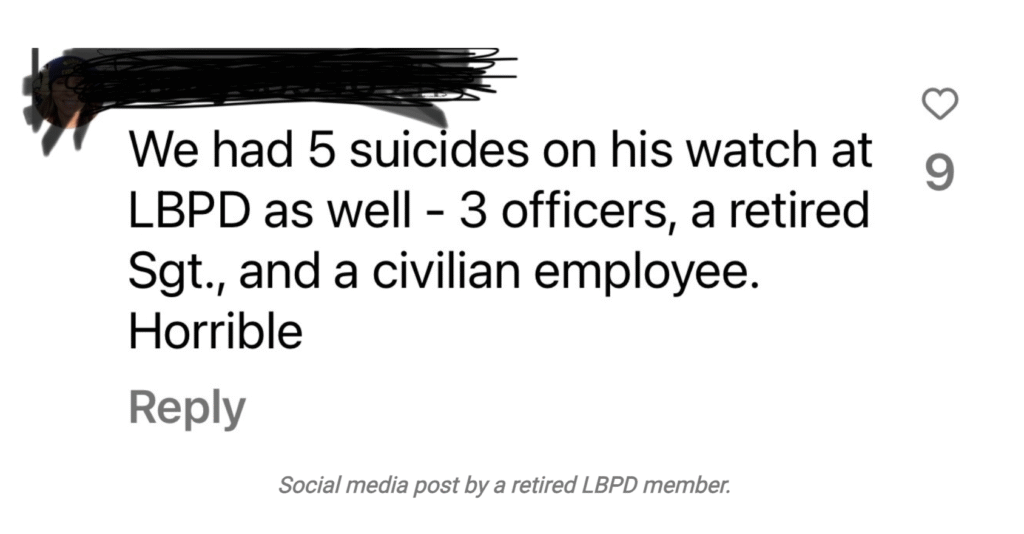
    This isn’t Luna’s first rodeo with a mental health crisis. Retired Long Beach PD personnel recall similar patterns under his command there. At LASD, his response to the wave of suicides has been a now-infamous department-wide email filled with platitudes and hotline numbers.

    He told media:

    “We are urgently exploring avenues to reduce work stress factors.”

    But behind the scenes, sources say the real focus has been on a bureaucratic “restructuring” designed to empower allies of former Sheriff Jim McDonnell—further alienating Luna from rank-and-file deputies.

    A 24% Vacancy Rate = A 100% Morale Collapse

    This week, Assistant Sheriff Jason Skeen dropped the hammer at the Civilian Oversight Commission meeting: 4,166 vacancies. That’s 24% of the department’s authorized staffing simply gone.

    “For every three people, they have to do the duties of one additional person,” Skeen said. No spin. No PR varnish. Just the cold, brutal reality of a workforce being run into the ground.

    Since Luna took office, LASD’s operational capacity has spiraled. Authorized to staff over 17,000 positions, the department is limping along at barely 75% strength. Patrols are stretched thin, jails are understaffed, specialized units are gutted, and those still showing up to work are shouldering impossible workloads.

    Mandatory overtime is now a way of life. Deputies are being crushed under endless shifts – six days a week, 16 to 18 hours a day, sometimes going weeks without a single day off. The mental and physical toll is crushing.

    Families of the fallen are now holding the county accountable. The family of Deputy Arturo Atilano-Valadez has filed a wrongful death claim, directly tying his suicide to the department’s relentless overtime demands and refusal to grant requested transfers.

    In 2023, the family of Deputy Ryan Clinkunbroomer, who was ambushed and murdered in September, filed a lawsuit against Los Angeles County. Their claim is clear: LASD’s relentless mandatory overtime policies left Ryan vulnerable, overworked, and exposed. His murder, they argue, was not just a random act of violence, but a tragic consequence of a department that prioritizes appearances over personnel.

    Luna’s Legacy: Politics First, People Last

    Luna claims he is a reformer, but in reality, he is a failure.

    This isn’t reform. It’s rot.

    And it’s not just about suicide – it’s about a department bleeding from the inside out.

  • The Devil is in the Details: Sheriff Luna Asks for Leniency After Pursuing Prosecution of One of His Deputies

    The Devil is in the Details: Sheriff Luna Asks for Leniency After Pursuing Prosecution of One of His Deputies

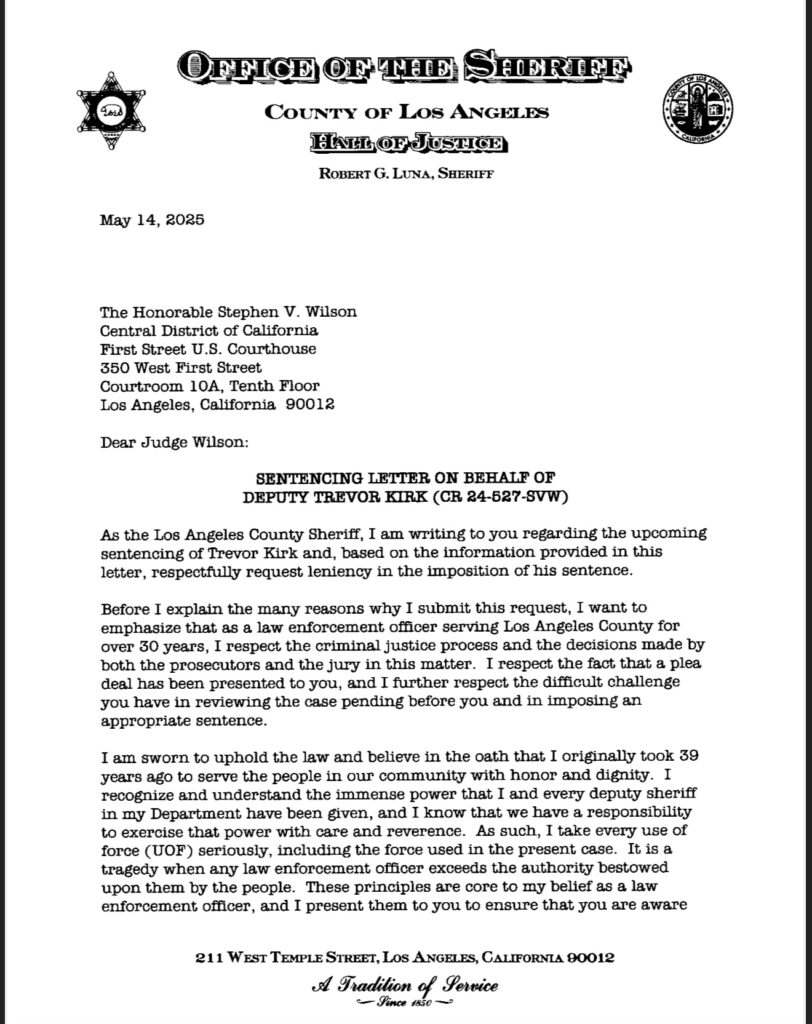
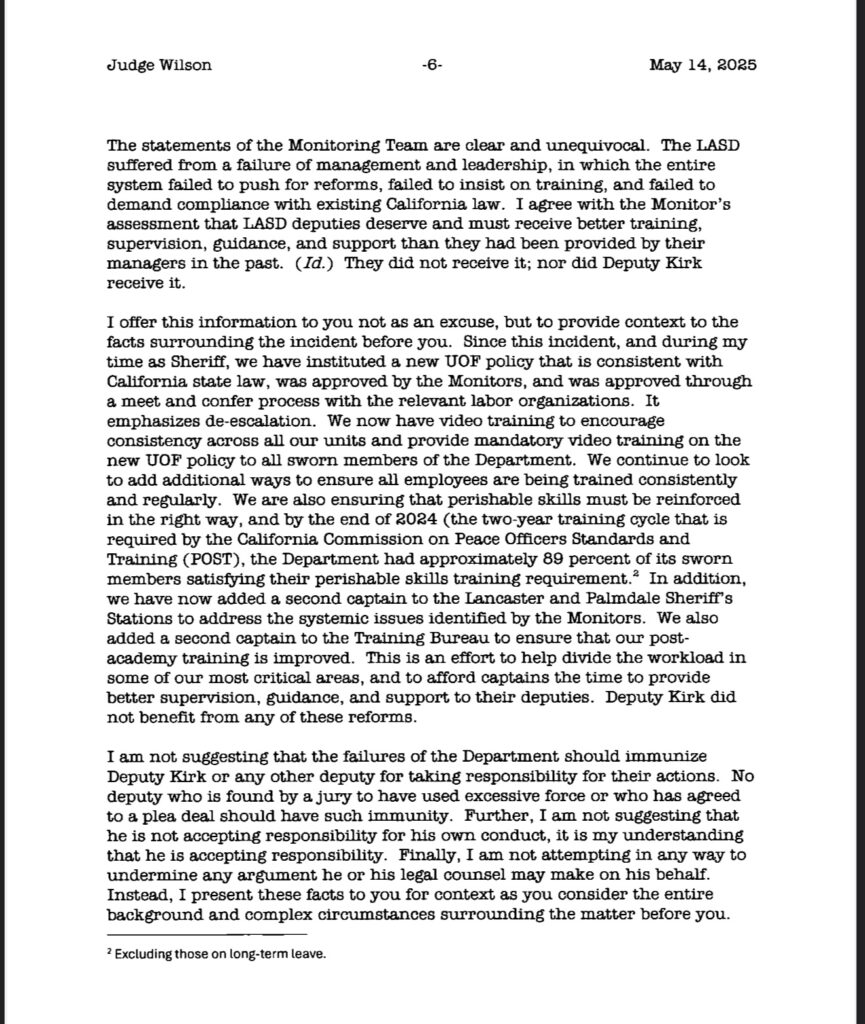
    In a move dripping with irony – and political calculation – Los Angeles County Sheriff Robert Luna has penned a seven-page letter to U.S. District Judge Stephen V. Wilson asking for leniency in the sentencing of Deputy Trevor Kirk. This, after Luna’s own administration cooperated with federal prosecutors to secure Kirk’s conviction for excessive use of force in a case that has rocked the law enforcement community.


    Screenshot

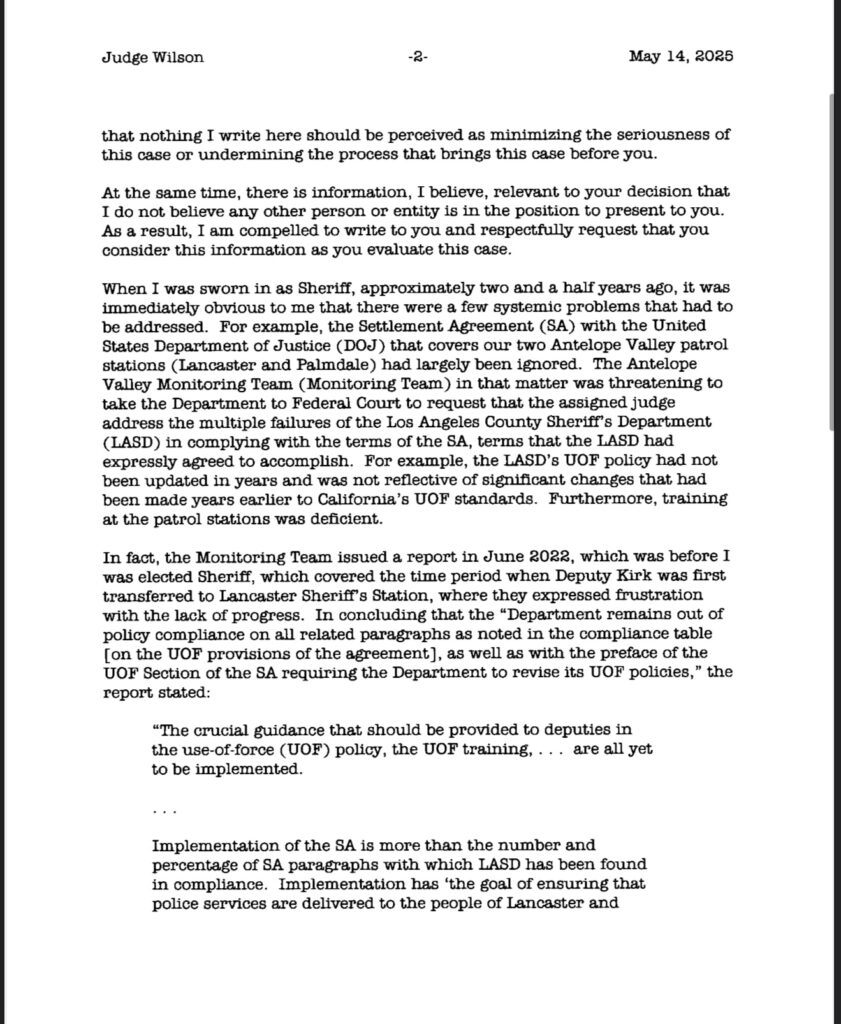
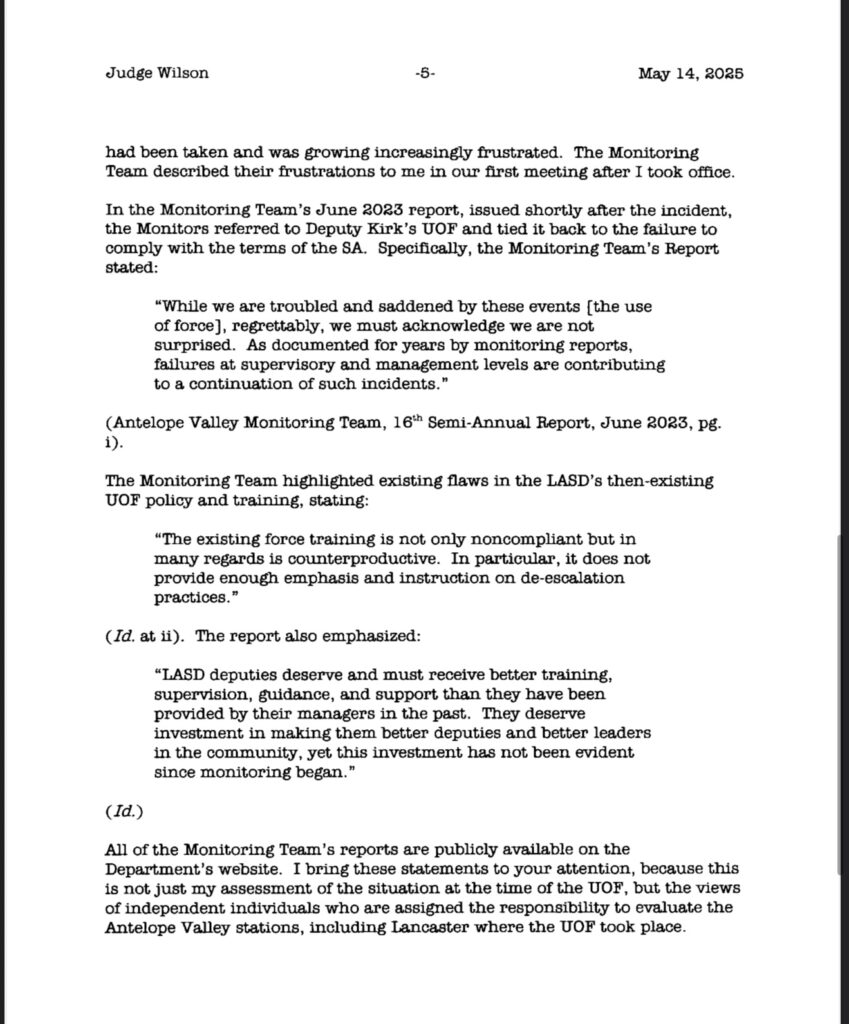
    The letter, dated May 14, 2025, reads like a masterclass in bureaucratic blame-shifting. Luna acknowledges the jury’s verdict but insists that Kirk’s actions were not entirely his fault, citing “systemic failures” in the Department stretching back years before he took office. Essentially, Luna is asking the court to go easy on Kirk because of the department’s longstanding dysfunction—a dysfunction Luna himself was elected to fix.

    Yet, as The Current Report detailed, Luna’s “leadership” has been more about optics than accountability. Under his watch, a historic staffing crisis has gutted morale, suicides have spiked, and political pandering to the Board of Supervisors has taken precedence over supporting rank-and-file deputies. Luna’s letter attempts to paint a picture of a reform-minded sheriff cleaning up a mess he inherited. But the facts tell a different story.

    Kirk was convicted of deploying pepper spray on a suspect in what the jury deemed an excessive and unconstitutional use of force. This federal conviction sets a dangerous precedent for law enforcement officers nationwide, effectively criminalizing split-second decisions made in the field. It’s the kind of prosecutorial overreach that should have Luna’s office up in arms defending his deputies. Instead, the department cooperated with federal investigators, providing the very documentation that helped convict one of their own.

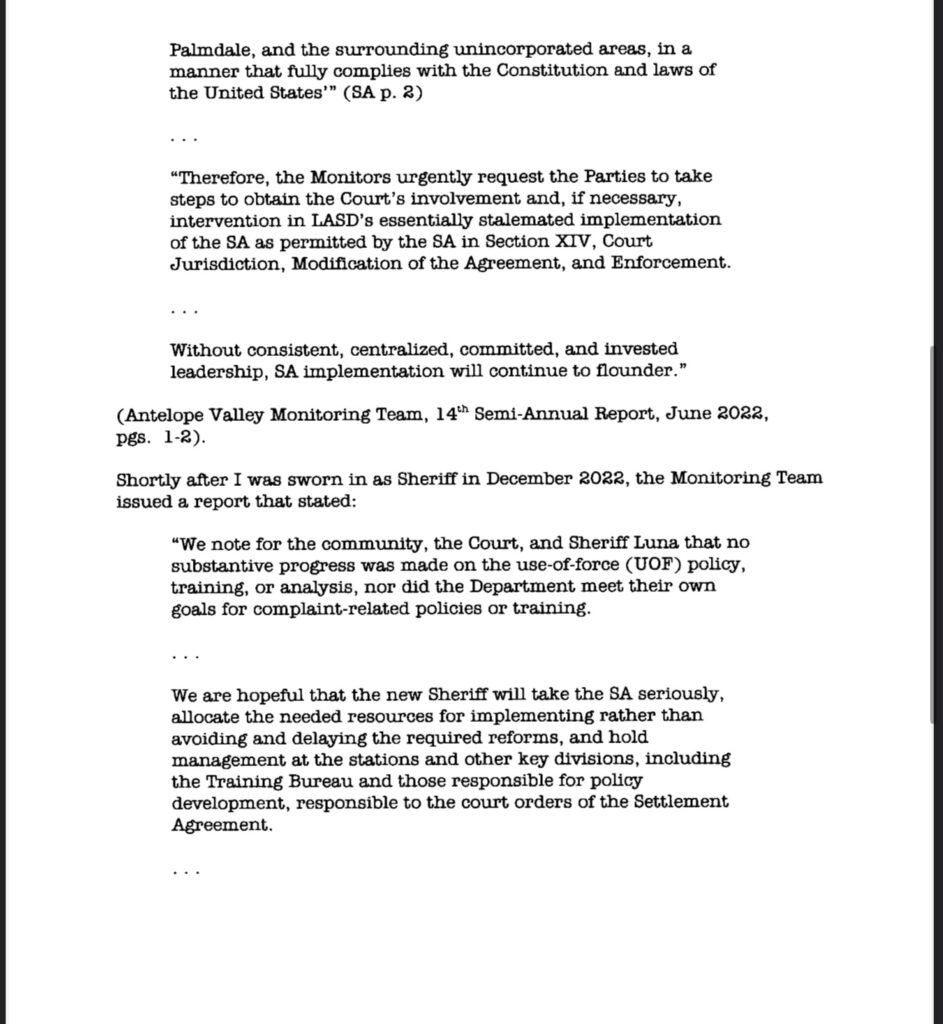
    Now, with the political winds shifting and union support waning, Luna is trying to play both sides – claiming to respect the court’s decision while simultaneously pleading for mercy. His letter extensively cites failures in the Settlement Agreement (SA) with the Department of Justice, highlighting outdated use-of-force policies and inadequate training at Lancaster and Palmdale stations, where Kirk was assigned. Luna even goes so far as to quote Monitoring Team reports that eviscerate his own department’s leadership and compliance failures.

    But here’s the kicker: these systemic issues were not new revelations. They were well-documented long before Luna took office, and his administration has had over two years to address them. Instead of decisive action, Luna’s tenure has been marred by more finger-pointing and politically safe photo ops, rather than substantive reforms.

    Luna’s request for probation as the “best suited” outcome for Kirk’s rehabilitation rings hollow. If he truly believed in supporting his deputies, why did his department facilitate the prosecution in the first place? The answer is simple: it was politically expedient.

    Defense attorney Tom Yu didn’t hold back when addressing the racial narrative swirling around Deputy Kirk’s case. “The race card gets abused by a lot of people,” Yu said bluntly. “Yes, there’s racism in this country — like in every other country. But this is still the greatest country in the world. I’d die for it. Unfortunately, radical groups have made a sport out of weaponizing race for their own agendas, and that’s exactly what’s happening here.”

    Yu made it clear: race has no business being a factor in this case. What should matter is the fact that Kirk had a clean, unblemished record before this incident. And more importantly, Yu dropped a reality check the media conveniently sidesteps — the plea deal everyone’s screaming about? It’s not some hush-hush backroom favor.

    “Deputy Kirk was offered a misdemeanor plea with no jail time back in December 2024 — two months before trial,” Yu said. “This was always on the table. Let me repeat that: always. It’s up to the U.S. Attorney to offer it, and they did. This isn’t a surprise twist. It’s standard procedure, whether people like it or not.”

    In other words, the virtue-signaling hysteria over this so-called “leniency” is nothing more than political theater — a scripted spectacle for public consumption, ignoring the facts that blow their narrative apart.
    As the department faces an exodus of personnel and a credibility crisis, Luna’s latest plea reveals the contradiction at the heart of his leadership. He wants the accolades of a reformer while avoiding the political cost of standing up for his own. Unfortunately for Deputy Kirk, he is now a casualty of that balancing act.
    The devil is, indeed, in the details.
  • Sheriff Luna’s LASD Staffing Crisis Explodes: 24% of Department Gutted – The Worst in Modern History

    Sheriff Luna’s LASD Staffing Crisis Explodes: 24% of Department Gutted – The Worst in Modern History

    The Los Angeles County Sheriff’s Department is not facing a staffing shortage. It’s enduring a historic collapse—and under Sheriff Robert Luna’s so-called leadership, the numbers are more damning than ever. This week, Assistant Sheriff Jason Skeen dropped the hammer at the Civilian Oversight Commission meeting: 4,166 vacancies. That’s 24% of the department’s authorized staffing simply gone.

    “For every three people, they have to do the duties of one additional person,” Skeen said. No spin. No PR varnish. Just the cold, brutal reality of a workforce being run into the ground.

    Since Luna took office, LASD’s operational capacity has spiraled. Authorized to staff over 17,000 positions, the department is limping along at barely 75% strength. Patrols are stretched thin, jails are understaffed, specialized units are gutted, and those still showing up to work are shouldering impossible workloads.

    Mandatory overtime is now a way of life. Deputies are being crushed under endless shifts — six days a week, 16 to 18 hours a day, sometimes going weeks without a single day off. The mental and physical toll is crushing.

    That toll turned deadly in November 2023, when LASD suffered a devastating string of suicides. Four department employees — including Commander Darren Harris, retired Sgt. Greg Hovland, and Custody Assistant Corina Thompson — died by suicide in a single 24-hour period. Since Luna’s tenure began, that number has risen to 12 suicides. These are not isolated tragedies. They are glaring red flags of a workforce in crisis, ignored and overworked to the breaking point.

    Families of the fallen are now holding the county accountable. The family of Deputy Arturo Atilano-Valadez has filed a wrongful death claim, directly tying his suicide to the department’s relentless overtime demands and refusal to grant requested transfers.

    In 2023, the family of Deputy Ryan Clinkunbroomer, who was ambushed and murdered in September, filed a lawsuit against Los Angeles County. Their claim is clear: LASD’s relentless mandatory overtime policies left Ryan vulnerable, overworked, and exposed. His murder, they argue, was not just a random act of violence, but a tragic consequence of a department that prioritizes appearances over personnel.

    Deputies, feeling abandoned and voiceless, have begun circulating anonymous “Just a Deputy” letters — raw, unfiltered pleas for help that paint a damning picture of life under Luna’s administration. These letters are not subtle. They speak of suffocating workloads, mental health neglect, and a top-down leadership more concerned with optics than with saving lives.

    Former Sheriff Alex Villanueva, never shy about calling out the obvious, took to X to deliver a scathing reality check:“Luna inherited the same problem the Board, the COC, and the OIG inflicted upon myself, the difference is, under him, it became disastrous.”

    And those numbers are damning.
    4,166 vacancies.
    24% of the department gutted.
    12 suicides under Luna’s watch.
    A deputy ambushed and killed, his family pointing to overtime as a key factor.

    This is not a recruitment problem. This is not a “budget issue.” This is a catastrophic leadership failure. And the ones paying the ultimate price are the very people tasked with keeping Los Angeles safe.

    The excuses have run out. The damage is real. The numbers don’t lie.
    And neither do the families burying their loved ones.

  • LASD Chief Joe Mendoza: From Deputy Clique Tattoos to Woke Agenda Enforcer – Joe  Mendoza’s Role in Driving LASD to the Breaking Point

    LASD Chief Joe Mendoza: From Deputy Clique Tattoos to Woke Agenda Enforcer – Joe Mendoza’s Role in Driving LASD to the Breaking Point

    As Los Angeles County Sheriff Robert Luna struggles to hold together a department in freefall, one name keeps surfacing behind the scenes: Chief Joe Mendoza. Recently promoted to oversee the Detective Division, Mendoza’s career reflects the very dysfunction eating away at LASD’s credibility — and its ability to retain the deputies it desperately needs.

    A Tattoo That Tells the Story

    Mendoza’s decision to cover up his notorious “Banditos” tattoo — once a proud display of clique loyalty — came only after the department’s image problem became politically inconvenient. His public narrative of “embarrassment” over the tattoo’s symbolism conveniently aligned with his bid for promotion, raising more questions than answers about his true motivations.

    While Mendoza rebranded himself with a St. Michael tattoo, many in the department saw it for what it was: optics over accountability.

    Targeting Critics: Intimidation Over Integrity

    Beyond symbolic gestures, Mendoza’s actions have directly targeted those who challenge the department’s inner circle. In 2021, he attempted to intimidate this reporter for assisting former Sheriff Alex Villanueva with a communications strategy. Mendoza’s approach wasn’t subtle — making inappropriate comments about my body and appearance, and attempting to bully me into silence.

    I reported Mendoza’s misconduct directly to Sheriff Villanueva, who addressed the matter swiftly and professionally. But Mendoza, despite his behavior, faced no public repercussions — a reflection of the department’s persistent culture of protecting insiders.

    A Woke Agenda Over the Rank and File

    Since his promotion, Mendoza has consistently made questionable administrative decisions that prioritize the Board of Supervisors’ progressive political agenda over the operational needs of LASD deputies. His actions — often in lockstep with supervisors more concerned with optics and “equity initiatives” — have further alienated the department’s frontline personnel.

    Deputies on the ground report that Mendoza’s decisions routinely undermine field operations, public safety priorities, and officer morale. Rather than advocate for the needs of sworn personnel, Mendoza has aligned himself with policies designed to appease county leadership — regardless of the impact on law enforcement effectiveness.

    The Consequences: A Department in Freefall

    The result? A historic personnel crisis. With the department in freefall, Luna distracts with dog-and-pony photo ops starring Mendoza — a career opportunist more interested in camera angles than serving the rank and file. Meanwhile, LASD has seen a mass exodus of sworn deputies, reaching its lowest staffing levels since the 1970s. Rank-and-file members cite a lack of leadership support, politically motivated policy shifts, and a toxic culture of retaliation as key reasons for leaving.

    While public safety deteriorates, Mendoza’s focus has remained fixed on maintaining favor with the Board of Supervisors and Sheriff Luna’s inner circle — not supporting the deputies tasked with protecting Los Angeles County.

    A Political Photo Op with Nathan Hochman — While the House Burns

    Most recently, Mendoza appeared alongside District Attorney Nathan Hochman at a photo op inside a 7-Eleven, promoting efforts to curb retail theft. For both men, the staged event was a convenient PR distraction from their respective failures — Hochman’s courtroom losses and Mendoza’s management disasters.

    But to the LASD rank and file, Mendoza’s photo ops are seen as hollow gestures — a continuation of the same political theater that has left the department understaffed, unsupported, and under siege.


    Bottom Line: The Mendoza Effect

    Chief Joe Mendoza’s career trajectory is a case study in how political loyalty and image management have overtaken competence and accountability within the LASD. His questionable decisions, lack of support for deputies, and alignment with a woke political agenda have accelerated a crisis that threatens the department’s core mission.

    For the deputies still holding the line, Mendoza’s legacy is already clear: he didn’t stand with them when it mattered.

  • Hochman’s High-Profile Humiliation: Two Major Courtroom Losses, One DA in Freefall

    Hochman’s High-Profile Humiliation: Two Major Courtroom Losses, One DA in Freefall

    For a District Attorney who campaigned on “restoring public trust,” Nathan Hochman’s early record tells a different story – one of chasing headlines, losing cases, and failing to address real public safety concerns.

    In less than a year, Hochman has suffered two major courtroom embarrassments: the botched attempt to block the Menendez brothers’ resentencing and the high-profile implosion of the A$AP Rocky assault trial. Both were supposed to cement his tough-on-crime image. Both backfired. Spectacularly.

    The Menendez Brothers – A Political Misfire

    Hochman’s aggressive opposition to the resentencing of Lyle and Erik Menendez ignored new evidence, public support, and the brothers’ own track record of rehabilitation. Despite spending decades leading inmate programs, mentoring fellow prisoners, and championing restorative justice behind bars — with zero expectation of ever getting out — the brothers were still painted by Hochman as “self-serving liars.”

    Veteran defense attorney Mark Geragos, who led the brothers’ resentencing fight, didn’t hold back:

    “Nathan Hochman made a calculated decision to politicize this case. He ignored evidence, ignored the family, and ignored reality — all for a headline. That’s not justice. That’s grandstanding.”

    Geragos further slammed Hochman’s refusal to acknowledge the brothers’ rehabilitation:

    “For over thirty years, Lyle and Erik have done the work — not for parole, but because it was right. Hochman’s position isn’t about public safety. It’s about pretending to be ‘tough on crime’ at the expense of actual facts.”

    In the end, the court wasn’t buying it. Judge Michael Jesic ruled in favor of resentencing, making the brothers parole-eligible and handing Hochman a public defeat.

    The A$AP Rocky Trial — Courtroom Theater Gone Wrong

    Hochman’s second high-profile failure came in the form of the A$AP Rocky assault trial, prosecuted by embattled Deputy DA John Lewin. What was intended as a slam-dunk case turned into a circus of weak evidence, inflammatory claims, and courtroom theatrics.

    Once again, the jury wasn’t convinced. The result: acquittal. The optics: disastrous.

    Geragos was blunt about Hochman’s media-driven prosecution strategy:

    “It’s become Hochman’s pattern — chase the biggest name in the headline, throw together a flimsy case, and hope the media applause drowns out the facts. But courtrooms aren’t press conferences. Eventually, you have to win a case.”

    Meanwhile, Violent Crime Is Left Unaddressed

    While Hochman pours resources into PR-friendly prosecutions, violent crimes like home invasions, follow-home robberies, and organized retail thefts continue to surge across Los Angeles. Critics argue Hochman has shown little interest in tackling these immediate threats to public safety.

    Geragos pulled no punches:

    “The people of Los Angeles deserve a DA who focuses on protecting them — not protecting his image. Hochman is playing to the cameras while residents are dealing with real crime in their neighborhoods.”

    The Hypocrisy: Hochman’s Gascón Problem

    Adding fuel to the fire, Hochman’s prior support of rehabilitation programs at San Quentin — mirroring many of George Gascón’s policies — undermines his own tough-on-crime branding. When politically convenient, Hochman praises rehabilitation. But when the media spotlight’s on, that stance disappears.

    “Hochman wants to be Gascón-lite when it’s safe, then suddenly ‘law and order’ when the cameras are rolling,” Geragos said. “You can’t have it both ways. Either you believe in justice reform or you don’t. The Menendez case exposed his hypocrisy.”

    Bottom Line: A DA Focused on Optics, Not Outcomes

    Two headline cases. Two public failures. And a rising violent crime crisis with no meaningful action from the DA’s office.

    Nathan Hochman’s early tenure reveals a leader more concerned with manufacturing a tough-on-crime image than delivering real results. As public trust erodes and courtroom losses mount, his political strategy of chasing high-profile cases — while neglecting actual community safety — is catching up to him.

    Geragos’ final shot summed it up best:

    “Hochman’s scoreboard is simple: Zero wins. Two spectacular losses. The question now is — how many more can Los Angeles afford?”

  • The Menendez Brothers Are Back in Court — and This Time, the System’s on Trial

    The Menendez Brothers Are Back in Court — and This Time, the System’s on Trial

    More than three decades after the brutal killing of their parents, Lyle and Erik Menendez are once again facing a courtroom — this time, to challenge the verdict that’s defined their lives.

    Convicted in 1996 and sentenced to life without parole, the brothers are now the focus of a high-stakes resentencing hearing under California’s youthful offender law. Over the next several days, Los Angeles Superior Court Judge Michael Jesic will determine whether the brothers should be granted parole eligibility — a decision that could reopen one of the most infamous cases in California history.

    The Evidence They Say Changes Everything

    At the center of the brothers’ case is a 1988 letter Erik Menendez wrote to his cousin, detailing sexual abuse by their father, Jose Menendez. The letter, never shown to jurors at the original trial, is now being framed by the defense as a critical piece of evidence that redefines the narrative.

    Adding weight to these claims, former Menudo member Roy Rosselló has publicly accused Jose Menendez of sexually abusing him in the 1980s — providing new context that the defense says shatters the prosecution’s theory of simple greed as the motive.

    “This isn’t a minor detail,” said defense attorney Mark Geragos. “It’s a window into the abuse and trauma that was never allowed into the courtroom.”

    Prosecution Pushback: A Battle of Narratives

    Los Angeles District Attorney Nathan Hochman remains firmly opposed to resentencing. His office has described the brothers’ abuse claims as “self-serving,” and points to risk assessment reports that suggest a “moderate risk” of violence should the brothers be released.

    Geragos, however, has accused the prosecution of clinging to an outdated narrative. “Every living family member supports their release,” he said. “To ignore that — and this new evidence — is not justice. It’s political theater.”

    What’s Really at Stake

    At its core, this hearing is about more than just parole. It’s a test of whether California’s justice system is willing to re-examine old cases through the lens of modern law and science.

    The youthful offender law, which acknowledges that young adults are developmentally different from fully mature adults, is designed for cases exactly like this. Lyle was 21, Erik was 18 — barely out of adolescence — when the murders occurred.

    Geragos argues that after more than 30 years of incarceration, rehabilitation, and evolving public understanding of abuse, the system has a responsibility to reconsider the case.

    A Reckoning for the Courts

    “This isn’t about absolving what happened in 1989,” Geragos said. “It’s about whether the justice system can face the uncomfortable possibility that it got it wrong — or if it would rather bury its mistakes.”

    The hearing concludes May 14. Whether the judge rules quickly or takes time to deliberate, the outcome will resonate far beyond the Menendez case, raising questions about how — and if — justice can evolve.

  • Sheriff Luna’s Sacramento Stunt: The Peace Officer’s Memorial Masks a Department in Crisis

    Sheriff Luna’s Sacramento Stunt: The Peace Officer’s Memorial Masks a Department in Crisis

    On May 6, 2025, Los Angeles County Sheriff Robert Luna stood among law enforcement officials at the California Peace Officers’ Memorial in Sacramento, bowing his head and laying a wreath for fallen officers. But back home, the very department he leads is imploding under his watch. While Luna posed for the cameras, many in the Los Angeles County Sheriff’s Department (LASD) saw his attendance not as a tribute – but as a tone-deaf performance by a leader who’s presided over one of the most devastating mental health collapses in LASD history.

    12 Suicides. Zero Accountability.

    Since Luna took office in December 2022, 12 LASD deputies and staff have died by suicide. Four of those tragedies occurred within a single 24-hour period in November 2023. One of them, Commander Darren Harris, was found dead from a self-inflicted gunshot wound to the head at his Santa Clarita home. The same day, retired Sgt. Greg Hovland shot himself in the chest in Lancaster. Hours later, custody assistant Corina Thompson took her own life in Stevenson Ranch. The fourth victim was discovered the next morning at the North County Correctional Facility in Duarte, where his wife—according to sources—confronted Luna and Chief of Custody Sergio Aloma at the hospital, blaming the relentless overtime and toxic work conditions for her husband’s death.

    The scene inside the department has been described by sources as one of despair, frustration, and betrayal. Luna, reportedly “visibly shaken,” admitted privately, “I know everyone thinks I’m a phony.” That sentiment was confirmed publicly by deputies who’ve called him exactly that—to his face.

    Sheriff Luna in Sacramento on May 6th.

    Burned Out, Overworked, and Dying

    The department is currently short 1,400 sworn personnel. To keep the jails running and patrols on the street, deputies are being forced into endless cycles of mandatory overtime—many working 12+ days straight, double shifts, with denied time-off requests, while raising families and coping with trauma that comes standard with the badge.

    The numbers are staggering: In 2024, LASD logged over 4.3 million hours of overtime, costing taxpayers $458 million. In jails like the Century Regional Detention Facility, staff are mandated to work two overtime shifts every week—on top of full 40-hour workweeks and their commutes.

    But the cost isn’t just financial. It’s fatal.

    Deputy Arturo Atilano-Valadez took his own life last year after working 99 hours of overtime in a single month. His widow has since filed a $20 million wrongful death lawsuit against the County, citing the crushing workload as a key factor in his death. A second lawsuit followed in April 2025. And more are expected.

    A Department Cracking from the Inside

    As tragedy after tragedy unfolded, the department turned into a pressure cooker of suppressed grief, unchecked exhaustion, and exploding morale issues. Anonymous “Just a Deputy” letters began circulating throughout the ranks and on social media, exposing Luna’s failures in graphic detail. The third letter, released in the wake of the November suicides, painted a grim picture:

    “We work multiple overtime shifts a week, often only getting a couple hours of sleep between continuous double shifts… We are frequently denied time off… Our leadership sides with criminals while condemning us.”

    The letter didn’t stop there—it exposed more horrors: from deputies denied adequate time off to grieve Deputy Ryan Clinkunbroomer’s murder, to a preventable explosion that left two deputies clinging to life in a jail range trailer because a $25,000 electrical upgrade was “deemed unnecessary.”

    And Luna? According to insiders, he landed at Lancaster Station the day of the suicides—not to grieve, but to catch a helicopter to a meeting with an anti-law enforcement community group.

    The betrayal runs deep.

    A Legacy of Lip Service

    This isn’t Luna’s first rodeo with a mental health crisis. Retired Long Beach PD personnel recall similar patterns under his command there. At LASD, his response to the wave of suicides has been a now-infamous department-wide email filled with platitudes and hotline numbers.

    He told media:

    “We are urgently exploring avenues to reduce work stress factors.”

    But behind the scenes, sources say the real focus has been on a bureaucratic “restructuring” designed to empower allies of former Sheriff Jim McDonnell—further alienating Luna from rank-and-file deputies.

    The Human Cost of Bureaucratic Theater

    According to Blue H.E.L.P., an organization tracking law enforcement suicides, LASD accounted for 10% of all known police suicides in the U.S. in 2023. And instead of confronting that crisis, Luna chose to grandstand in Sacramento—eulogizing the dead while ignoring the pleas of the living.

    When Sheriff Robert Luna stood on those Capitol steps, he didn’t just honor the fallen—he dishonored the 12 who died under his watch, and the thousands still working themselves to death inside his department.

    The California Peace Officers’ Memorial is sacred. But using it as a photo op while your own house is on fire? That’s not leadership. That’s hypocrisy.


    If you or someone you know in law enforcement is struggling, please reach out:

    • CopLine (24/7): 1-800-267-5463

    • National Suicide & Crisis Lifeline: 988

  • Sheriff Luna’s Sacramento Stunt: The Peace Officer’s Memorial Masks a Department in Crisis

    On May 6, 2025, Los Angeles County Sheriff Robert Luna stood among law enforcement officials at the California Peace Officers’ Memorial in Sacramento, bowing his head and laying a wreath for fallen officers. But back home, the very department he leads is imploding under his watch. While Luna posed for the cameras, many in the Los Angeles County Sheriff’s Department (LASD) saw his attendance not as a tribute – but as a tone-deaf performance by a leader who’s presided over one of the most devastating mental health collapses in LASD history.

    12 Suicides. Zero Accountability.

    Since Luna took office in December 2022, 12 LASD deputies and staff have died by suicide. Four of those tragedies occurred within a single 24-hour period in November 2023. One of them, Commander Darren Harris, was found dead from a self-inflicted gunshot wound to the head at his Santa Clarita home. The same day, retired Sgt. Greg Hovland shot himself in the chest in Lancaster. Hours later, custody assistant Corina Thompson took her own life in Stevenson Ranch. The fourth victim was discovered the next morning at the North County Correctional Facility in Duarte, where his wife—according to sources—confronted Luna and Chief of Custody Sergio Aloma at the hospital, blaming the relentless overtime and toxic work conditions for her husband’s death.

    The scene inside the department has been described by sources as one of despair, frustration, and betrayal. Luna, reportedly “visibly shaken,” admitted privately, “I know everyone thinks I’m a phony.” That sentiment was confirmed publicly by deputies who’ve called him exactly that—to his face.

    Burned Out, Overworked, and Dying

    The department is currently short 1,400 sworn personnel. To keep the jails running and patrols on the street, deputies are being forced into endless cycles of mandatory overtime—many working 12+ days straight, double shifts, with denied time-off requests, while raising families and coping with trauma that comes standard with the badge.

    The numbers are staggering: In 2024, LASD logged over 4.3 million hours of overtime, costing taxpayers $458 million. In jails like the Century Regional Detention Facility, staff are mandated to work two overtime shifts every week—on top of full 40-hour workweeks and their commutes.

    But the cost isn’t just financial. It’s fatal.

    Deputy Arturo Atilano-Valadez took his own life last year after working 99 hours of overtime in a single month. His widow has since filed a $20 million wrongful death lawsuit against the County, citing the crushing workload as a key factor in his death. A second lawsuit followed in April 2025. And more are expected.

    A Department Cracking from the Inside

    As tragedy after tragedy unfolded, the department turned into a pressure cooker of suppressed grief, unchecked exhaustion, and exploding morale issues. Anonymous “Just a Deputy” letters began circulating throughout the ranks and on social media, exposing Luna’s failures in graphic detail. The third letter, released in the wake of the November suicides, painted a grim picture:

    “We work multiple overtime shifts a week, often only getting a couple hours of sleep between continuous double shifts… We are frequently denied time off… Our leadership sides with criminals while condemning us.”

    The letter didn’t stop there—it exposed more horrors: from deputies denied adequate time off to grieve Deputy Ryan Clinkunbroomer’s murder, to a preventable explosion that left two deputies clinging to life in a jail range trailer because a $25,000 electrical upgrade was “deemed unnecessary.”

    And Luna? According to insiders, he landed at Lancaster Station the day of the suicides—not to grieve, but to catch a helicopter to a meeting with an anti-law enforcement community group.

    The betrayal runs deep.

    A Legacy of Lip Service

    This isn’t Luna’s first rodeo with a mental health crisis. Retired Long Beach PD personnel recall similar patterns under his command there. At LASD, his response to the wave of suicides has been a now-infamous department-wide email filled with platitudes and hotline numbers.

    He told media:

    “We are urgently exploring avenues to reduce work stress factors.”

    But behind the scenes, sources say the real focus has been on a bureaucratic “restructuring” designed to empower allies of former Sheriff Jim McDonnell—further alienating Luna from rank-and-file deputies.

    The Human Cost of Bureaucratic Theater

    According to Blue H.E.L.P., an organization tracking law enforcement suicides, LASD accounted for 10% of all known police suicides in the U.S. in 2023. And instead of confronting that crisis, Luna chose to grandstand in Sacramento—eulogizing the dead while ignoring the pleas of the living.

    When Sheriff Robert Luna stood on those Capitol steps, he didn’t just honor the fallen—he dishonored the 12 who died under his watch, and the thousands still working themselves to death inside his department.

    The California Peace Officers’ Memorial is sacred. But using it as a photo op while your own house is on fire? That’s not leadership. That’s hypocrisy.


    If you or someone you know in law enforcement is struggling, please reach out:

    • CopLine (24/7): 1-800-267-5463

    • National Suicide & Crisis Lifeline: 988

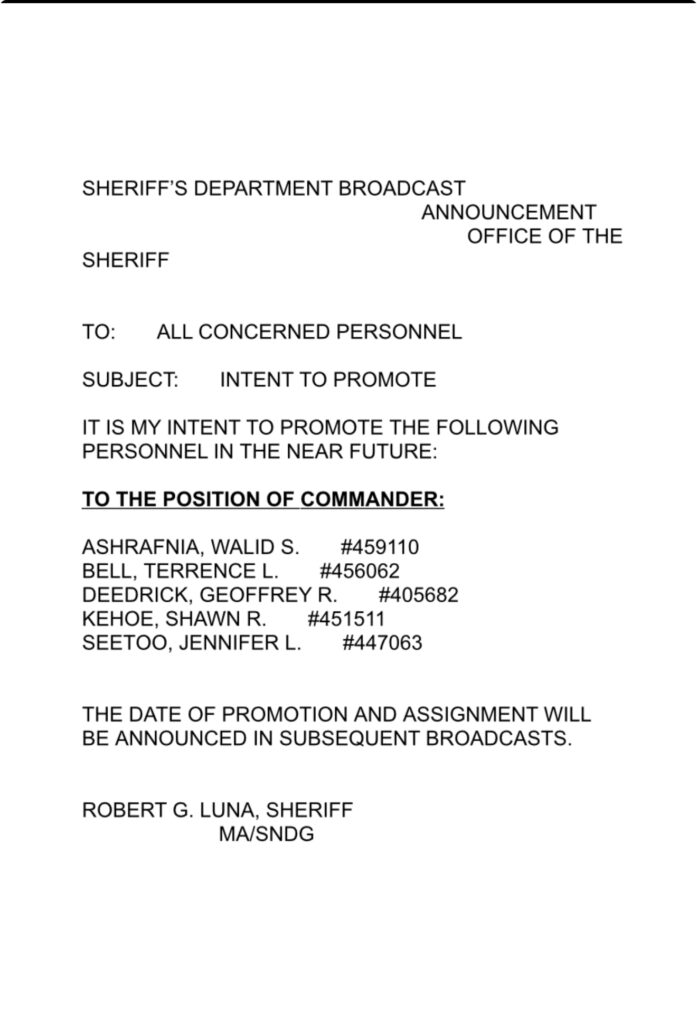
  • Promoted or Protected? Commander Jennifer Seetoo’s Rise Through the Ranks Reeks of Politics, Not Merit

    Promoted or Protected? Commander Jennifer Seetoo’s Rise Through the Ranks Reeks of Politics, Not Merit

    In a department drowning in scandal, buried misconduct, and zero public confidence, Sheriff Robert Luna just slid Malibu/Lost Hills Captain Jennifer Seetoo into a shiny new Commander title – and did it with all the subtlety of a backroom deal in a burning building.

    Let’s be real: this wasn’t a promotion, it was a political payoff dressed up as leadership.

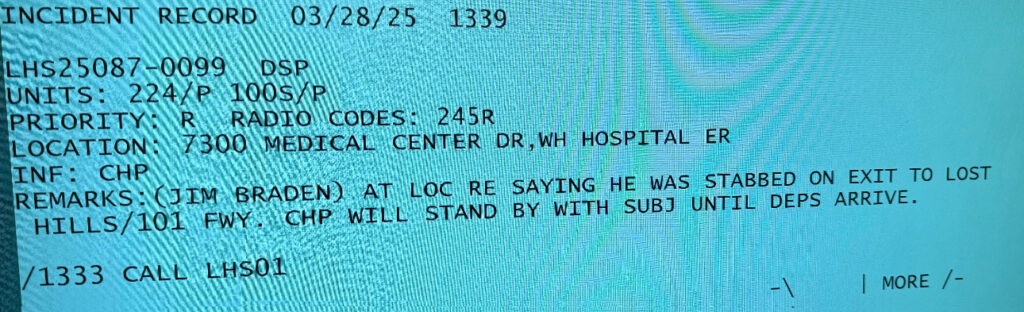
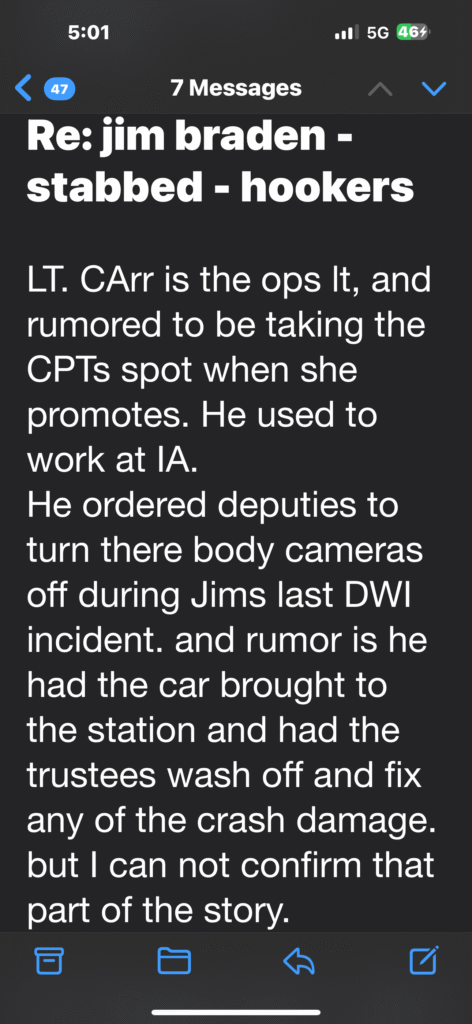
    The move came just as the Malibu/Lost Hills Station is embroiled in yet another bombshell scandal, this one involving retired Lieutenant Jim Braden, once highly respected in the Malibu community, and among the station line staff… until March 28th when the wheels came off the wagon and his shady activity was under a bright spotlight.

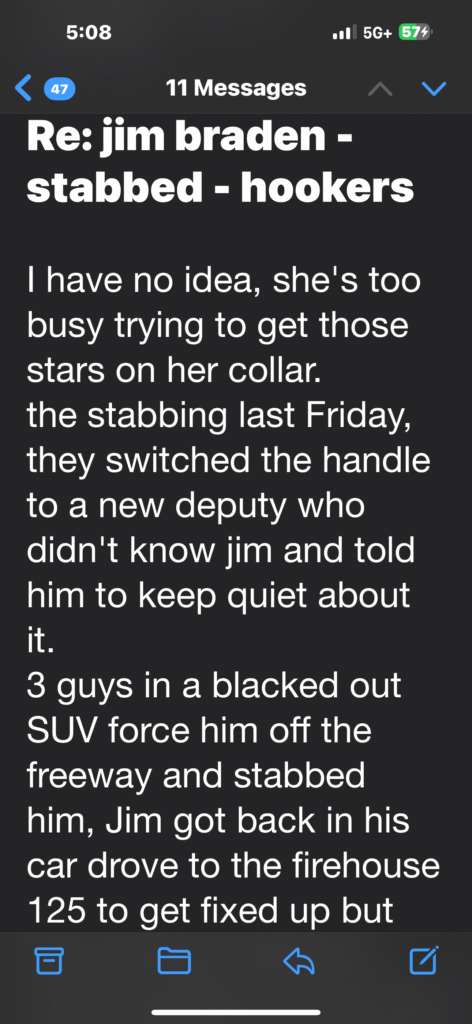
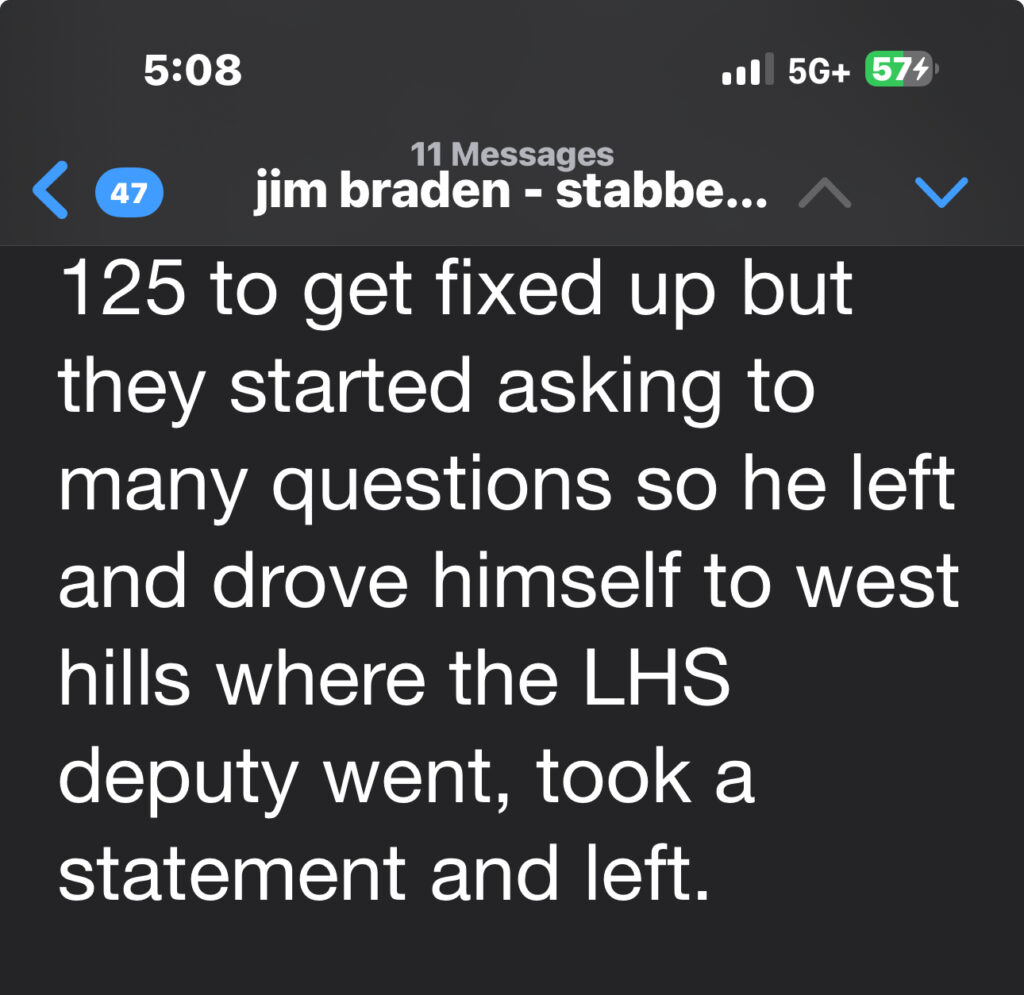
    On March 28th, Braden was reportedly stabbed after allegedly refusing to pay a sex worker.

    That’s just the beginning of what we are now learning is one of a series of disturbing incidents involving Braden, actively being covered up by the Lost Hills Station over the last three years.

    The Braden Bombshells

    The stabbing incident didn’t just expose Braden’s double life; it kicked open a door to a vault of dirty secrets buried under Seetoo’s command. Multiple sources say Braden was involved in a DUI incident that responding deputies attempted to handle… until they realized who was behind the wheel. According to those inside the station, OPS Lieutenant Dustin Carr ordered body-worn cameras shut off, and Braden’s vehicle was mysteriously “cleaned up” at the station. You know, standard operating procedure—if you’re trying to obstruct justice.

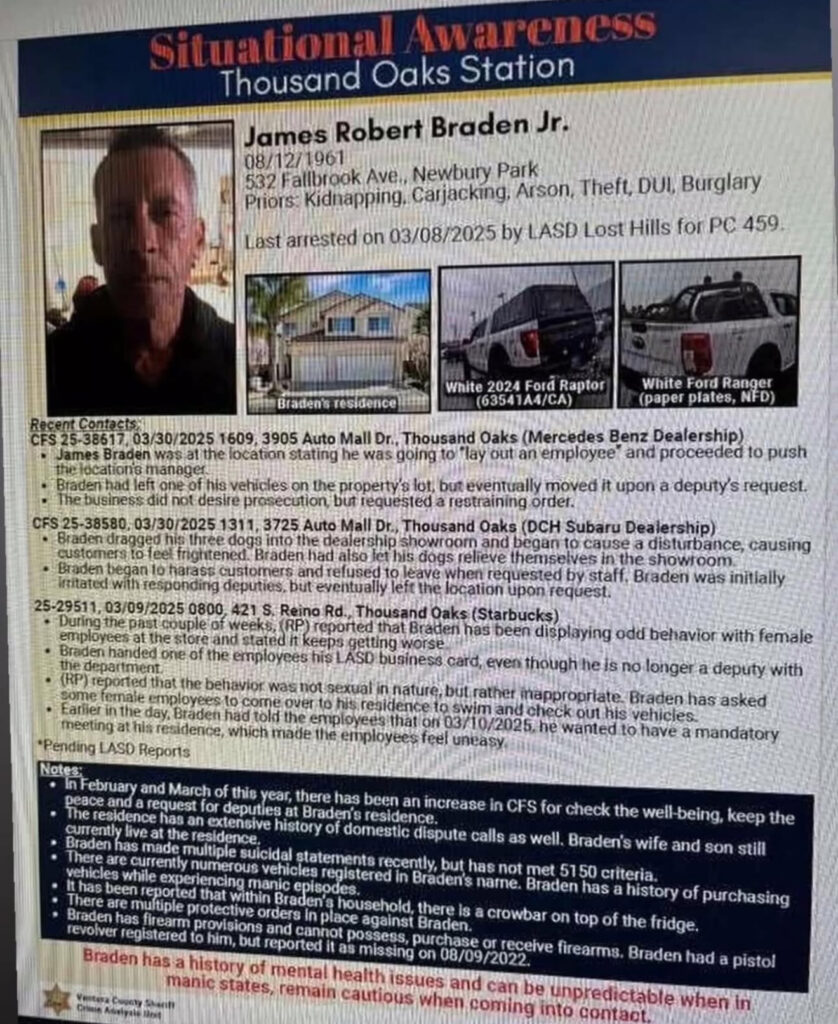
    In case anyone thought this was an isolated case, Braden’s ongoing criminal behavior was documented in an internal bulletin from the Ventura County Sheriff’s Department. Which begs the question…how many incidents were swept under the rug while Seetoo looked the other way—or worse, participated in the cover-ups?

    Fire, Ego, and a Breakdown in Command

    Seetoo’s judgment wasn’t just questionable behind the desk—it was also a failure in the field. During the Palisades and Eaton fires, a pissing match of egos broke out between agencies, with Cal Fire’s red hats clashing with LASD command over who was in charge. The Rose Bowl Incident Management Team had to step in and assert authority, citing potential criminal elements behind the fires that could lead to murder charges.

    And who muddied the chain of command? You guessed it… Captain Seetoo, who reportedly inserted herself into IMT operations – a direct violation of IMT protocol. According to sources, her interference caused confusion and chaos during a life-threatening emergency.

    As Cal Fire reportedly “drove right over her and the Palisades IMT,” the Rose Bowl team had to clean up the command mess – because apparently, Seetoo couldn’t even follow her own department’s playbook.

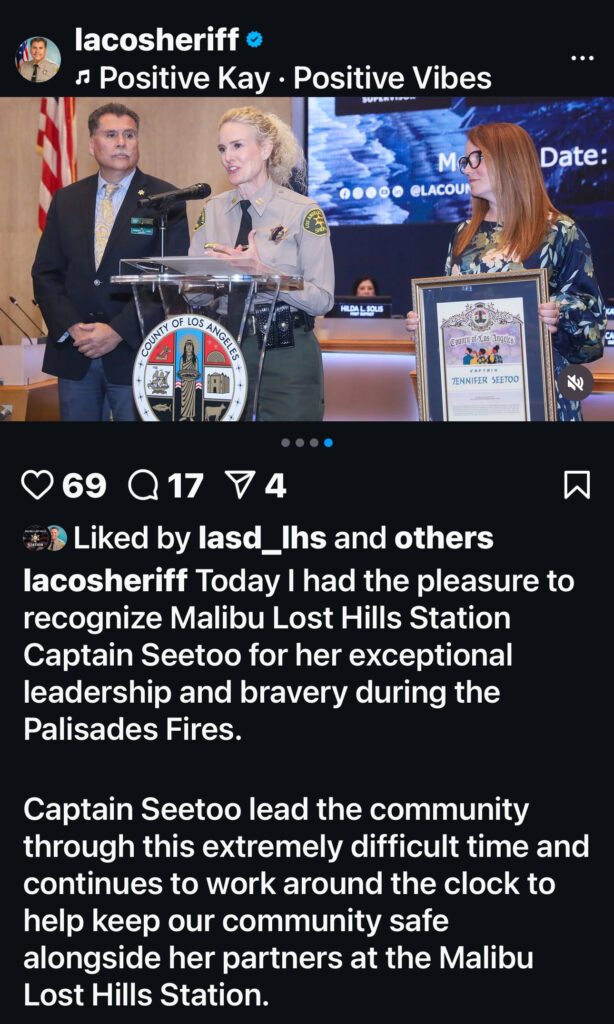
    And instead of discipline, Sheriff Luna decided Seetoo was more deserving of an award for “bravery” during the Palisades Fire response. 

    Arrive Alive

    Shortly after four Pepperdine students were tragically killed on PCH, Seetoo launched a public safety campaign to much fanfare. Meanwhile, behind the scenes, Malibu Search and Rescue – under her command – was launching a craft beer collab with a local brewery.

    The cans were slapped with the silhouette of LASD’s Air 5 rescue helicopter – because nothing says “we take public safety seriously” like using a life-saving aircraft emblazoned on a beer can served at an event inside Malibu Creek State Park – where drunk drivers would potentially leave drunk, turning on to the canyon roads where accidents are routinely airlifted out by the very team now hawking the public safety branded craft beer.  The level of ignorance, and the timing, is mind numbing. Literally and figuratively.

     The Coup No One Talks About

    Seetoo’s fast-tracked promotion has long been a point of controversy. In May 2022, council members from multiple cities told the Malibu Daily News they were completely blindsided by her appointment as Captain. Four out of five city managers had reportedly indicated their choice was Acting Captain Joe Fender.

    So what happened? According to city insiders, Malibu City Council members Mikke Pierson and Karen Farrer pulled a political stunt, pressuring city managers to flip their support to Seetoo – without input from their councils. The move reeked of a backroom deal, and the fallout was immediate: frustration, distrust, and disillusionment.

    Meanwhile, during the compromised Captain selection process, Seetoo was suing the department for discrimination – because allegedly she wasn’t getting promoted fast enough.

    Communication is Key

    At the PCH Taskforce meeting held in the wake of the horrific crash that killed four Pepperdine students, L.A. County Supervisor Lindsey Horvath offered praise that aged like milk. “We know you are working closely with the city,” Horvath gushed to Lost Hills Station Captain Jennifer Seetoo.

    Except… she actually wasn’t.

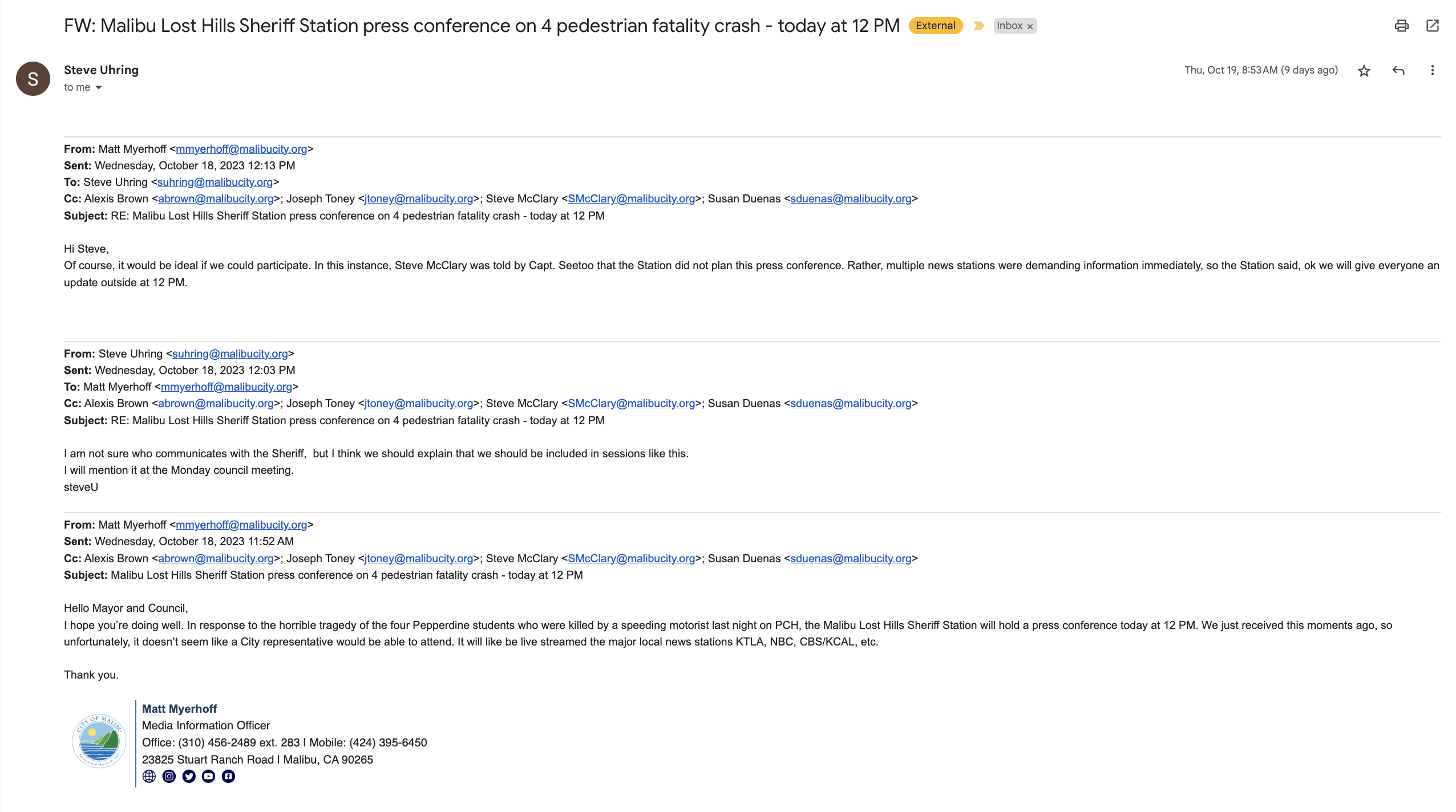
    Clearly, Horvath missed the memo—assuming one even existed—about the calculated communication blackout Seetoo orchestrated to exclude Malibu officials from a critical press conference regarding the fatal crash. The briefing was held at Lost Hills Station, 19 miles from Malibu City Hall, and city officials were given a whole seven minutes’ notice via email. That’s not “working closely”—that’s sabotage.

    Captain Seetoo’s move wasn’t just a logistical fumble—it was a deliberate power play, one that snubbed Malibu leadership and made a mockery of the $15 million contract the city pays annually for LASD services. Apparently, the price tag doesn’t come with common courtesy.

    Malibu Mayor Steve Uhring was justifiably livid, blasting the department’s opaque handling of the tragedy:

    “I was not getting information from the city staff or the Sheriff… we have some communication issues that we need to learn how to deal with with the Sheriff,” Uhring told Malibu Daily News.

    Let’s be clear: this wasn’t a simple scheduling snafu. It was a slap in the face to a grieving community and its elected officials—one more example of the growing dysfunction between LASD leadership and the city they’re supposed to serve.

    While Malibu’s elected officials were iced out of the press conference, Captain Jennifer Seetoo made sure her favorite PCH safety influencers had front-row seats. Multiple activists she’s cozied up to were given ample notice to attend the high-profile event—because when it comes to image control, Seetoo plays favorites like a seasoned politician.

    Meanwhile, Malibu Daily News was tipped off by sources at LASD HQ—not Seetoo herself—at 9 a.m. that a press conference would be held at noon. That’s how the public and the press found out: not through local coordination, but through backchannel scrambling.

    And once the cameras rolled, Seetoo wasted no time shamelessly plugging her station’s social media—yes, those were her actual words—as if Instagram clout could erase a legacy of inaction. The Lost Hills Station feed had suddenly become flooded with posts touting speeding citations and impounded cars in the days following the tragedy. A PR blitz disguised as enforcement.

    But residents weren’t buying the photo-op policing. On social media, outrage boiled over. The consensus was scathing:
    “Where was the Sheriff’s Department before these young women were killed?”

    The 180-degree shift in enforcement didn’t inspire trust—it exposed a department in damage control mode, trying to save face after failing to save lives.

    Back in 2019, communication – or the lack thereof – was already a glaring issue for Captain Seetoo, who at the time was a lieutenant tasked with overseeing comms at Lost Hills Station during the first fire season post-Woolsey.

    On the night of Thursday, October 10, 2019, as the Wendy Fire was being reported across social media, panic began to spread faster than the flames. What locals didn’t know – because no one bothered to tell them—was that firefighting efforts had successfully halted the blaze near Point Mugu State Park.

    But residents in Decker Canyon could see flames glowing in the distance before 10 p.m. and heard nothing from authorities. No alerts. No wind forecasts. No preparation instructions. Just radio silence.

    Neither Lost Hills Station nor the City of Malibu offered a shred of real-time guidance. So, like clockwork, those with livestock and large animals – who had been burned before, literally and figuratively – took matters into their own hands, organizing voluntary evacuations in the dark with zero help from the people who are supposed to protect them.

    It was a preview of what’s become a pattern: when crisis hits, the only thing Malibu residents can rely on is each other – not their $15 million-a-year LASD contract.

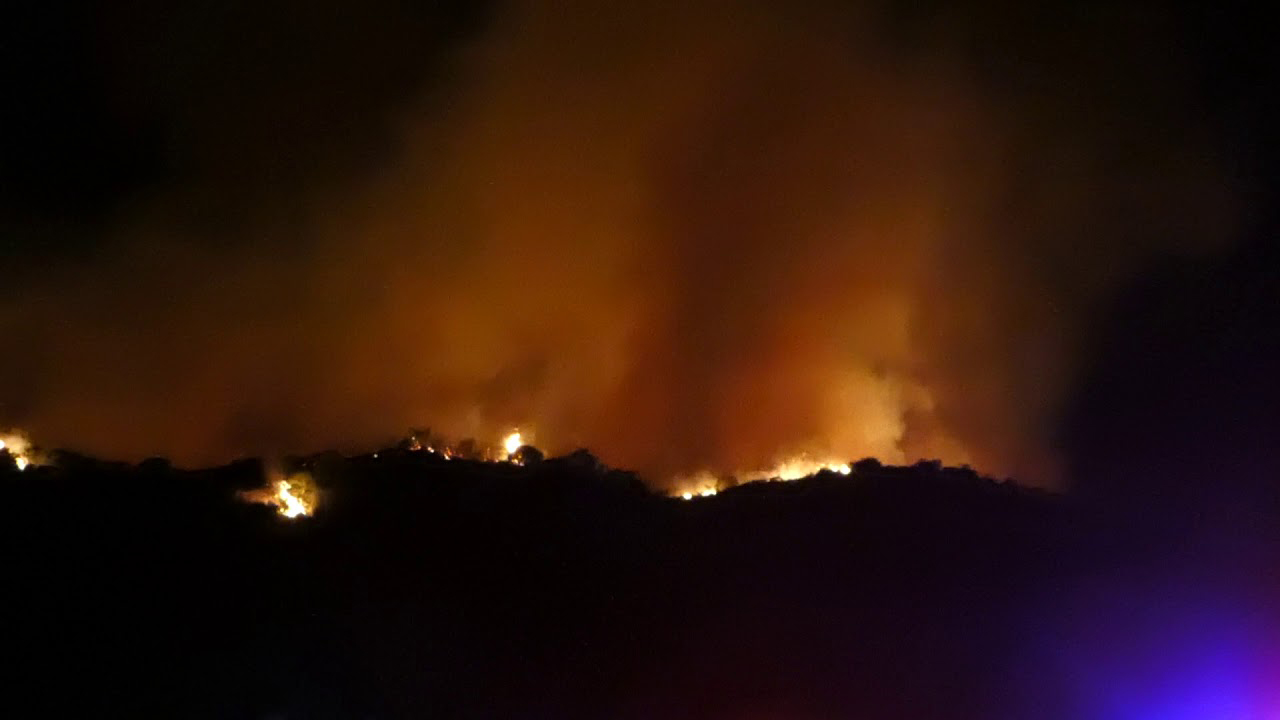
    The Wendy Fire in 2019.

    Anxiety reached a fever pitch with residents posting on social media their concerns over the flames visible from the Wendy Fire, and smoke filling the canyons from different directions. The City of Malibu sent out only one alert at 8:23 p.m., and no further updates as flames became more visible from canyons looking down the coastline.

    Lt. Seetoo was contacted multiple times regarding updates as there was no information from the station posted on social media. She stated there were no fires in the canyon and that the smoke was coming from fires burning in the San Fernando Valley. Malibu Daily News strongly suggested to Lt. Seetoo that the station needs to post updates to calm residents who were anticipating evacuations based on the smoke filling the air in the canyons.

    After three solid days of failing to update the community, photos of the station’s Twitter account was sent directly to then-Sheriff Alex Villanueva. The posts clearly showed the blatant failure to communicate with residents during a critical time and the first fire season after Woolsey. Shortly after, Lt. Seetoo was transferred to the West Hollywood station.

    Even more startling is that Captain Seetoo was Acting Captain of the station during the Woolsey Fire and had full knowledge and hands-on experience witnessing the magnitude and the destruction these wildfires cause, and yet she still failed to take control of the situation during the first fire season after Woolsey.

    Villanueva took the issue very seriously and mandated station personnel to go through social media training. In 2020, Lt. Chuck Becerra was promoted to Captain taking command of the Lost Hills station. Becerra contacted Malibu Daily News to help facilitate introductions with key members in the community who could help with emergency preparedness and assistance developing a better overall messaging strategy to reach more residents during a disaster or critical incident.

    A comprehensive social media plan was devised including tagging all local media at the end of every emergency post to ensure the messaging was reached as many residents as possible (the same strategy was also suggested to Villanueva for LASD HQ social media. An internal power struggle stopped it dead in its dead tracks which is unfortunate as it would have been viewed as an olive branch to the press, which was much needed at the time).

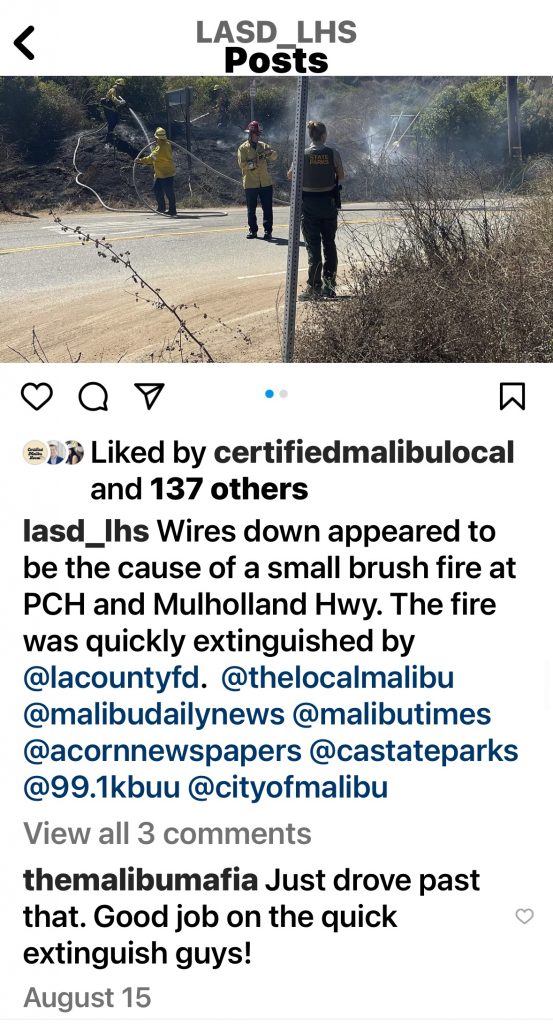
    The strategy was successfully implemented at the station level and continued until The Current Report and Malibu Daily News articles exposed Sheriff Luna’s failures, and Captain Seetoo’s failures at the Lost Hills Station under her command.. Shortly after the articles were published, The Local Malibu and Malibu Daily News social media accounts were excluded from all Lost Hills Station emergency posts.

    Including the post notifying the community of the October 17th crash that killed the four young women.

    BEFORE

    AFTER

    A purposeful (and retaliatory) act, not in the best interests of the safety of the community and contrary to the statement Captain Seetoo made at the PCH Task Force meeting: “We must do this together as a community. We must do this together to save lives.” she said

    A Commander of What, Exactly?

    During, and at the end of  Seetoo’s watch, Malibu/Lost Hills has descended into internal chaos. Complaints were mounting. The Malibu/Lost Hills region was losing faith under her failed leadership, and yet, the May 10th fundraising event in support of Sheriff Luna’s re-election bid hails her as “Malibu’s most powerful community leader.”

    Powerful? Not by anyone actually paying attention.

    Final Thought: Promotions or Payoffs?

    Sheriff Luna may think quietly promoting Commander Seetoo will deflect attention from the department’s implosion, but the facts say otherwise. Cover-ups, chaos, cronyism—this isn’t leadership. It’s a masterclass in corruption.

    The 2026 race for Los Angeles County Sheriff isn’t just pivotal — it’s a five-alarm political reckoning. Sheriff Robert Luna announced his re-election bid last November, shamelessly asking for four more years after a term defined by scandal, spin, and strategic cowardice. Across LA, one question echoes louder than a siren: how much more damage can one sheriff do?

    The answer? A hell of a lot.

    Another four years under Luna wouldn’t just be a step backward – it would be the final nail in the coffin of what was once the most respected sheriff’s department in the nation. Under his failed leadership, LASD isn’t being reformed – it’s being dismantled, one tone-deaf decision at a time.