Month: December 2018

  • Along For The Ride: Malibu Icon Millie Decker

    Along For The Ride: Malibu Icon Millie Decker

    Editor’s Note: Millie Decker died peacefully in her sleep on Christmas Eve 2018. She was 98 years old. This story, by Amelia Fleetwood, and produced by Tara Owens, was originally published in 2016.

    “Riding horses was like bread and milk for us, just an everyday common thing,” remarks Millie Decker, one of Malibu’s oldest and most treasuredresidents. Arriving in 1925, she remembers a Malibu inhabited solely by the original ranching/homesteader families. Pacific Coast Highway was just a dirt track with gates at both ends, guarded by the often-terrifying gure of Mary Rindge, the “Queen of Malibu.”

    “As a child,” Millie smiles, “I was scared to death of Mrs Rindge. She used to go around in these long dresses, wearing a great big old western gun belt with guns on both sides!” Millie, herself is a force to be reckoned with, a wild haired woman with steely blue eyes. She’s tucked her western shirt neatly into her leather gaucho pants that show off a huge turquoise belt buckle. Married three times to men from the original ranch families of thearea, Harold Lewis, Warner Mandeville, and Jimmy Decker, this mother of three is still lithe, and walks with a cane only when she is calling to herhorses or taking her blue heeler dog out on a walk.

    To say she is tough is an understatement.

    Mille was the youngest daughter of Percy and Rose Meek. Her father was meek in name only; he was a rancher, a bronc rider, a hunting-dog trainer and a lion tamer. He was even called to hunt down criminals for Ventura County with his thirty blood hounds. Percy moved his family to Malibu and settled at the Mesa Ranch, now known as Circle X Ranch in Decker Canyon. He needed space to train his lion hunting blood hounds. He’d planned a trip to Manchuria to hunt Mongolian tigers.

    “My father was the bravest man I ever knew. We had a mountain lion staked out between the house and the barn that Daddy used for training his dogs. I remember the time the mountain lion got loose, knocked me over, killed a few chickens and ran up a tree.” Millie laughs. As the story goes, her father climbed the tree, put a choke collar on the mountain lion and headed home. At rst the family was meant to spend only the summerin the small cabin at the Mesa Ranch, but they never left. Those early days of family square dances at Yerba Buena school, hunting on horseback, running horses and cattle, living off the land now exist only in the Malibu of Millie’s memory.


    There were always plenty of animals. “Mama had a pet skunk who hated other skunks and would spray whenever it met one. Mama would end up retching.” Millie laughs. “I even had a pet coyote pup my father gave me.” In Millie’s case, that old saying,“I could ride before I could walk,” is actually true. “When I was a year old my father put me on a mare to babysit me. A year later I had a horse of my own and I’ve owned horses ever since.” In the pasture behind her house she keeps two retired horses, with bloodlines that run back to her father’s original stock.“I keep asking my horse trainer son, Chip Mandeville, to buy me a nice gentle horse.” Millie says with a raised eyebrow. “Every time I ask, he tells mehe hasn’t found one yet. I don’t think he is really looking that hard.”

    “Anyway, I’m over the hill now,” she laughs. “I do love that expression. I think it’s a Western sort of expression.”

    With no sons, and being the Meeks’ youngest, Millie was raised by her father as the son he never had. She and her sisters rode rodeo with their father. “We were put on the bulls in the bucking shoots and we would just hang on until Daddy would ride up and pick us up off the bulls. I think we were just too scared to fall off!”

    When she was older, Millie began team roping with her father. Her son Chip explains: “My mother could hold her own with the guys whether she was roping or trading goods out of the trade bag at the end of the day at the rodeo.

    “When the cattle gathers happened at the local ranches, the ranch men would show up to help rope and brand the cattle. Millie was the only woman at those old gathers. It was a test of skill – only the top horsemen were allowed to do the roping and drag the calves to the fire, and that was pretty muchall my mother did. “They had to respect her because she was the best.”

    At age twelve Millie was one of the rst female jockeys to get her jockey card. She rode her father’s race horses at the Los Alamitos Race Course. “In the 1930’s it was most definitely a man’s world. Initially there was a lot of animosity from the owners and other jockeys. Millie earned their respect by winning, and they soon gured they better pay her some attention.” Millie Decker laughs: “Well, I can’t say how much of a lady I am.” A self-proclaimed tomboy, thisfascinating woman has walked a long ways in her cowboy boots, (she boasts of owning a pair in every color). These days Millie spends her time with herfamily at her ranch in Decker Canyon. Millie says of her years spent in Malibu, “I was very lucky to live the life I have lived out here like this. Being outside in the sun seems to do more good than anything else.”

    Story by:

    Amelia Fleetwood, ameliafleetwood71@gmail.com

    310.913.7710

    http://www.ameliafleetwood.com

  • The Fire’s Out, But City Hall’s Toxic Ash Remains

    The Fire’s Out, But City Hall’s Toxic Ash Remains

    The City Observed by Sam Hall Kaplan

    The holiday season is almost over, but sadly the daily reminders of the disastrous fire and an overpaid, under performing City Manager, her indulged entourage and oblivious supporters still remain, like the residue of toxic ash that lingers on our community.

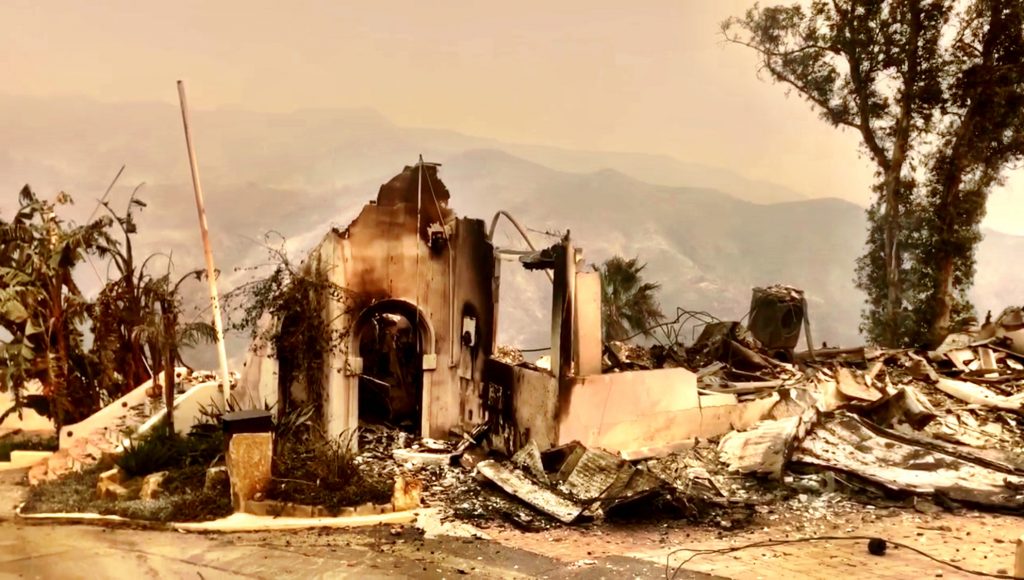
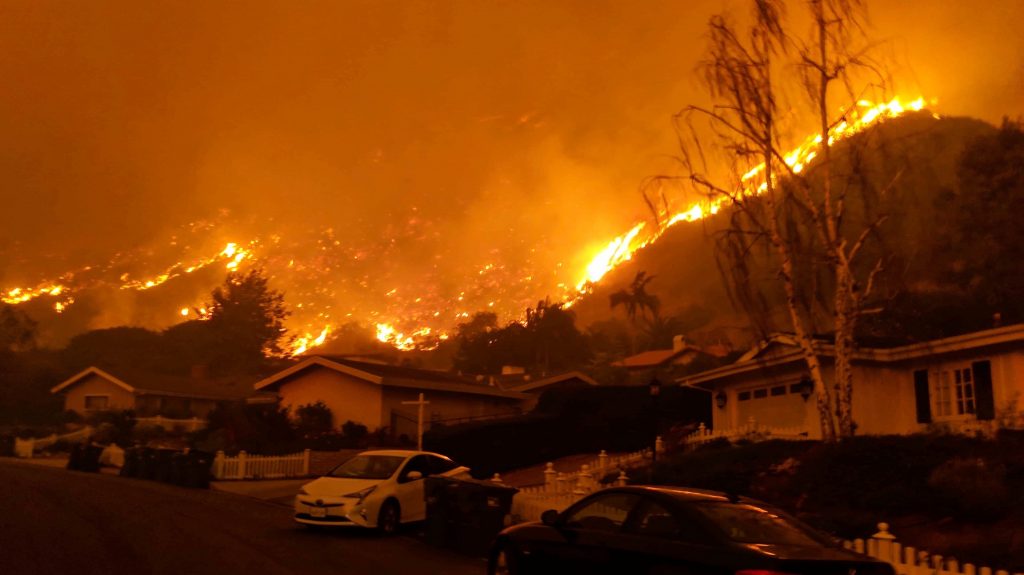
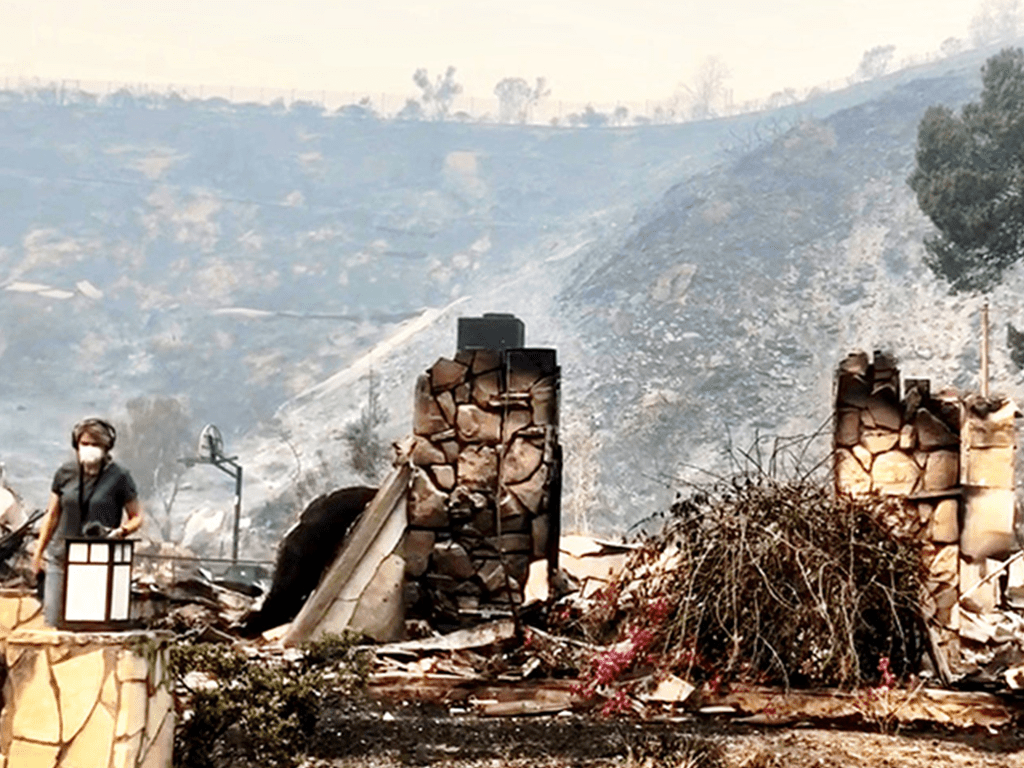
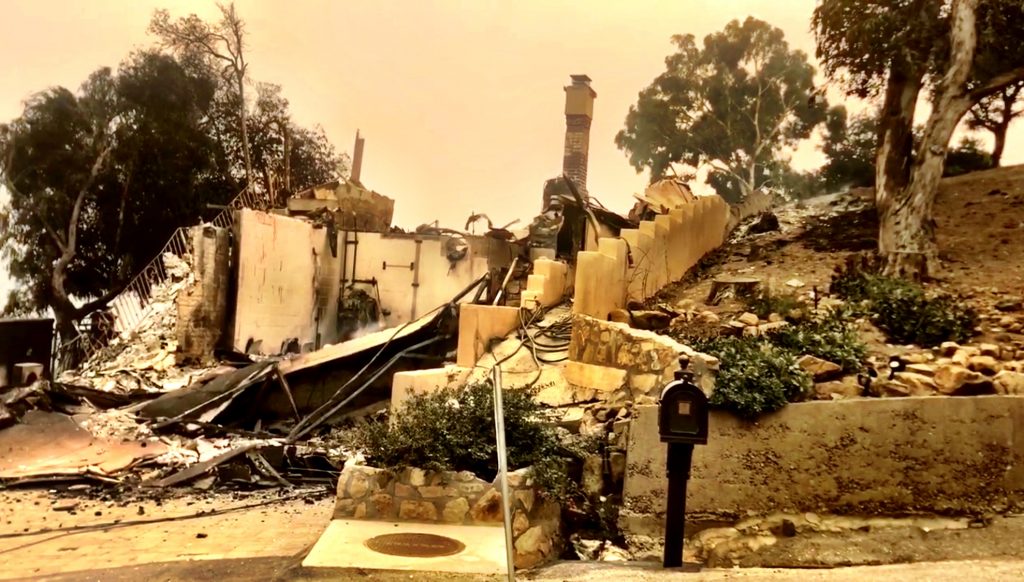
    In rendering the Malibu landscape raw and 500 homes ash, the disastrous Woolsey fire has disquietly exposed Malibu’s governance as inept, to the increasing exasperation of a growing majority of the city’s resident population. Time for a recall?

    Also palpably changed as a result of the calamity is the conceit that is Malibu, its surviving citizenry more communal, more politically alert and frankly tired of the City Hall bullshit, and so I write in The Local and websites everywhere (nice to have a reach in the hundreds of thousands of new readers and journalistic integrity, at the sorry cost of a few radio listeners.)

    And the ranks of the concerned are growing daily, as City Hall’s finagling and failures are exposed in the social media, even if some in the local media don’t see it. This has prompted more and more signatures on a petition calling for the resignation or firing of city manager Reva Feldman: https://www.change.org/p/malibu-residents-take-back-our-city

    From my pedagogical perspective on the Point, philosophically also up in smoke from the firestorm is the enlightened Social Contract, the hallowed basis of democracy where citizens essentially obey laws and pay taxes in return for government providing safety and services.

    That did not happen in the Woolsey fire, when as the flames raced toward Malibu and communications collapsed, and the mismanaged mandatory evacuation turned the PCH into a highway hell, putting the thousands fleeing at deadly risk. But you needn’t worry about Mayor Mullen, he defied the order so his teenage son could protect their home. And councilman Peak roosts in another county.

    Meanwhile, confusion reigned in a neophyte City Hall where its emergency operation center was closed for the a critical period when canyons were scorched and street after street of western Malibu and the Point tragically burned.

    And for whatever reason, the once but not-now heralded first responders were absent, or flaked out, only later to appear to further bungle the aftermath. It is personally painful to recall that time, as I broached barriers, ferried people, and saved chickens.

    And where were and what were the city leaders doing then, other than congratulating themselves at every opportunity, as if their helloes and hugging would absolve them. Who do Reva, Rick and Skylar think they duped with their sham theatrics, in particular in a city where many in show business live. Check the charlatans on these YouTube videos interviewed by Malibu local John Watkin:

    https://www.youtube.com/watch?v=uRLEE36stI4&t=15s

    https://youtu.be/ul1J7nAormc?fbclid=IwAR0mxhYi9GMT_O9-7iLvyh26ZdD0919ktSSBx-trHRmX-cZwIViPZeXMXUU

    There is a popular political precept among governmental wonks that states  “A people hire A people, B people hire C people,. “ It is my sad observation that Malibu City Hall is a quagmire of Cs, sinking under the weight of a bevy of bungling bureaucrats, and two returning recalcitrant councilmen.

    My initial hope was that an independent local task force of citizens aided by professionals would take a hard look at the city’s actions and inactions in the firestorm so that it be better prepared for the next disaster sure to come. But it seems the process was hijacked by a cabal of self serving city leaders, who are the most suspect of failing the city.

    Now I’m wondering if the local task force is really needed, even if purged, and that the “comprehensive review” of the County’ s announced by Supervisor Sheila Kuehl will suffice.

    Frankly, I feel the issue of the city manger, as well as councilmen Mullen and Peak are beyond the question of whether they failed the city. The harsh reality is that guilty or not, they do not have the confidence of most residence,  and should resign,  get out of the way of the cleanup and the need for municipal reform.

    It would certainly save themselves and the city embarrassment, in the case of Reva being fired and Rick and Skylar recalled. Let’s think of it as a holiday gift to the city, other than the blackened coal they left on our steps.

  • Building in the Bu – DEBRIS REMOVAL: A Burnout’s Analysis

    Building in the Bu – DEBRIS REMOVAL: A Burnout’s Analysis

    Our resident pitbull with building and planning (even more so after the Woolsey Fire!), Architect Lester Tobias, goes deep on the subject of debris.

    Debris Removal: A Burnout’s Analysis

    I have been so deep in the debris on this debris removal thing that it’s pathetic.  But it’s justified.

    I do not trust the government as far as I can throw them.  The whole notion that Cal OES will take care of everything and either not charge the homeowner a dime seemed, at first blush, a nice offer.  We kept being told how successful the program has been in the past, how there have historically been 90% participation rates, etc.  Then the people of Malibu read the “opt-in” document and forms, and started asking questions.

    So I have been reading and calling and getting quotes on all sorts of scenarios.  I have filled out the entire “Opt-out” form and generated all the plans and photo documentation.  I have also filled out the “Opt-in” forms so that I may submit them immediately if the situation ultimately warrants this action.  I have met with the County representatives at both Malibu and Calabasas.  And I still haven’t decided what to do.  I don’t have the answers, but I think I have all the right questions.

    Which is why fortune smiled on me this morning and put me at the building department just as Tim Smith, the Cal OES guy in charge of the whole deal, showed up to answer questions.

    So I had questions and he definitely had answers.  Here is the gist of our conversation:

    Q: How is this thing structured?

    A: Cal OES is in charge of the whole thing.  They are hiring two “Prime” Contractors who will be subcontracting all of the work to licensed demo and hauling outfits.  Each Prime Contractor will start out with three to five subcontractors and will ramp up to 20 each, for an estimated total of 40 demo crews working in Malibu at the apex of the effort.

    Q: What about the “Sweetheart Deal” aspect of this no bid work?

    A: Cal OES is assuring homeowners that each property will be monitored for actual costs (I had heard that each property would be bid, but he did not say that, nor does the structure of the process seem to involve individual bids), hauling loads will be recorded, crew size and days per project will be monitored and ultimately managed by the Cal OES people.  It is important to remember that, ultimately the only people on the hook for the cost of this work are the American Taxpayers, so I do think that there will be that perfunctory governmental assurance that they realize that the taxpayers deserve an efficient and effective process, so, you know, there’s that….

    Q: What parts of the site are being cleared by this program?

    A: The testing and debris removal are limited to structures. They are NOT clearing your site,  vegetation, removing vehicles, site retaining walls, etc.  They are not removing swimming pools.

    They will not remove a structure’s retaining walls if it looks like their removal will cause slopes to fail.

    Q: How much work can be done on those excluded items before the Cal OES contractors come in?

    A: As long as the areas of the structures are undisturbed, there is nothing that is specifically excluding the removal of those items that Cal OES is not having removed.  HOWEVER, if the crews determine that the areas under their purview have been disturbed, they might not perform their services, so it’s a little dicey if you want to get in ahead of the process.

    Q: How will the parcel debris removal be prioritized?

    A: At this time it is undetermined.  Historically, schools and other public sites go first, then parcels that pose the most hazard to neighbors (like, if you are the only house on your street that burned down, I think…). However they may just set up a start and finish line and run an orderly sweep from one end of the west side to the other.  It is all up to the number and location of the “opt-ins” and how fast they can ramp up operations.  Basically, nobody knows.

    Q: How long will it take?

    A: Three months.

    I’m sure you will all have more questions.  Tim can be emailed at tim.smith.caloes.ca.gov.

    Have at it.

    Enjoy the Holidays.  We have some heavy lifting to do come the first of the year!

  • Finally! Answers to the Fire Debris Removal Program for Malibu Residents

    Finally! Answers to the Fire Debris Removal Program for Malibu Residents

    Local architect Lester Tobias has given our readers a first hand account of the frustration residents are experiencing with the debris removal process (no thanks to the City and the County’s communication on the subject).

    The Local reached out to experienced Fire Attorney Bill Robins of Robins Cloud LLP to formulate an easy to understand checklist for Woolsey burn out victims.

    Before signing up for the Los Angeles County Debris Removal program get an estimate from a licensed debris removal contractor

    The Los Angeles County debris removal program is not free as is often stated.  If you opt-in to this program (deadline extended to January 28, 2019) you must assign the County “any and all” proceeds from your debris removal insurance coverage to the County.  Most insurance policies provide a benefit for debris removal in addition to the face value of the policy which may also be available to reclaim your property or for other costs of construction.  If debris removal can be provided by a licensed contractor at a cost less than what the County would take from your insurance coverage, you may have more money for rebuilding.  Whether participating in the program is right for you is a decision that should be made only after that comparison is done.

    Document all damage to trees and other landscaping before any debris removal takes place

    Evidence of trees and other landscaping destroyed by the fire may be lost after debris removal occurs.   Most insurance policies will not cover the full value of lost trees and other landscaping, and these underinsured losses may be recoverable from SoCal Edison or other third parties found responsible for starting the Woolsey Fire.  California law also allows for recovery of up to two times the value of lost trees from the responsible party.  Documenting damage to the trees and other landscaping is an important part of supporting these claims.  Take photos of all damage or have an arborist assess the damage before removing destroyed trees and other landscaping.

    Create a fully itemized list of your contents and their value

    People may be discouraged from fully itemizing their contents once they get to the policy limit, or may be tempted to accept a waiver of the itemization requirement by the insurance carrier in exchange for acceptance of less than the full policy limit. These may seem like easier approaches, but, aside from not receiving every dime you are entitled to under your insurance policy, there is another hidden danger.  If you choose to pursue a third party claim, a list of contents will be a valuable tool to ensure you receive full and fair compensation for everything that was lost.  Every toothbrush, every spoon, every table coaster has value.  Trying to create a list of everything that was lost six or twelve months from now will be frustrating and difficult as those items will fade from memory.

    Be patient in making your decision whether to rebuild or replace your home 

    As the shock and disbelief wears off, people may find the task of rebuilding or finding another comparable home overwhelming, and may be tempted to just cash out their insurance for the face value of their coverage for loss of their structures on the property.    However, many insurance policies have provisions that will pay money above the policy limit for the purpose of rebuilding or replacing their burned structures.  People who inform their insurance company they do not have an intent to rebuild or replace their property may lose these proceeds, without being told there may be money available beyond the face value of the policy limits that can be used for rebuilding or replacing their home.   

  • Building in the Bu – The Supervisor Speaks with No Real Answers…

    Building in the Bu – The Supervisor Speaks with No Real Answers…

    Our resident pitbull with building and planning (even more so after the Woolsey Fire!), Architect Lester Tobias, navigates us through Supervisor Sheila Kuehl’s Town Hall Meetings which, in a nutshell was too much of not enough. See the first installment here…

    December 14th, 2018

    Here is the Supervisor’s response to my letter:

    Lester, I get that you’re frustrated and angry but there was plenty of info on everything not all in the general session. Most folks went to the individual tables in the other room to discuss their particular lost home. Debris removal. Rebuilding. Fire was there and on the stage. Planning answered several questions on the code requirements and how we would work through code requirements w each homeowner. Water could be a problem no doubt.

    Finally no one is foisting anything on you. There’s a no cost choice or anything else you want to do re debris if approved for health and safety. Fema sets the deadlines for their benefits. Insurance is used up to what the costs are not your max. Hard to pay attention to the details while streaming.

    And here is my response to the Supervisor:
    Dear Supervisor Kuehl,

    Thank you for your response. Here’s mine:

    1. There is a difference between information and answers. We are WAY past the information stage. I want answers, and there were no answers delivered last night.

    2. The table thing is nice, and I have used the tables at the DAC at the Malibu Courthouse. I have a hard time believing than anyone got anything of substance at the tables at Gillette Ranch. But you are right. I wasn’t there. So your point is taken.

    3. Fire may have been there and on the stage, but Orsby was not, and like I said, he is the guy whose talk is scaring people.

    4. Whatever planning said last night, that was the county, not Malibu. Sunday will be an entirely different beast and you need to be aware of that.

    5. We agree on water and as our Supervisor we will look to you for solutions.

    6. If you think that this demo conundrum is not a foist you have not read the documents, nor are you in our shoes. It is incredible to see so many smart, successful people completely stymied by this “out of the gate” aspect of rebuilding.

    7. Regarding the insurance pay out for debris removal, I re-watched the video. The exact quote from the guy who answered that question was, “Anything that the insurance would be paying you for debris removal, they will take the entire amount.” What did you hear? Or was your statement above just wrong? Or was the guy on stage wrong? I think he is right and you are wrong because he also said that if their cost goes over they don’t charge you any additional fees, and most people are going to be under insured for this part of the work. Do the math…

    8. It’s actually easier to pay attention to the live stream than to be there in person. I watch most city council meetings and planning commission meetings from my laptop in the comfort of my home. Which burned down. Because no firefighters came to Cavalleri Road.

    I will be there on Sunday.

    Look for me.

    I’ll be the frustrated, angry guy.

    Easy to pick out.

    Sincerely,

    Lester Tobias

  • Building in the Bu – An Open Letter to Supervisor Sheila Kuehl

    Building in the Bu – An Open Letter to Supervisor Sheila Kuehl

    Our resident pitbull with building and planning (even more so after the Woolsey Fire!), Architect Lester Tobias, sends an open letter to Supervisor Sheila Kuehl.

    Dear Supervisor Kuehl,

    I watched the live stream of last night’s Gillette Ranch meeting. It left me completely unsatisfied as to obtaining useful information on actual policy, events, timelines and likelihood’s of how we in Malibu are going to put our town back together.

    The presentations were fine. Good bedside manner was exhibited by all involved. Unfortunately Fire Chief Daryl Osby was not present, as he is the guy scaring us the most. Until we get some sense that he will work with those in our community who cannot meet the current fire code’s water and access requirements (you know, the requirements that did not save any homes on November 9th), many of us will live in a state of fear that we will ultimately be run out of town by a bureaucrat who, to date has shown no compassion whatsoever to our plight, or any ability to effectively fight a fire even with hundreds of thousands of dollars worth of access PER PARCEL that homeowners have been reluctantly installing and paying for lo theses many years.

    The attempt to clarify the debris removal policy was ineffective. The gentleman from Public Works was either deliberately obfuscating the truth or he didn’t understand the policy himself (where was CAL OES?). Here are the pertinent questions that perhaps can be answered on Sunday at Pepperdine:

    1. Why is there such pressure for homeowners still reeling from the disaster to sign their property access and full insurance limits away to the state in the next two weeks? This deadline is exacerbated by the holidays which will be upon us in a matter of days, not weeks or months. WE NEED UNTIL THE END OF JANUARY, 2019 TO MAKE AN INFORMED DECISION. It was not clear what timeline was extended last night. It needs to be the decision to opt in, as opposed any of the other deadlines in the program.

    2. Realizing that some parcels are basically uninsured for this removal, and will have those services provided LITERALLY FOR FREE by the State, why are the parcels that are either somewhat, adequately, or heavily insured by their homeowner’s policies CHARGED THE FULL EXTENT OF THEIR AVAILABLE COVERAGE? It would seem to me that either everyone pays or everyone gets it free. You must explain AND DEFEND this approach on Sunday at Pepperdine.

    3. Who is responsible for this seemingly ill conceived approach, where the State is basically contracting with what appears to be a no bid, single entity to test, remove and retest 500 homes in a few month’s time? Why are there no real metrics being provided on actual costs for this work? Why is there no real understanding of the available insurance pool of funds for reimbursement? In my business (architecture and construction) that kind of deal means that either there is a huge windfall for the people providing the services (and they know it), or everyone else in the state or the nation is on the hook for any shortfalls that the contractors might incur. Can you say “sweetheart deal”?

    4. Why is there such a “bulls in a china shop” policy with regard to this opt in effort? Have you yourself read the policy? If you do decide to read it, would you take this option, especially if you had adequate insurance?

    The State of California owes it to the people on whom they are basically forcing a service to FULLY AND COMPLETELY EXPLAIN THIS SERVICE TO THOSE PEOPLE.

    The next issue that was glossed over at last night’s meeting was this notion from the County Building Department that everyone will get to rebuild “what they had”. The comment that since building permits go back to the 1930’s everyone should be able to obtain their home’s permit history is laughable in a Malibu context.

    Every home in Malibu built prior to 1994 is non-conforming and has a very spotty permit record. In addition, county assessors’ square footage records are always undersized when compared to building permit sizes, as the two agencies use different methods of calculations. And finally, the inability of the City of Malibu to implement a fair and timely permit process has led to twenty five years of un-permitted work that basically complies with both zoning and building codes. The local architects have come up with a fair process for determining a structure’s baseline square footage. Why haven’t we been consulted on this matter, when we are the ones who for 25 years or more have been in the trenches dealing with both an onerous zoning code and a completely inept review process?

    Next, please have someone at the Pepperdine meeting who can give us a timeline and other answers on the following milestones:

    1. The selection of, hiring, and start date of the private code firm, and the name of that firm.

    2. Where will they be located? Will their commencement of duties be delayed by the preparation of their space? If so, why?

    3. Will this be a true one stop shop where planning, structural plan check, grading and environmental health (as a partial list of agencies) be performed by this one company in this one location?

    4. How long with the complete permit review take? Obviously the straight like for like will be faster than the 10% additions and those requiring special dispensation, but it seems like someone can figure that out. This is important because unlike business as usual, most people are on limited insurance timeframes so everyone needs to be advised as to the regulatory process and timeframe.

    And finally, will you please tell Reva Feldman that the people of Malibu want her to know the following:

    1. She is the City Manager.

    2. She is in charge.

    3. When something goes wrong, it is her fault.

    4. To those of us who lost everything and are trying to get our homes and lives back on track, she looks like a deer in the headlights who doesn’t give a crap doubt about us.

    Thank you for your time and all your personal efforts on behalf of our city.

    Sincerely,

    Lester Tobias

  • Woolsey Fire Victims: Site Clearing Confusion Continues…Sigh… Valuable Insight from Architect Lester Tobias

    Woolsey Fire Victims: Site Clearing Confusion Continues…Sigh… Valuable Insight from Architect Lester Tobias

    Our resident pitbull with building and planning (even more so after the Woolsey Fire!), Architect Lester Tobias, guides us through the very confusing site clearing process to date.

    December 11th, 2018

    The confusion surrounding the hazardous Waste Removal, Demolition, and Debris Hauling associated with the Woolsey Fire homes. It’s amazing how confused the people who apparently should be in charge of this portion of the rebuild process continue to be, nearly five weeks after the fire. My understanding is based on numerous, face-to-face discussions with city officials. Admittedly, I have not spoken to state or county agencies, but I think I should be able to rely on the City for valid, up to the minute information (did I really just say that?).

    Okay first off, about this Hazardous Waste Removal. I have been associating that scary term with toxins and radioactivity and cancer causing leaky sludge (thank you, Robert Kennedy Jr.) As it turns out, it’s basically paint cans and propane tank removal. So we are being held hostage by paint cans and propane tanks.

    After those items have been removed by people who apparently posses special training in moving paint cans and propane tanks, we reach a fork in the road. The state has made each fork undesirable, yet we each most choose a path.

    Path #1 is the path of Big Brother. It is the so called “Free” option. You basically sign on the dotted line and the government comes and clears your site. Sounds great until you ask a few questions or read the fine print. The first thing is that they will remove your foundation whether you like it or not. So if you need to see, inspect, measure or otherwise engage with your foundation, cleared of debris, then this is an untenable offer. The second item of note is that if you are insured, this service is not free, as you will have to sign over all or part of the demolition line item in your policy to the state agency clearing your site “for free”. To a government agency, the only thing better than “other people’s money” is other people’s money from even other people. I’d love to see the lobbying efforts that went into that clause…

    Path #2 is the so called “private” option, where you basically act like a logical human in the marketplace who hires a private sector company that performs debris removal and/or hauling (these two acts are typically performed by separate companies, working in tandem, to get the shit off your site and get it to the dump). If you choose this option you need to be aware that a special license is required by the state for fire debris removal. In a similar vein, the hauler must be also approved for fire debris removal. Now, I am assuming that companies that are licensed for this type of demo and hauling know the ropes, can fill out the paperwork, and get the job done. But I am just assuming at this point, so it’s still buyer beware….but it is free market pricing with this option, and the competition will be fierce, so the odds are that you will keep more of your insurance money with the private option.

    I’m sorry that I have no definitive advice or recommendations on this matter, especially since it is such an obvious bottleneck and roadblock to getting our lives put back together. But this is the information on which I am basing my decision today, but since I may wait a month for that one paint can that didn’t incinerate at my house to be removed, I guess I am not in any hurry….sigh….

  • A Portion of State Route 23 Opens to Residents Only (Lower Mulholland to Decker School Rd)

    A Portion of State Route 23 Opens to Residents Only (Lower Mulholland to Decker School Rd)

    The following statement was released by CalTrans:

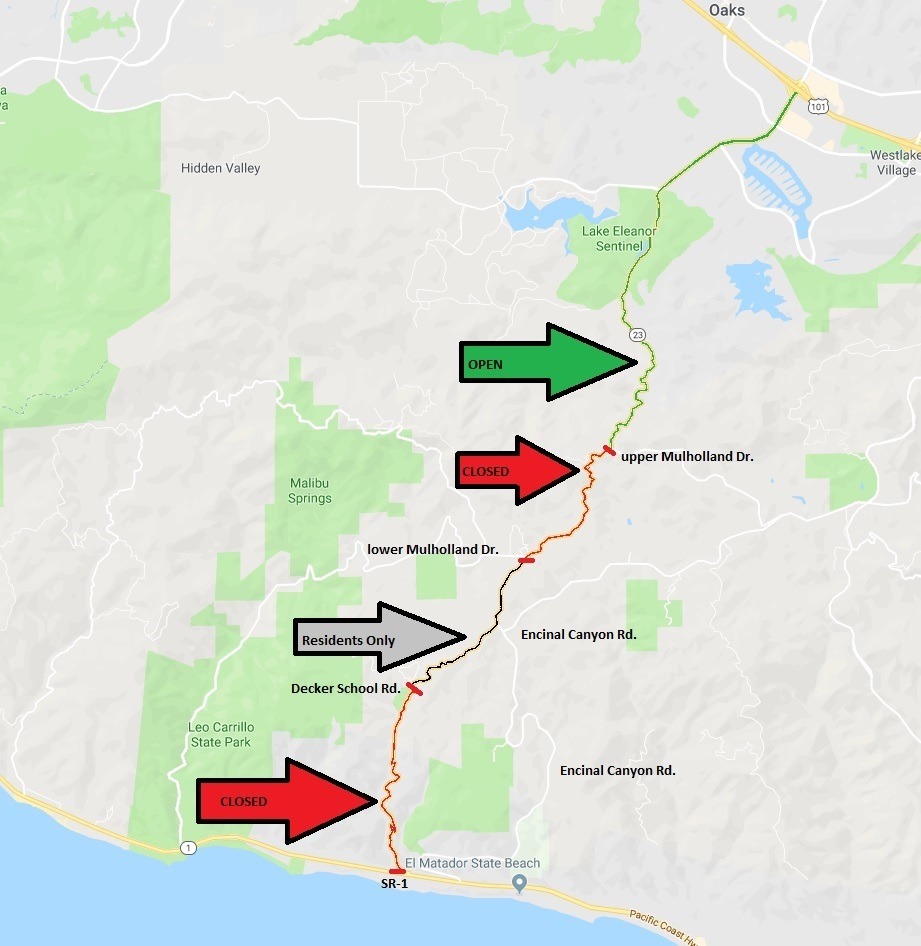
    MALIBU  – The California Department of Transportation (Caltrans) announces that a portion of State Route-23 is now open to residents onlybetween Decker School Rd. and lower Mulholland Dr. above the city of Malibu. Flagging operations permitting one direction of travel at a time will be in effect within these parameters while work continues.


    Heading north on SR-23 from SR-1 (Map attached):

    CLOSED: SR-23 from SR-1 to Decker School R

    OPEN to residents only: SR-23 from Decker School Rd. to lower Mulholland Dr. (Accessible via SR-1 to Encinal Canyon Rd. to SR-23.)

    CLOSED: SR-23 from lower Mulholland Dr. to upper Mulholland Dr.

    OPEN: SR-23 from upper Mulholland Dr. to US-101.

    Vehicles will not be able to travel Mulholland Dr. from SR-1 across SR-23 to Kanan Rd.

    SR-23 between SR-1 and upper Mulholland Dr. within the Woolsey Fire burn area has been closed to the general public since early November. The closure on the south end at SR-1 was implemented by and has been maintained by the Los Angeles County Sheriff’s Department. The closure on the north end at upper Mulholland Drive was implemented by and has been maintained by the California Highway Patrol. The new closures at Decker School Rd. and at lower Mulholland Dr. are now also maintained by CHP.

    SR-23 will remain closed from lower Mulholland Dr. to upper Mulholland Dr. until further notice to allow further work by utlity companies and by Caltrans.

    The roadway remained closed primarily to provide utility companies a safe and unrestricted work space. Southern California Edison and Frontier Communications have been replacing poles, cable and line across steep terrain and on extremely narrow slopes

    As of Friday, December 7, a Caltrans contractor has been replacing guardrail. The critical guardrail at the south end of the closure near SR-1 will be replaced first and the contractor will work northward to replace all guardrail up to upper Mulholland Dr. This is expected to take up to six weeks.

    Much of the rail is intact, but most of the wooden support posts were burned. The current 27” tall guardrails will be replaced by 31” rails and the wooden posts will be replaced with metal posts. Caltrans engineers and geologists will determine if additional guardrail is required.

    Cranes with stabilizer arms for the utility companies and for the guardrail contractor require the full space of the roadway lanes.

    Multple sections of roadway within the closure were subject to flooding and mud slides during two rain storms in early December. A separate contractor is clearing all debris from the roadway shoulder and from all storm drains. Caltrans geologists have recommended two types of erosion control for the slopes:

    1. Hydroseed, which is seed combined with a binding agent that is sprayed over the terrain.
    2. Rock screen, which is similar in appearance to chain link fencing and is secured with long shafts driven deep into the ground. The exisiting rock screen in multiple areas within the closure performed well, but will also be replaced in case the integrity of the metal was compromised. Geologists will determine if additional rock screen is required.

    Caltrans, CHP, LASD, L.A. County Fire, L.A. County Public Works Dept., and the utility companies have been meeting regularly to determine when it will be safe to open the roadway to the public.The priority is to make the roadway safe for drivers and vehicles. The duration of the hard closure remains unknown. Caltrans and our partners thank the residents and the public for their patience and understanding.